
A Grave Betrayal: Sexual Assault Allegations and the Erosion of Public Trust
Published
- 3 min read
The Allegations and Immediate Context
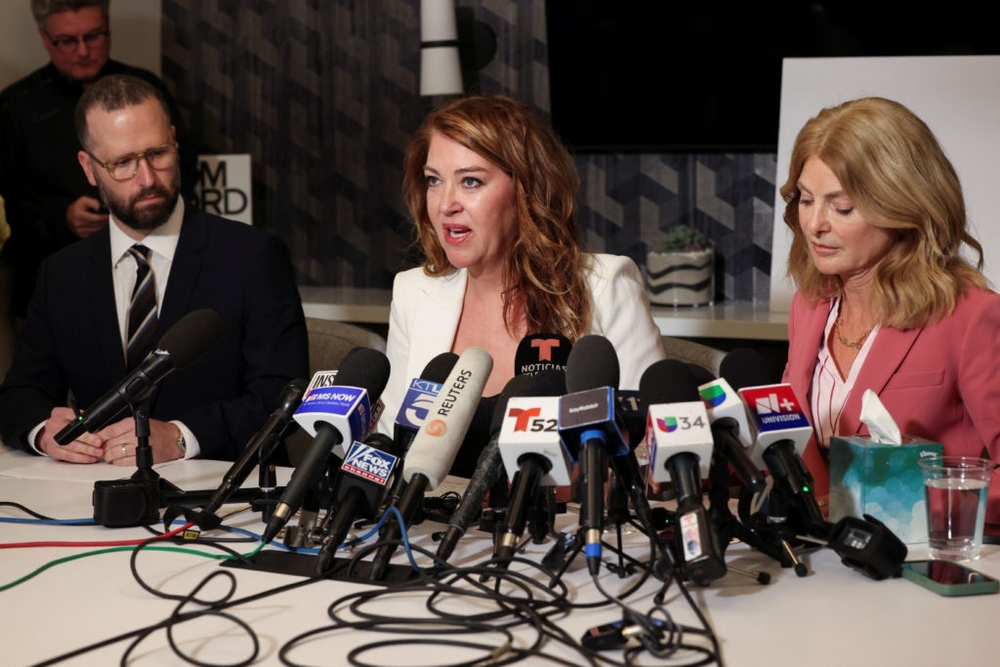
On Tuesday, Lonna Drewes held a news conference in Los Angeles to make a devastating public allegation. She stated that in 2018, United States Representative Eric Swalwell of California drugged and raped her at a hotel in Southern California. Drewes described meeting Swalwell, who had offered to help her fashion software company with connections, on the night of the alleged assault. After attending a restaurant opening, she says Swalwell wanted to stop at his hotel room to retrieve paperwork. Upon reaching the room, Drewes reported feeling her limbs grow heavy, leading her to believe she had been drugged. She alleges Swalwell then raped her and choked her, causing her to lose consciousness. “I did not consent to any sexual activity,” Drewes stated unequivocally. Her attorney, Lisa Bloom, indicated that journal entries, text messages, and photographs documenting the alleged assault would be included in a forthcoming report to the Los Angeles County Sheriff’s Department.
This allegation did not emerge in a vacuum. It came merely a day after Representative Swalwell announced he would resign from Congress, following earlier publications by the San Francisco Chronicle and CNN detailing allegations of sexual misconduct from other women. These prior accusations included at least two other alleged incidents of nonconsensual sex, as well as reports of Swalwell sending inappropriate messages and nude photos. Swalwell, who had recently dropped out of the California governor’s race, denied the prior accusations of sexual assault but conceded he had made unspecified “errors in judgment.” His attorney, Elias Debaie, did not immediately respond to a request for comment on Drewes’ new allegation.
The Facts as Presented
The core facts presented are grave and specific. Lonna Drewes has identified herself publicly, which is why her name is used in this reporting. She alleges a violent sexual assault by a sitting member of Congress. She claims to have contemporaneous evidence in the form of a personal journal and communications. Her decision to report the incident to law enforcement initiates a formal legal process, distinct from the court of public opinion. It is crucial to note that these are allegations, and under the American principle of due process, Eric Swalwell maintains the presumption of innocence in a legal sense. However, the political and ethical context is shaped by the pattern of accusations, his own admission of poor judgment, and his subsequent resignation from the House of Representatives.
The sequence of events—multiple accusers coming forward, a resignation from a powerful legislative body, and now a planned criminal report—paints a picture of a profound personal and institutional crisis. Drewes’ account includes specific details: the location (a Southern California hotel), the purported method (drugging), and the violent nature of the alleged assault (rape and choking leading to unconsciousness). She also outlined her personal context at the time, working as a model and running a business, and Swalwell’s purported offer to leverage his political connections for her benefit, a dynamic that implies a significant power imbalance.
Opinion: A Crisis of Character and the Foundations of Democratic Service
The allegations against Eric Swalwell, taken together, represent more than a sordid personal scandal; they strike at the heart of what public service in a democracy must embody. As a thinker committed to liberty, human dignity, and the rule of law, I view these developments with a profound sense of outrage and sorrow. Democracy is not merely a mechanical system of elections and governance; it is a compact built on trust. Citizens vest representatives with extraordinary power and authority, trusting that they will uphold the laws they pass and embody the values of the nation they serve.
When a representative stands accused of violating the most fundamental personal liberty of another human being—the right to bodily autonomy and security—that compact is shattered. The allegation of drugging a person to facilitate assault is particularly heinous, as it represents a premeditated removal of agency and consent. It is the ultimate betrayal of the fiduciary duty a public official holds. The power and connections of office must never be tools for predation, yet Drewes’ account suggests these very assets may have been used to create opportunity and imbalance.
Swalwell’s resignation, while a necessary first step, is not synonymous with accountability. Resignation is a political act; justice is a legal and moral one. Lonna Drewes’ courageous decision to file a report with the Los Angeles County Sheriff’s Department is where the pursuit of real accountability must now focus. The legal system, with its rigorous standards of evidence and due process, is the proper forum to adjudicate the truth of these specific criminal allegations. It is imperative that this investigation be conducted with the utmost seriousness, transparency, and impartiality. Any appearance of political protection or obstruction would further damage public faith in our institutions.
Furthermore, the pattern indicated by the multiple accusers cannot be ignored. While each allegation must stand on its own merits, a recurring theme of alleged misconduct suggests a deep flaw in character utterly incompatible with high office. Swalwell’s vague admission of “errors in judgment” in the face of multiple accusations of sexual assault is insultingly inadequate. It trivializes the trauma alleged by the accusers and fails to meet the moment with the contrition or clarity the public deserves.
This episode forces a uncomfortable but necessary reflection on the culture of power in Washington and beyond. It underscores why robust, independent systems for reporting and investigating misconduct—both within political parties and in law enforcement—are non-negotiable. Survivors like Lonna Drewes often face immense personal and professional risk in coming forward, especially when against powerful figures. Their voices must be heard, their claims investigated thoroughly, and their safety protected. The #MeToo movement has highlighted systemic failures across industries; politics cannot be an exception.
From a constitutional perspective, public officials swear an oath to support and defend the Constitution. How can one who is alleged to have violently deprived a citizen of her liberty and security possibly claim to be a defender of the very charter that enshrines those rights? The Bill of Rights exists to protect individuals from the overreach of power, whether from the state or, as in this allegorical sense, from those who represent it. These allegations describe the antithesis of constitutional values.
In conclusion, the story of Lonna Drewes and Eric Swalwell is a tragic one, laden with personal pain and public consequence. It is a stark reminder that the health of our democracy depends not just on policies and platforms, but on the basic humanity and integrity of the people we elect. Upholding the rule of law means ensuring it applies equally to the powerful and the powerless. Supporting liberty means fiercely protecting the bodily autonomy of every individual. As we process these disturbing events, we must recommit to building a political culture where character is paramount, where survivors are supported, where allegations are taken seriously, and where no position of authority serves as a shield from justice. The work of perfecting our union demands nothing less.