
A Hazard to Humanity: The Reckless Gamble of Placing a Detention Center in a Chemical Zone
Published
- 3 min read
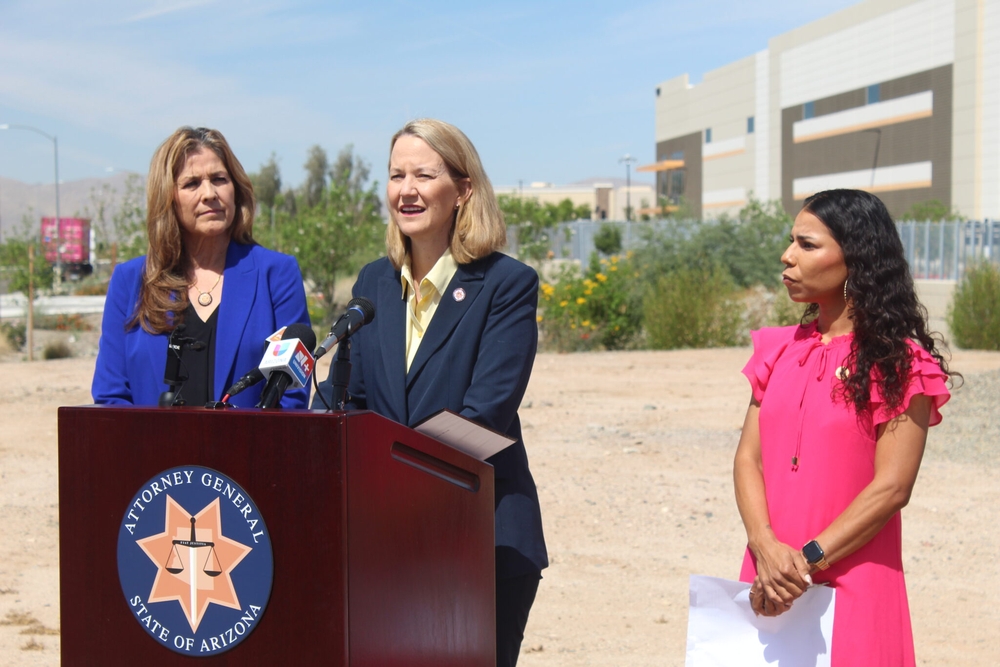
In a stark confrontation that pits state sovereignty against federal overreach, Arizona Attorney General Kris Mayes has filed a lawsuit against the Trump administration to halt the conversion of a massive commercial warehouse in Surprise, Arizona, into a new Immigration and Customs Enforcement (ICE) detention facility. The core of the legal challenge is not merely procedural; it is a profound indictment of a policy that deliberately places human beings in imminent physical danger. The proposed site is directly across the street from a hazardous chemical storage facility, a fact that the lawsuit argues violates multiple federal statutes designed to protect both detainees and the surrounding community. This case transcends immigration policy; it is a fundamental test of whether the federal government is bound by its own laws regarding human safety and environmental justice.
The Facts: A Warehouse, Chemicals, and a Flouted Process
The facts laid out in the Attorney General’s complaint are alarming in their clarity. U.S. Immigration and Customs Enforcement purchased a 418,400-square-foot warehouse with the intent to retrofit it into a detention center. Initially planned to hold 1,500 detainees—which would have made it Arizona’s largest—the capacity was later revised to 542, with plans to house 250 by September. This warehouse is one of at least 24 such facilities nationwide that the administration aims to establish to meet its goal of deporting one million people annually.
The existential threat, however, lies just outside its doors. Large tanker trucks bearing multiple warning labels for hazardous materials are a common sight, idling near the warehouse entrance. The adjacent chemical storage facility filed a federally mandated risk management plan in January, but that assessment could not account for the detention center, as its existence was not revealed until the end of the same month. The federal government has provided no complementary risk assessment of its own.
Attorney General Mayes’s lawsuit alleges violations of the National Environmental Policy Act (NEPA), which requires environmental impact studies and public input; the Immigration and Nationality Act, which mandates “appropriate places” for detention; and the Administrative Procedure Act, which demands clear reasoning for federal actions. The lawsuit meticulously details how the retrofitting would strain local infrastructure, estimating wastewater output between 35,000 and 104,000 gallons per day, and how increased traffic from construction and detainee transport would hamper emergency response on an already narrow, congested road.
Perhaps most damning is the evidence of a broken public process. A required floodplain notice was published with a public comment deadline set for January 19, 2024—four days before ICE even purchased the warehouse. The DHS website later listed a contradictory deadline. Solicitor General Joshua Bendor noted that DHS complied with NEPA for a Texas facility in 2021, making its failure here “baffling.” Meanwhile, local opposition has been fierce, with hundreds of Surprise residents—many from a nearby high school with a majority Hispanic student body—packing city council meetings. Mayor Kevin Sartor, however, has stated the city lacks legal grounds to oppose the federal government, opting instead to lobby for revenue reimbursement.
The Context: A Pattern of Dehumanization and Institutional Erosion
This is not an isolated incident. It is a calculated piece of a larger pattern. The drive to rapidly expand detention capacity through retrofitting warehouses—buildings “not designed or constructed to house, feed, bathe, protect, or provide adequate care for humans,” as Bendor wrote—speaks to a policy of mass detention as an end in itself. The reduction in planned capacity from 1,500 to 542 suggests internal recognition of impracticality, but not a retreat from the core, inhuman objective.
The legal strategy in Arizona mirrors a successful challenge in Maryland, where a federal judge blocked a similar facility last week based on failures to conduct environmental reviews. This indicates a systemic, administration-wide tactic of bypassing legal safeguards to accelerate a political agenda. The context also includes the tragic backdrop of recent mass raids and the killings of individuals like Alex Pretti and Renee Goode in Minnesota, which have galvanized public criticism of enforcement methods that prioritize spectacle over safety and humanity.
Opinion: A Profound Moral and Constitutional Failure
What we are witnessing is not merely a bureaucratic failure or a regulatory oversight. It is a profound moral abdication and an assault on the constitutional order. The decision to place a facility housing a captive population—individuals who by definition cannot flee—in a “documented chemical hazard zone” is an act of staggering negligence that borders on the malicious. It treats human lives as disposable commodities in a political calculation, utterly violating the mandate to provide “appropriate” detention conditions.
The principle at stake is foundational to a free society: the government’s absolute duty to protect those in its custody. When the state deprives a person of their liberty, it assumes a sacred responsibility for their well-being. Placing them in the path of a potential “mass casualty event,” as AG Mayes warned, is a grotesque betrayal of that duty. It shreds the social contract and reduces the rule of law to a hollow slogan.
Furthermore, the blatant disregard for NEPA and the public comment process is a direct attack on democratic governance. These laws exist to ensure that communities have a voice in projects that affect their safety, environment, and future. By setting comment deadlines before purchasing the property and publishing contradictory information, the federal government displayed contempt for the people of Surprise. It told them, in effect, that their safety, their children’s safety, and their right to self-determination were irrelevant to the political goal of mass deportation. Mayor Sartor’s pragmatic focus on reimbursements, while understandable from a municipal liability standpoint, underscores how local democracy is rendered powerless by such federal coercion.
This lawsuit, therefore, is about more than one warehouse. It is a line in the sand for constitutional governance. Attorney General Mayes’s argument that the Supremacy Clause “doesn’t apply to the federal government’s own laws” is legally precise and morally urgent. A government that exempts itself from the laws it imposes on its citizens is a government descending into authoritarianism. The fight is not between state and federal power, but between lawful order and arbitrary power.
As a firm supporter of the Constitution, the Bill of Rights, and humanist principles, I view this action with alarm and resolve. Policies that deliberately endanger human life, sideline community input, and flout environmental and safety laws are antithetical to American values. They destroy public trust in institutions and erode the legal bedrock of our republic. The planned Surprise facility is a physical manifestation of a policy that has lost its moral compass, where human dignity is sacrificed on the altar of political rhetoric.
The courage shown by Arizona’s Attorney General and the citizens of Surprise must be amplified. Every individual who believes in liberty, justice, and the rule of law should demand that the federal government, as Mayes stated, simply “follow the law.” To do otherwise is to accept a future where our institutions no longer serve to protect the vulnerable, but instead become instruments of their peril. This is a battle we cannot afford to lose, for the soul of our democracy and the safety of every human being within our borders depends on it.