
A Judicial Mandate: Wisconsin's Supreme Court Victory and the Reassertion of Popular Sovereignty
Published
- 3 min read
The Facts of the Case
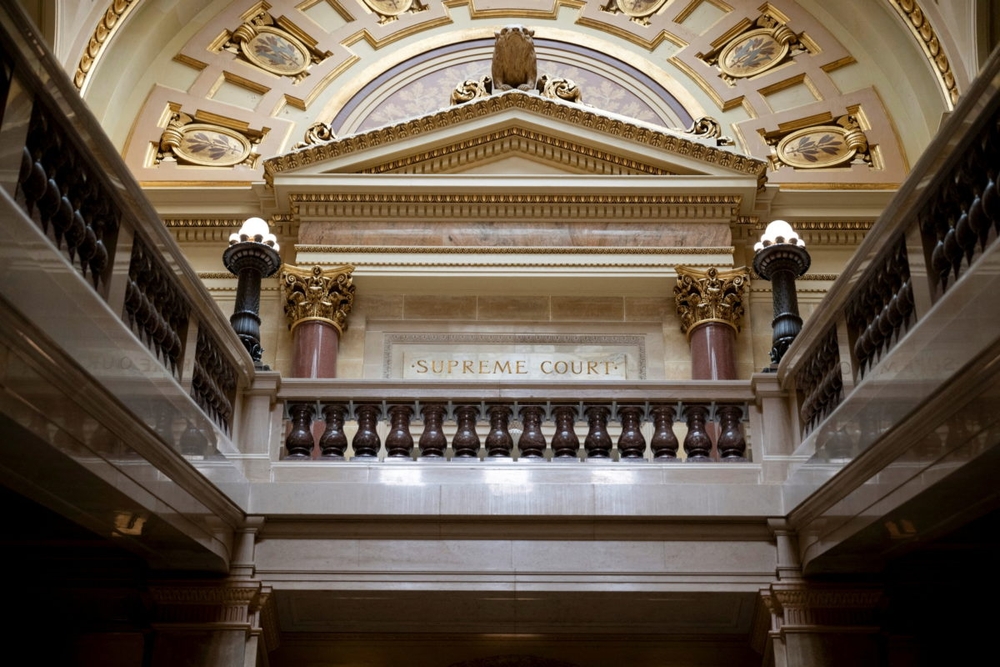
On a pivotal Tuesday in Wisconsin, the political trajectory of one of America’s most consequential swing states was altered. Democratic-backed candidate Chris Taylor was elected to the Wisconsin Supreme Court, defeating Republican-backed candidate Maria Lazar by a decisive, double-digit margin. This victory is the fourth consecutive win for liberal candidates in state Supreme Court races since 2020, guaranteeing a liberal majority on the court until at least 2030. The election centered sharply on the issue of abortion rights, with Taylor making it a cornerstone of her campaign, while Lazar had praised the U.S. Supreme Court’s overturning of Roe v. Wade as “very wise.”
The Stakes and Context
The implications of this election stretch far beyond a single judicial seat. Wisconsin has been a central battleground for the nation’s political and ideological wars for over a decade. Since 2011, Republicans have controlled the state legislature, enacting a host of laws that made Wisconsin a laboratory for conservative policy, including restrictions on abortion access, voter ID requirements, and Act 10, which effectively ended collective bargaining for most public workers. The state Supreme Court, under a conservative majority for 15 years, upheld many of these measures. Its role came into sharpest focus in 2020 when it came within one vote of siding with former President Donald Trump in his attempt to invalidate enough votes to overturn the presidential election results in the state.
Liberals regained control of the court in 2023, and this 2025 election was about consolidating that power. The liberal-majority court has already acted, striking down the state’s abortion ban and ordering new legislative maps. With another conservative justice retiring next year, Taylor’s win opens the path to a commanding 6-1 liberal majority. The election saw dramatically lower spending and national attention compared to the previous two cycles, precisely because majority control was not at stake—it was being fortified.
The Campaign and the Candidates
Chris Taylor, a state Appeals Court judge and former Democratic state legislator from Madison, ran a campaign focused relentlessly on the threat to reproductive freedom. She leveraged a massive fundraising advantage, outspending Lazar on television ads by a factor of nine. Maria Lazar, also an Appeals Court judge, framed Taylor as a “radical, extreme legislator” and a “judicial activist” who would bring a partisan agenda to the bench. Lazar’s professional background included defending Act 10, voter ID laws, and abortion restrictions while working for a Republican attorney general under former Governor Scott Walker. The race, though officially nonpartisan, was a clear ideological showdown.
Opinion: A Resounding Rebuke of Anti-Democratic Encroachment
This election result is nothing short of a political earthquake with profound constitutional resonance. It represents a deliberate and powerful choice by the people of Wisconsin to reclaim their institutions from the grip of partisan engineering and restore the primacy of individual liberty and democratic norms.
For years, Wisconsin has suffered under a regime that systematically sought to dilute popular sovereignty. Laws designed to suppress voter turnout, cripple organized labor, and dictate personal medical decisions were not just policy disagreements; they were an assault on the foundational American idea that government derives its just powers from the consent of the governed. The state Supreme Court, under its former conservative majority, often served as a rubber stamp for this agenda, bringing the state perilously close to subverting the will of the people in the 2020 election.
Chris Taylor’s victory, and her declaration that government must center “the people,” not “the billionaires, or the most powerful and privileged,” is a direct refutation of that corrosive philosophy. It is an emotional vindication for every citizen who felt their voice was being silenced by gerrymandered maps and their autonomy stripped by legislative overreach. The focus on abortion rights was not a diversion; it was the central front in a war over bodily autonomy and personal liberty—core tenets enshrined in the spirit, if not always the explicit letter, of our Constitution.
The Dangerous Illusion of “Judicial Activism”
The conservative critique of “judicial activism” levied against Taylor is profoundly ironic and disingenuous. For a decade and a half, the conservative court majority engaged in its own form of activism—upholding laws that restricted freedoms and cemented minority rule. Defending a law that ends collective bargaining or restricts ballot access is not passive jurisprudence; it is an active choice to endorse a particular political outcome. When Taylor’s campaign highlighted these issues, she was advocating for a judiciary that actively protects constitutional rights and democratic processes, which is its fundamental duty. The true activism is in using the bench to sustain power structures that defy popular will, not in dismantling them.
The Path Forward: Vigilance and Renewed Commitment
While this victory is cause for measured optimism, it is not a time for complacency. Wisconsin Republican Chair Brian Schimming’s call for his party to “stay united and continue fighting for our conservative values” signals that the pressure on democratic institutions will not relent. The forces that supported the prior status quo—including billionaires like George Soros and Elon Musk, who have previously injected funds into these races—remain potent.
The newly constituted court now bears an enormous responsibility. It must not become a mere instrument of the Democratic party, but a rigorous guardian of the rule of law for all citizens. Its upcoming docket, potentially including the constitutionality of Act 10, is a chance to demonstrate that principle. It must restore faith in a judiciary that interprets the law impartially, with a steadfast commitment to liberty, equality, and justice.
In the end, the story of Wisconsin’s 2025 Supreme Court election is a testament to the enduring power of civic engagement. In the face of concentrated power and a decade-long onslaught against progressive governance, the electorate organized, voted, and delivered a mandate. They chose a future where courts protect rights rather than revoke them, where elections reflect the popular will, and where the government serves the people. This is how democracy fights back—not with violence or fury, but with votes, with voices, and with an unshakeable belief in the promise of self-government. The work continues, but in Wisconsin, the flame of liberty burns brighter tonight.