
A Judicial Rebuke: The Courts Stand Firm Against Federal Overreach on Voter Data
Published
- 3 min read
The Facts of the Case
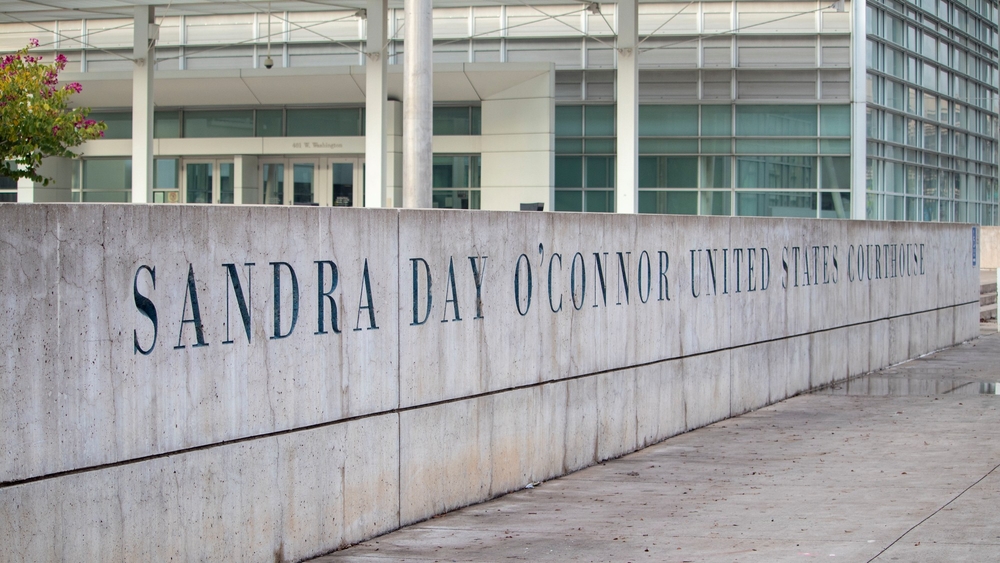
On Tuesday, the United States District Court for the District of Arizona delivered a decisive blow to an alarming federal initiative. Judge Susan Brnovich, appointed to the bench by President Donald Trump in 2018, dismissed with prejudice a lawsuit brought by the Trump administration’s Department of Justice (DOJ) against Arizona Secretary of State Adrian Fontes. The DOJ had sued after Secretary Fontes repeatedly refused its demands for an unredacted electronic copy of the state’s entire voter registration database. Judge Brnovich’s order means the case is permanently closed and cannot be refiled, marking a significant and final victory for the state of Arizona.
This legal battle began in July 2025 when the DOJ first requested the data, citing the Civil Rights Act of 1960. The federal government argued this law imposed a “sweeping obligation” on state officials to preserve election records and granted the Attorney General the power to obtain them. Arizona’s leadership, including Secretary Fontes and Attorney General Kris Mayes, stood firm, citing state and federal privacy laws that prohibited such a handover. In their joint statement following the ruling, they declared the decision “vindicates” their stance and pledged to continue defending voter privacy against “federal overreach.”
The National Context and Underlying Motives
Arizona’s case is not an isolated incident. It represents the sixth consecutive failure for the DOJ in its quest to gather voter registration information from every state. Federal judges in California, Massachusetts, Michigan, Oregon, and Rhode Island have all issued similar dismissals. In each ruling, the courts have uniformly concluded that the Civil Rights Act’s election record provisions do not apply to a state’s centralized, living voter database.
The DOJ framed this nationwide data collection as an effort to ensure compliance with federal voting laws. However, the administration’s own actions and statements revealed a far more troubling agenda. In March, a DOJ attorney admitted in a Rhode Island court that the voter data it had collected from compliant states was being shared with the Department of Homeland Security (DHS) to “scour voter rolls for noncitizen voters.” This admission laid bare the true objective: the creation of a de facto national voter database to hunt for individuals the administration claims are voting illegally.
This pursuit is built on a foundation repeatedly debunked by evidence. Former President Trump has consistently propagated the false claim that “tens of millions” of undocumented individuals vote. This myth has been thoroughly dismantled by multiple studies. Notably, an analysis by the Bipartisan Policy Center of data from the conservative Heritage Foundation found only 77 instances of alleged noncitizen voting across the entire nation between 1999 and 2023—a period encompassing dozens of federal election cycles. The center concluded there is “no evidence that noncitizen voting has ever been significant enough to impact an election’s outcome.” Furthermore, Arizona itself has had a proof-of-citizenship requirement for voter registration since 2004, making the federal demand there particularly superfluous.
The Legal Reasoning: A Defense of Federalism and Logic
Judge Brnovich’s order leaned heavily on the reasoning of a federal judge in Michigan who rejected a similar DOJ suit. The core of the legal argument is both technical and profoundly important. The court found that Arizona’s statewide voter registration list is not a “record” that must be preserved and produced under the federal law cited by the DOJ. The database is a living document created and maintained by state officials, constantly updated as required by other federal laws like the National Voter Registration Act (NVRA) and the Help America Vote Act (HAVA). The preservation mandate in the Civil Rights Act, the judge reasoned, applies to original documents like voter registration applications submitted by individuals, not to the dynamic administrative tool derived from them.
Perhaps most damningly, Judge Brnovich highlighted a fatal internal conflict in the DOJ’s argument. One section of the Civil Rights Act imposes criminal penalties for altering documents that must be preserved for the DOJ. Yet, the NVRA and HAVA require state officials to regularly alter—that is, update and correct—the electronic voter database. Adopting the DOJ’s interpretation would place state election officials in an impossible legal bind, criminalizing the very actions federal law commands them to perform. “Even if (the Civil Rights Act) includes a categorically ‘sweeping’ number of documents… it is not limitless,” Brnovich wrote, drawing a necessary boundary on federal power.
Opinion: A Necessary Stand for Liberty and Institutional Integrity
The dismissal of this case is more than a legal technicality; it is a vital affirmation of foundational American principles. At its heart, this was an attempt at federal coercion, an effort to strong-arm states into surrendering sensitive data on every registered citizen under a manufactured and pretextual legal theory. The concerted effort to build a national voter registry, justified by a phantom threat, echoes the tactics of authoritarian regimes, not a constitutional republic built on limited government and enumerated powers.
The involvement of the Department of Homeland Security transforms this from an academic legal dispute into a grave civil liberties concern. The fusion of voter data with immigration enforcement databases creates a chilling climate of suspicion and surveillance. It threatens to deter eligible voters—particularly in immigrant communities—from participating in the democratic process for fear of being caught in a sprawling federal dragnet. This is the very essence of voter suppression: not through poll taxes or literacy tests, but through the insidious creation of a pervasive atmosphere of fear and government monitoring.
The heroic figures in this story are the state officials like Adrian Fontes and Kris Mayes who had the courage to say “no” to the federal leviathan. They understood their oath was to their state constitution, their laws, and their citizens’ privacy, not to the whims of a federal administration pursuing a political agenda. Their victory, upheld by a Trump-appointed judge, demonstrates that the rule of law can still transcend partisan loyalty. Judge Susan Brnovich’s ruling is a testament to judicial independence, proving that a principled jurist will follow the law and the Constitution, not the political interests of the president who appointed them.
This string of six unanimous judicial defeats should serve as a permanent repudiation of this dangerous scheme. It affirms a crucial tenet of our federalist system: states are laboratories of democracy and sovereign entities, not mere administrative subunits of the national government. The voter registration process, a key gateway to democratic participation, must remain under the primary stewardship of the states, insulated from federal overreach and political manipulation.
Ultimately, the quest for a national voter database under the guise of stopping non-existent mass fraud is a solution in search of a problem. It wastes judicial resources, undermines public confidence, and encroaches on fundamental liberties. The courts have now spoken with a clear, unified voice. They have defended the constitutional balance of power, protected citizen privacy from unwarranted federal intrusion, and upheld the integrity of our election systems from those who would weaponize them. This is not just a win for Arizona; it is a win for every American who believes in limited government, the right to privacy, and the enduring strength of our democratic institutions. We must remain vigilant, for the forces that sought this power have not disappeared, and the next assault on our liberties may only be a pretext away.