
A Lifeline for Mothers: Missouri's Bipartisan Step to Confront a Maternal Mortality Crisis
Published
- 3 min read
The Legislative Action and Its Core Provisions
On a Thursday in Missouri, the state House of Representatives passed a wide-ranging and significant piece of health care legislation. At its most vital core, the bill, sponsored by Republican State Representative Tara Peters, expands Medicaid coverage for doula services for low-income families from six to sixteen visits, encompassing pregnancy, birth, postpartum, and lactation support. This provision stands as a direct response to a profound and enduring public health emergency within the state. The legislation also adds coverage for childbirth education classes for families in the state’s Show Me Healthy Babies program, aiming to equip parents with knowledge from the very start.
The bill’s passage was not narrow; it garnered 129 votes in favor, with 20 Republicans opposed, signaling a notable level of bipartisan agreement on the urgent need to address maternal health. Democratic State Representative LaKeySha Bosley passionately urged her colleagues to support the measure, stating with conviction that the doula provision “will save women’s lives.” Her words are not mere political rhetoric but are grounded in the stark and distressing reality of healthcare outcomes in Missouri.
The Grim Context: A State in Crisis
To understand the profound importance of expanding doula access, one must first confront the devastating statistics that motivated this legislative action. Missouri is a state grappling with a severe maternal mortality crisis. On average, approximately 70 women die each year in Missouri during childbirth or within the first postpartum year. Perhaps the most gut-wrenching detail is that the state itself has determined that 80% of these deaths were preventable. These are not unavoidable medical anomalies; they are systemic failures claiming lives.
The crisis is starkly inequitable. Data from the state’s Pregnancy-Associated Mortality Review board reveals a harrowing racial disparity: Black women in Missouri are three times more likely to die within a year of pregnancy than white women. Furthermore, the board’s assessment of deaths from 2017 to 2021 found that women insured through Medicaid—the very population targeted by this new bill—were seven times more likely to die within one year of pregnancy than their counterparts with private health insurance. In 2024, Medicaid covered 38% of all births in Missouri, underscoring the program’s critical role in the health of a vast number of mothers and infants.
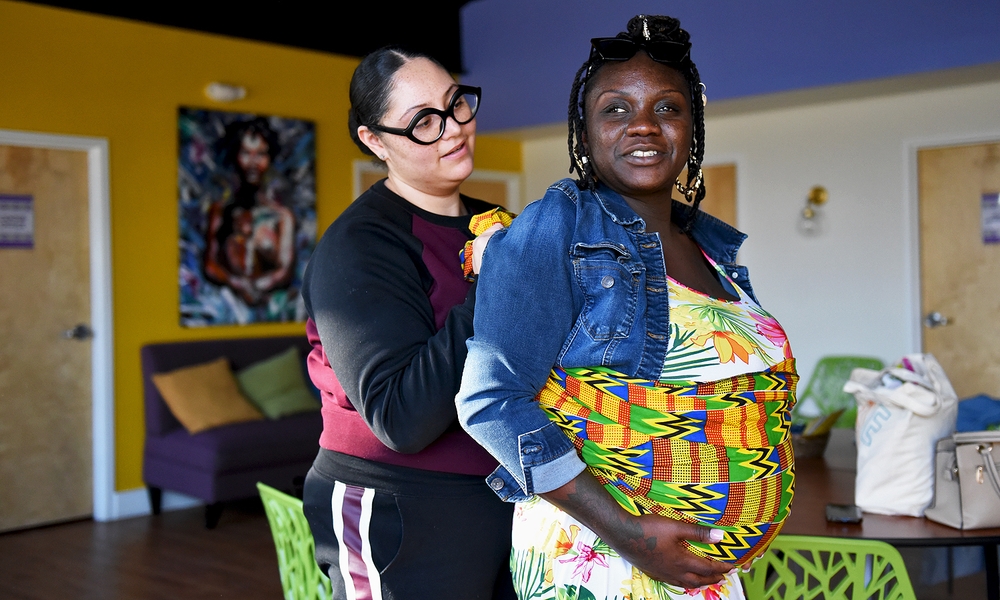
The state’s poor outcomes have earned it a dismal D- grade for preterm births from the March of Dimes. Into this bleak landscape, doulas have been consistently cited as a key part of the solution. Doulas are non-clinical birth workers who advocate for the physical and emotional wellbeing of mothers and families, providing continuous support, education, and advocacy. They do not deliver babies but instead support the person who is delivering, ensuring their voice is heard in the medical system. The Missouri Department of Social Services, recognizing an “immediate danger to the public health, safety or welfare of pregnant women,” had already enacted an emergency rule in late 2024 to authorize Medicaid reimbursement for doula services. Since then, over 625 Medicaid participants have accessed these vital services, proving both need and demand.
A Broader, and More Contentious, Legislative Package
It is crucial to note that the doula provision is embedded within a much larger omnibus health bill. This legislation, as described by Representative Peters, is “about getting government out of the way and letting our health care providers do what they do best.” The bill’s other aims include allowing local hospitals to expand investment opportunities; expanding delivery methods for epinephrine; targeting hospital workplace violence; increasing inspections of long-term care facilities; and expanding insurance options for small businesses.
However, the bill also contains several highly contentious items that have drawn scrutiny in public health circles. It would allow for the over-the-counter sale of ivermectin, a drug notoriously misappropriated during the COVID-19 pandemic against the guidance of federal health agencies. It also seeks to expand insurance coverage for some anesthesia services and establish various awareness months and days, from Blood Donor Awareness Month to a day for Pediatric Acute-Onset Neuropsychiatric Syndrome (PANS/PANDAS). This blending of urgently needed, evidence-based maternal health supports with politically charged and scientifically dubious provisions is a hallmark of contemporary lawmaking, presenting a complex package where vital progress comes with problematic baggage.
Opinion: A Vital Step on a Long Road to Justice
From a standpoint deeply committed to human dignity, liberty, and the fundamental promise of life, the expansion of doula services through Medicaid is not merely a policy adjustment; it is a moral imperative. A society that professes values of family and life must be judged by how it treats mothers at their most vulnerable. The data from Missouri paints a picture of a system that has failed these mothers catastrophically, with preventable death tolls and unconscionable racial disparities. This legislation represents a concrete, albeit initial, attempt to build a guardrail against that failure.
The bipartisan support for the doula provision is perhaps its most encouraging feature. In an era of paralyzing partisan division, the shared recognition that supporting mothers and saving lives should transcend political allegiance is a flicker of hope. Representative Bosley’s advocacy and Representative Peters’s sponsorship, from opposite sides of the aisle, demonstrate that the cause of maternal health can and must be a unifying one. This is governance aligning, however imperfectly, with the foundational principle of promoting the general welfare.
However, genuine commitment to democratic principles and human welfare demands clear-eyed criticism of the bill’s other facets. Packaging life-saving doula access with provisions like over-the-counter ivermectin is a legislative tactic that risks undermining public trust in evidence-based medicine. It inserts ideological battles into a space that should be solely dedicated to health outcomes. A true commitment to “getting government out of the way” would mean funding and empowering proven solutions—like doulas and childbirth education—without simultaneously promoting policies that contradict the consensus of the public health community.
The racial disparity highlighted by the data is a stain on the state’s conscience and a direct contradiction to the promise of equal protection. Expanding doula access is a targeted intervention that could begin to address this injustice. Doulas have been shown to improve outcomes for Black mothers specifically by providing culturally competent advocacy in medical settings where implicit bias can be lethal. Therefore, this policy move is not just about health; it is a small but necessary step toward racial equity and justice.
Ultimately, the passage of this bill by the House is a beginning, not an end. The Senate must now take it up. More importantly, the state must ensure robust implementation, adequate reimbursement rates for doulas, and widespread education so that every eligible mother knows this support is available. The establishment of awareness months and days within the bill, while seemingly symbolic, can also play a role in sustained public education and destigmatization.
In conclusion, the core of this Missouri health bill—the expansion of doula and childbirth education support for low-income mothers—is a powerful and positive development. It acknowledges a profound societal failing and chooses to act. It aligns with the deepest American values of life, liberty, and the pursuit of happiness by ensuring more mothers have the chance to experience the joy of parenthood safely. While the broader bill is muddied by politicized additions, the heart of it beats with a compassionate, bipartisan recognition that supporting mothers is the bedrock of a healthy, free, and prosperous society. The work is far from over, but for the first time in a long time for Missouri’s mothers, there is a tangible sign of hope.