
A Litany of Deception: Kennedy's HHS Peddles Pseudoscience While Undermining Native American Health
Published
- 3 min read
The Facts of the Announcement
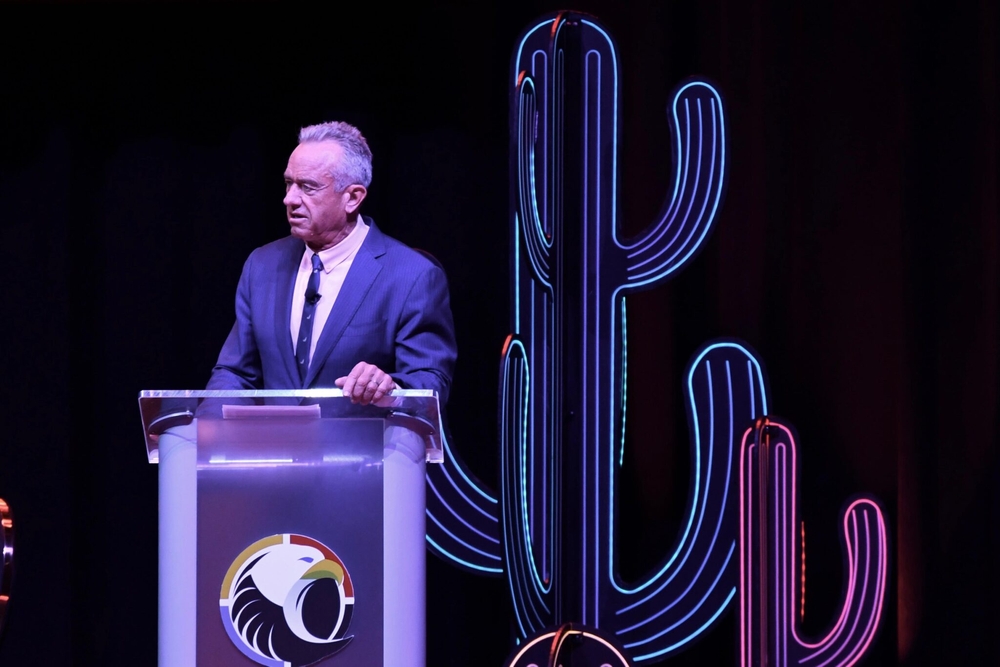
On a stage at the Gila River Indian Community’s Wild Horse Pass Casino, United States Health and Human Services Secretary Robert F. Kennedy Jr. addressed a gathering of Native American leaders during the annual Tribal Self Governance Conference. The setting was the final stop of a five-day “Take Back Your Health” tour in Arizona. Secretary Kennedy used this platform to announce a significant proposed budgetary increase for the Indian Health Services (IHS), an agency within his department that provides healthcare to members of federally recognized tribes. The increase, part of President Donald Trump’s budget proposal for 2027, would amount to $1.1 billion, raising the IHS budget to a total of $9.1 billion—an 11% raise that Kennedy touted as an “emblem of my personal commitment.”
Alongside this financial announcement, Kennedy unveiled a new “upside-down food pyramid” and made a startling medical claim to the audience. He stated, “Type 2 diabetes is curable. You can reverse the diagnosis by changing the food source.” He directly linked this to the high rates of Type 2 diabetes within Arizona’s Indigenous communities, suggesting that the elimination of “ultra-processed” foods was the solution. This statement, however, is factually inaccurate according to established medical science. While dietary changes are a crucial component of managing Type 2 diabetes, the disease is not considered curable; it is a chronic condition that can be put into remission but not eliminated.
The Omitted Context: Cuts and Rollbacks
While Secretary Kennedy highlighted this single budget increase, his speech conspicuously omitted the broader context of the administration’s health policy. The proposed IHS boost occurs simultaneously with massive proposed cuts to Medicaid, a program upon which many Native Americans rely for healthcare services that IHS does not provide. Furthermore, the Secretary did not address reports, such as those from ProPublica, detailing how under his leadership, IHS has deliberately ramped down its efforts to encourage childhood vaccinations. The agency has reportedly reframed vaccination as a “personal choice” rather than a critical public health imperative, a shift that contradicts the CDC’s designation of declining rural vaccination rates as a critical public health issue.
Kennedy also promoted a $50 billion Rural Health Transformation Program. However, a critical caveat for tribal nations is that they cannot apply for these funds directly; they must rely on state governments to consider their needs when allocating the money, adding a layer of bureaucratic uncertainty to already strained healthcare systems.
The Reaction from Tribal Leadership
The response from those present was measured and grounded in a long history of federal promises. Latisha Miller, Vice chair of the Paskenta Band of Nomlaki Indians, provided a poignant perspective. Having attended these conferences for three decades, she noted that the conversations remain frustratingly similar. She expressed a hope that Kennedy would follow through on his promises but emphasized that sincerity is measured in actions, not words. Miller offered a particularly powerful critique of Kennedy’s dietary advice, pointing out the profound irony of a federal official—representing the same government that historically forced Native communities onto reservations and onto a diet of government commodity processed foods—now lecturing them on healthy eating. “I grew up on commodities, processed foods that (the government) gave us,” she said, highlighting the deep, systemic origins of the very problems Kennedy was oversimplifying.
Opinion: The Dangerous Confluence of Ideology and Incompetence
The events described in this article are not merely a political announcement; they represent a dangerous and irresponsible confluence of ideological crusading and gross governmental incompetence. As a staunch defender of democratic institutions and the rule of law, it is horrifying to witness the nation’s top health official using his platform to disseminate medical misinformation. The role of the HHS Secretary is to steward public health based on evidence and scientific consensus, not to champion personal, anti-science beliefs that have been thoroughly debunked.
The Betrayal of Scientific Integrity
Secretary Kennedy’s assertion that Type 2 diabetes is “curable” through diet is a profound betrayal of scientific integrity. It is a simplistic and dangerous falsehood that misleads vulnerable populations about the nature of a serious chronic disease. This is not a matter of semantic debate; it is a fundamental misrepresentation that can lead individuals to forgo necessary medical treatment in the belief that dietary changes alone will provide a cure. This approach echoes Kennedy’s long-standing and well-documented anti-vaccination stance, which has now been bureaucratically embedded into IHS policy. To deliberately weaken childhood vaccination efforts is to play Russian roulette with the health of Native American children, undermining decades of public health progress for the sake of an ideological agenda. This is an unforgivable abuse of power that places political and personal beliefs above the sacred duty to protect citizens’ health.
The Illusion of Generosity
The touting of an IHS budget increase must be viewed with extreme skepticism within the larger framework of the administration’s proposed budget. Presenting an 11% raise for one program while simultaneously proposing deep cuts to Medicaid is a classic political sleight of hand. It creates an illusion of generosity and commitment while enacting policies that will likely result in a net loss of healthcare access and quality for Native Americans. Medicaid is a vital supplement to IHS, covering services like specialized care, emergency transport, and long-term care that IHS often cannot provide. Slashing Medicaid to fund a marginal IHS increase is like giving someone a new garden hose while shutting off their water main. It is a hollow victory that will leave tribal nations worse off overall. This is not fiscal responsibility; it is a cruel calculus that sacrifices the health of the marginalized for political talking points.
The Insult of Superficial Solutions
Perhaps the most galling aspect of Kennedy’s presentation was the suggestion that complex, systemic health disparities rooted in historical trauma, poverty, and federal policy can be solved by simply telling people to eat better. Latisha Miller’s reaction cuts to the heart of the issue: the audacity of the federal government to offer dietary advice after having created the conditions of dependency on unhealthy foods is staggering. It reflects a deep lack of historical awareness and respect. True support for tribal self-determination, which Kennedy claimed the administration champions, involves empowering communities with resources and authority to develop their own solutions, not peddling pseudoscientific quick fixes. It means fully funding IHS to meet its obligations, protecting Medicaid, and supporting initiatives that tribes themselves identify as priorities, such as revitalizing traditional food systems on their own terms.
Conclusion: A Call for Accountability and Evidence-Based Governance
The performance by Secretary Kennedy at the Tribal Self Governance Conference was a masterclass in misinformation and misdirection. It showcased a department led by an individual whose commitment to ideology appears to far outweigh his commitment to evidence, truth, and the well-being of the American people, particularly its most vulnerable communities. This is not just poor policymaking; it is an active undermining of public health and a violation of the public trust.
A functioning democracy relies on institutions led by officials who respect the rule of law and the principles of sound science. When the head of Health and Human Services deliberately propagates falsehoods and obscures harmful policy changes with empty promises, he damages the very fabric of our governance. We must demand better. We must insist that our public health officials be guided by data, not dogma, and that their actions match their rhetoric. The health and sovereignty of Native American nations depend on it, and the integrity of our nation’s commitment to justice and liberty demands it. The conversation cannot remain the same for another 30 years; it is time for action that is rooted in truth, respect, and genuine partnership.