
A Moral Line in the Sand: When the Pontiff Condemns the President
Published
- 3 min read
The Stark Facts of a Grave Escalation
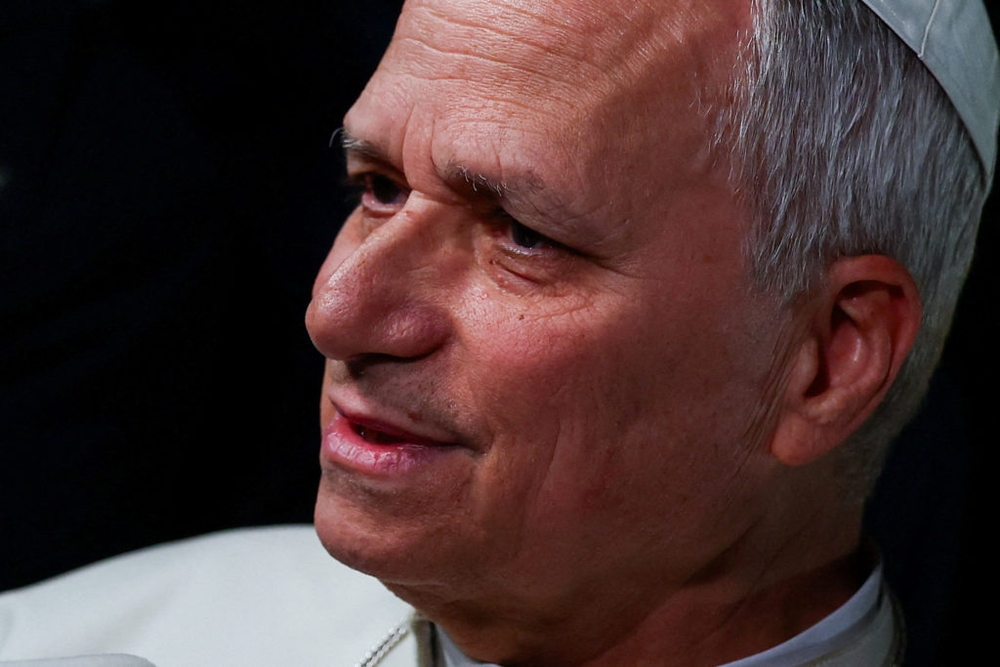
On a Tuesday that will be etched into the annals of contemporary geopolitical tension, Pope Leo XIV delivered a public rebuke of profound moral gravity. Standing outside his residence in Castel Gandolfo, the leader of the Roman Catholic Church responded directly to a threat issued earlier that day by United States President Donald Trump. The President had declared that if Iranian leaders did not agree to a deal concerning the Strait of Hormuz, “a whole civilization will die tonight, never to be brought back again.” President Trump had imposed an 8 p.m. Eastern deadline and had spoken of a “plan” to target Iran’s power plants and bridges—infrastructure critical to civilian life.
The Pope’s response was unequivocal. He labeled the threat “truly unacceptable,” framing it not merely as a breach of international law but, more importantly, as a deep moral failing. He invoked the image of “many innocent people, so many children, so many elderly, completely innocent,” who would become victims of an escalating conflict he termed “an unjust war.” His core message was a call to “all people of goodwill” to seek peace and reject violence.
This spiritual condemnation found a swift echo in the United States. Archbishop Paul Coakley, speaking for the U.S. Conference of Catholic Bishops, released a powerful statement of alignment. He explicitly stated that “the threat of destroying a whole civilization and the intentional targeting of civilian infrastructure cannot be morally justified.” Archbishop Coakley called on President Trump to “step back from the precipice of war” and pursue negotiation.
The Context: Norms, Laws, and the Shadow of War Crimes
To understand the magnitude of this moment, one must contextualize the statements within the framework of established international norms and laws. The deliberate targeting of civilian infrastructure—such as power plants and bridges essential for water, electricity, and medical services—is explicitly prohibited under the Geneva Conventions and customary international humanitarian law. Such acts are widely considered war crimes. When a sitting U.S. president publicly muses about such a plan, it represents a staggering normalization of rhetoric that has long been relegated to the realm of the unthinkable among democratic nations.
Furthermore, the threat of civilizational annihilation transcends mere military strategy; it enters the realm of existential terror. It is a rhetoric of total war, incompatible with the principles of proportionality and distinction that underpin just war theory—a doctrine with deep roots in Catholic moral theology itself. The Pope’s intervention, therefore, is not merely a political opinion but a defense of a foundational ethical tradition against what he perceives as its gross violation.
Opinion: The Profound Significance of a Pontifical Rebuke
This event is not a simple diplomatic spat. It is a seismic moment that reveals several alarming fractures in our global and domestic landscape. First and foremost, it highlights a dangerous erosion of the guardrails of democratic discourse and statecraft. When the most powerful office in the world employs language synonymous with genocide and war crimes, it fundamentally degrades the standards of international dialogue and emboldens autocrats everywhere. The Pope’s condemnation serves as a necessary corrective, a reminder from a millennia-old institution of the timeless moral limits of power.
Secondly, the unified front presented by the Vatican and the U.S. Catholic bishops is significant. It underscores that this is not a left-right issue, but a right-wrong issue. In a hyper-partisan age, moral clarity that transcends political tribalism is both rare and essential. Archbishop Coakley’s statement is a courageous act of pastoral duty, placing the defense of human life and dignity above any temporal political loyalty. It is a model for other faith leaders and civic institutions in standing against rhetoric that dehumanizes an entire population.
Thirdly, this episode lays bare the fragility of the post-World War II international order. The norms against targeting civilians and the frameworks for conflict resolution are being stress-tested to a breaking point. The Pope’s call for negotiation and peace is not naive; it is the only sustainable path forward. A war initiated or escalated on such terms would be catastrophic, destabilizing the Middle East further, causing incalculable human suffering, and dragging the United States into another protracted, morally ambiguous conflict. The human cost—those innocent children and elderly the Pope cited—would be a permanent stain on the nation’s conscience.
The Path Forward: Reclaiming Principle Over Power
As a thinker committed to democracy, liberty, and the rule of law, I view this moment with profound alarm and a sense of duty. The principles enshrined in our Constitution and Bill of Rights are not merely for domestic application; they inspire a vision of America’s role in the world that should be one of principled leadership, not brute intimidation. Threatening wholesale destruction is the antithesis of liberty; it is the language of tyranny.
The united voice of the Catholic Church, from the Pope to the U.S. bishops, provides a critical fulcrum for civil society to rally around. Citizens of all faiths and none must demand that their leaders unequivocally reject the rhetoric of annihilation and the targeting of civilians. We must insist on a foreign policy grounded in smart diplomacy, robust alliances, and unwavering respect for international law. Congress must reassert its constitutional role in matters of war and peace, providing rigorous oversight and check on executive power.
Ultimately, Pope Leo XIV has drawn a moral line in the sand. On one side stands the precarious, violence-tinged path of ultimatums and threats against civilians. On the other stands the difficult but righteous path of dialogue, law, and a commitment to our shared humanity. The choice for Americans, and for their president, is clear. We must step back from the precipice, not for the sake of political expediency, but for the sake of who we are as a nation founded on the ideal that all people are endowed with inalienable rights. To ignore this call is to betray those very ideals and to march blindly into a darkness from which our civilization, and others, may never fully return.