
A Plea for Patience Without a Plan: The Peril of Protracted Conflict
Published
- 3 min read
The Facts: A Presidential Address and a Disconnected Reality
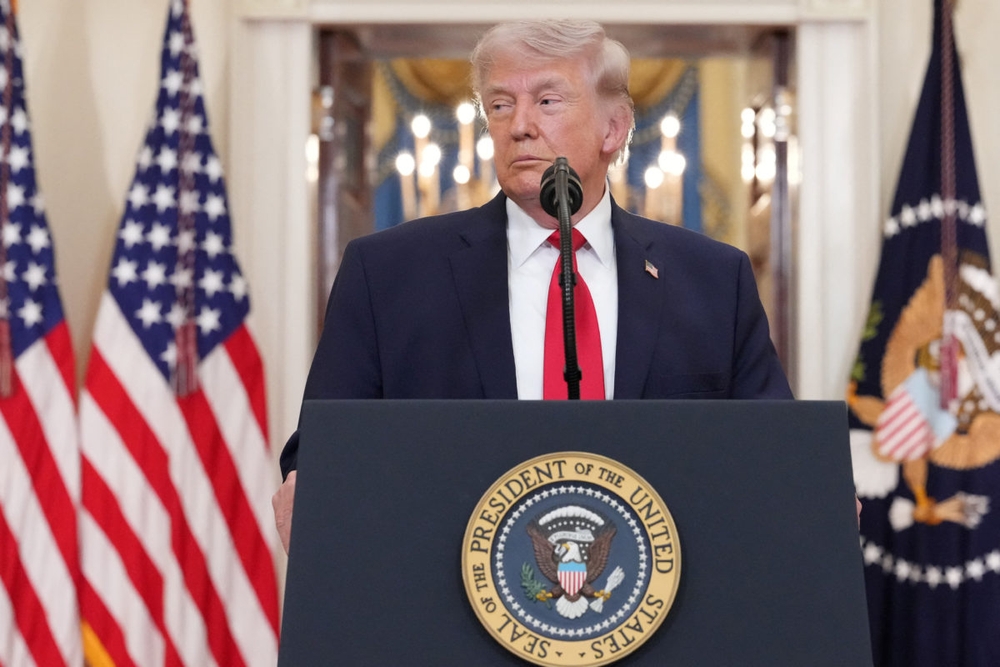
On a Wednesday evening, one month into a significant military engagement with Iran, President Donald Trump addressed the nation. The core message of his prime-time speech was a request for American patience, assuring the public that military objectives would be completed “shortly” and that the operation had been “so powerful, so brilliant.” He detailed the devastation wrought upon Iran, claiming the country was “eviscerated” and “really no longer a threat,” framing the conflict as an investment in future generations. Notably, he offered no specific timeline for conclusion beyond stating the U.S. would continue to hit Iran “very hard” for the next two to three weeks.
The address was delivered against a backdrop of significant domestic and international strain. According to an AP-NORC poll conducted in mid-March, approximately 59% of Americans believe U.S. military action against Iran has been excessive. Economic anxieties are acute, with 45% of Americans extremely or very concerned about affording gasoline, a sharp increase from 30% shortly after the President’s reelection. Globally, oil prices have surged past $110 a barrel, Asian stocks have fallen, and the critical Strait of Hormuz—a vital chokepoint for global oil shipments—remains effectively closed by Iran, despite U.S. claims of victory.
President Trump made a direct, if historically selective, appeal for public forbearance, listing the durations of past American wars from World War I to Iraq. He suggested NATO allies should “build up some delayed courage” and buy American oil, while offering no coherent plan for securing the Strait of Hormuz. He also set a stark ultimatum, threatening to simultaneously hit “each and every one” of Iran’s electric generating plants if a deal to open the strait is not reached. The speech contained mixed signals, with the President stating he was “OK” with public demands to “just win” and come home, while simultaneously threatening massive new escalation.
The Context: A War of Choice and Its Consequences
The conflict, launched in conjunction with Israel, was initiated with the stated primary objective of ensuring Iran would “never have a nuclear weapon.” However, the President’s rationale has shifted, and the operational goals have become murky. The article reveals a White House struggling with the unintended consequences of its own actions. Iran, while “badly battered,” continues to land “effective blows” and project more regional power, particularly through its control of the Hormuz Strait. The war has proceeded without meaningful consultation with global allies, who are now expected to help manage the resulting economic and security crisis.
Domestically, the political landscape is fractured. Democratic critics, exemplified by Senator Chris Murphy of Connecticut, lambasted the address as “grounded in a reality that only exists in Donald Trump’s mind.” Murphy argued the U.S. is “losing this war,” spending billions, losing American lives, and appearing “feckless” on the world stage. The President, meanwhile, attempted to project an image of controlled strength, claiming “all the cards” and placing Iran’s nuclear material under “intense satellite surveillance.” He notably avoided signaling any preparation for a ground troop invasion, an omission that speaks to the conflict’s uncertain trajectory and the limits of air and missile campaigns.
Opinion: The Hollow Echo of “Just Win” and the Abdication of Strategic Clarity
The most alarming aspect of this situation is not the complexity of Middle Eastern geopolitics, which is a constant, but the profound deficiency of strategic leadership emanating from the White House. A presidential plea for patience is not, in itself, unreasonable during wartime. However, such a plea becomes a dereliction of duty when it is divorced from transparency, a coherent endgame, and a respectful engagement with the democratic will of the people. Asking citizens to endure economic pain, anxiety, and the risk of their loved ones’ lives requires more than boasts of “brilliance” and vague promises of a conclusion “shortly.”
President Trump’s speech was a masterpiece of dissonance. He declared Iran “no longer a threat” in one breath, and in the next threatened to systematically destroy its civilian energy infrastructure—an act that would constitute a dramatic escalation and likely humanitarian catastrophe. He claimed total control, yet admitted the key strategic objective, reopening the Strait of Hormuz, remained unmet, dependent on either Iranian capitulation or allied assistance he has done little to cultivate. This is not a strategy; it is wishful thinking punctuated by threats.
The AP-NORC poll numbers are a deafening shout from the American public, a cornerstone of our democratic system. When a clear majority believes military action has gone too far, a leader committed to democratic principles must pause and reassess, not double down on rhetoric. The President’s lament that it is “unfortunate” there isn’t patience to seize Iran’s oil reveals a troubling mindset—one that views national patience as an asset to be spent on maximalist gains rather than a sacred trust to be honored in pursuit of clear, lawful, and necessary objectives.
Senator Murphy’s critique, while partisan, touches on vital truths. A war that leaves Iran with greater control of a critical global chokepoint, that destabilizes world markets, and that alienates traditional allies cannot be labeled a success, no matter how many targets are struck. The strength of a nation is not measured solely in its capacity to inflict damage, but in its wisdom to apply force judiciously, its diplomatic skill to build coalitions, and its moral clarity to distinguish between military necessity and punitive destruction.
The Principles at Stake: Democracy, Liberty, and Responsible Statecraft
As a firm supporter of the Constitution, the rule of law, and democratic accountability, this moment is deeply disquieting. The power to wage war is the most solemn responsibility entrusted to a president. It must be exercised with rigorous honesty, strategic foresight, and profound respect for the sacrifices demanded of the citizenry. When a leader fails to articulate a plausible path to peace, dismisses public concern, and operates in a reality detached from verifiable facts—such as the ongoing strategic impact of a closed Hormuz Strait—they undermine the very institutions that constrain power and protect liberty.
The human cost, both American and Iranian, must be central to our judgment. Prolonging a conflict without a defined strategic purpose is antithetical to our values. The suggestion of targeting Iran’s power grid—critical for hospitals, water treatment, and civilian life—moves into territory that challenges the laws of armed conflict and basic humanity. Our nation’s greatness is rooted in its defense of human dignity, not in its capacity to inflict collective punishment.
In conclusion, the President’s address was not a roadmap to resolution but a symptom of a deeper malady: the substitution of spectacle for statecraft. The American people deserve better than a plea for patience based on vanity. They deserve a clear-eyed assessment of the stakes, a viable diplomatic and military strategy developed in concert with allies, and an honest conversation about the costs and expected benefits. True strength lies not in refusing to acknowledge complications, but in navigating them with principle, clarity, and an unwavering commitment to the democratic consent of the governed. The current path—marked by bluster, contradiction, and strategic vagueness—risks not just a protracted war, but a corrosive erosion of trust in the institutions that are the bedrock of our republic. We must demand a higher standard.