
A Promise of Voices: The Cruel Road to Epstein Accountability
Published
- 3 min read
The Facts: A Committee’s Commitment and a First Lady’s Call
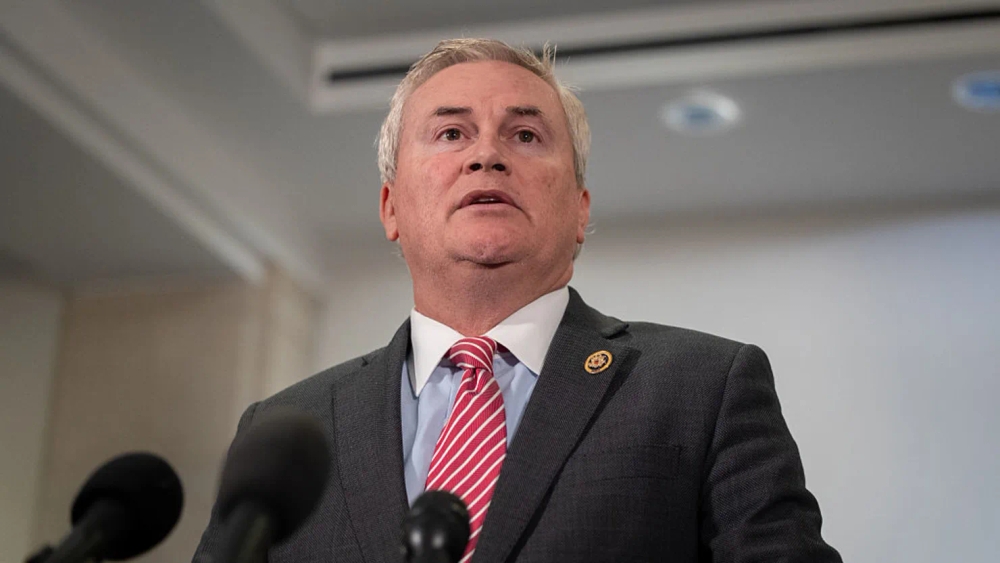
In a development that cuts through the dense fog of speculation and legal wrangling surrounding the late financier and convicted sex offender Jeffrey Epstein, House Oversight and Government Reform Committee Chairman James Comer (R-KY) has made a definitive promise. Following a public statement from First Lady Melania Trump urging Congress to provide “a public hearing specifically centered around the survivors,” Chairman Comer confirmed that his committee will hold hearings featuring the victims of Epstein and his procurer, Ghislaine Maxwell. This announcement, made in a Fox News interview, represents a tangible, if belated, step toward congressional scrutiny of one of the most grotesque abuse networks in modern memory.
The context, as outlined in recent reports, is a sprawling and complex investigation. The House Oversight Committee is currently in the midst of taking depositions from a roster of high-profile individuals connected to Epstein’s world. The scheduled interviewees include Microsoft co-founder Bill Gates, Commerce Secretary Howard Lutnick, billionaire Ted Waitt, and former federal jail guard Tova Noel. The committee had also planned to depose former Attorney General Pam Bondi, but that session was canceled after the Department of Justice asserted she was subpoenaed in her official capacity. The dynamic is charged, with Democrats on the committee threatening contempt charges should Bondi fail to comply with future demands.
Chairman Comer emphasized that hearings with victims have always been part of the plan, stating, “My attorneys on the Oversight Committee have been communicating on a constant basis for months with the attorneys representing Epstein victims.” He acknowledged the profound difficulty of such testimony, noting, “There are some victims who are willing to come in. Most victims aren’t, and I completely understand that.” The victim hearings are slated to occur after the current phase of depositions from associates is complete. The First Lady’s intervention, which she framed as a demand to end “lies” linking her to Epstein, added a unexpected and politically potent voice to the call for survivor-centered proceedings, even drawing bemused commentary from late-night host Jimmy Kimmel.
The Context: A Labyrinth of Power, Secrecy, and Suffering
To understand the weight of this promised hearing, one must recall the staggering scale of the Epstein saga. This is not a simple criminal case; it is a saga of immense wealth and political connectivity being leveraged to allegedly facilitate and conceal the sexual abuse and trafficking of young women and girls. Epstein’s death in a Manhattan jail cell in 2019, ruled a suicide, left a gaping void in public accountability, transforming a living defendant into a specter haunting countless civil suits and investigations. The release of court documents has slowly peeled back layers, revealing a social and professional network that included princes, politicians, academics, and billionaires.
The House Oversight Committee’s investigation sits within this fraught landscape. Its work is ostensibly aimed at understanding the institutional failures—within the justice system, within financial institutions that facilitated his dealings, and within the social circles that normalized his presence—that allowed Epstein to operate for decades. The depositions of figures like Bill Gates and Leon Black are seeks to map the extent of this network. Yet, there is a constant risk that such an inquiry becomes a spectacle of names rather than a sober inquest into systemic rot and victim trauma.
Opinion: The Promise and Peril of a Public Hearing
The commitment to public hearings for Epstein’s victims is, on its face, a morally unambiguous good. For years, these individuals have been reduced to footnotes in a story dominated by the powerful—their trauma secondary to the celebrity of the abuser and his associates. A public, congressional platform forces a national audience to witness not just the crime, but its human cost. It is an act of recognition, a formal declaration by a co-equal branch of government that these voices matter and their stories are central to understanding a profound failure of justice. In a republic built on the principle that all are equal before the law, giving the powerless a podium in the halls of power is a powerful symbolic redress.
However, this promise arrives shrouded in a thicket of caveats and concerns that must be addressed with utmost seriousness. Chairman Comer’s acknowledgment that most victims are unwilling to testify publicly is a devastating reminder of the enduring, life-altering nature of this trauma. Reliving such horror under the blinding klieg lights of a congressional hearing and the subsequent media frenzy is an ask of almost unimaginable courage. The committee must, therefore, implement protections of the highest order: allowing testimony in a manner that safeguards the mental health and privacy of survivors, whether through closed sessions, blurred faces, or voice distortion for public broadcast. The hearing must be for them, not for political theater or ratings.
This leads to the second, more profound concern: the inescapable political context. The investigation is being led by a Republican committee chairman, and the most prominent recent call for victim hearings came from a Republican First Lady. This immediately invites skepticism about motive. Will this process be a genuine, non-partisan pursuit of truth wherever it leads, or will it be subtly—or not so subtly—steered to embarrass political adversaries while soft-pedaling questions about associates within one’s own sphere? The American people have grown weary of investigations where the outcome seems predetermined by tribal allegiance. For this hearing to have legitimacy, it must be scrupulously fair and its scope genuinely expansive. The question “Who enabled Epstein?” cannot have a partisan answer.
The depositions of powerful figures like Bill Gates are necessary, but they risk becoming the headline-grabbing focus. The true heart of the matter, the reason this scandal continues to sear the public conscience, is the abuse of the vulnerable by the powerful. Therefore, the victim hearings must not be an afterthought or a concluding chapter. They should be the foundational testimony against which all other evidence is measured. The detailed, painful accounts of survivors are the most credible indictment of not just Epstein, but of the entire ecosystem that allowed him to thrive. They speak to the failure of law enforcement, the moral bankruptcy of social complicity, and the corrosive effect of extreme wealth and influence.
Furthermore, these hearings must aim for more than catharsis. They must produce actionable recommendations. What specific legislative reforms can prevent another Epstein? How can financial systems be better weaponized against human trafficking? What changes are needed in prison oversight and prosecutorial independence? Without a concrete legislative outcome, the hearings risk being a performative exercise in public grief that ultimately changes nothing.
Conclusion: A Test of Institutional Integrity
In the end, Chairman Comer’s promise is a test. It is a test of Congress’s capacity to conduct a solemn, painful, and morally urgent investigation in a way that transcends politics. It is a test of our nation’s commitment to the principle that justice, however delayed, must be pursued without fear or favor. The victims of Jeffrey Epstein have been failed by almost every institution they should have been able to trust: law enforcement, the courts, and the informal institutions of elite society.
This congressional hearing represents a chance for one branch of government to begin, in a small way, to redress that balance. To do so effectively, it must center the survivors with compassion and respect, follow the evidence with relentless integrity regardless of political affiliation, and channel the undeniable public outrage into durable, systemic change. The world will be watching to see if the United States Congress can meet this moment not as Republicans or Democrats, but as Americans upholding a fundamental promise of liberty and justice for all. The voices that have been silenced for so long deserve nothing less than our absolute commitment to truth. Their courage in speaking out demands a reciprocal courage from our leaders: the courage to listen, to learn, and to act without partisan blinders, forever altering the systems that allowed such darkness to flourish in the first place.