
A Steward, Not an Owner: The Judicial Defense of the White House and the Rule of Law
Published
- 3 min read
The Facts of the Case
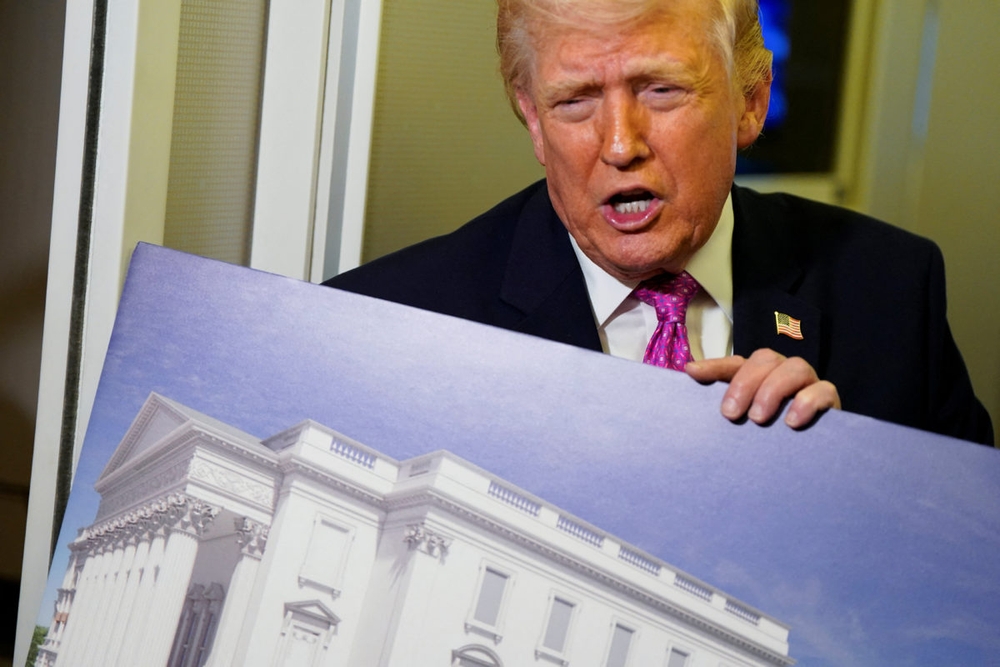
On Tuesday, a federal district judge in Washington, D.C., delivered a stunning legal and symbolic blow to the Trump administration’s ambitions for the White House grounds. U.S. District Judge Richard Leon, appointed by President George W. Bush, granted a preliminary injunction requested by the National Trust for Historic Preservation, temporarily halting the construction of a proposed $400 million ballroom. This project, personally championed by President Donald Trump, had already resulted in the demolition of the historic East Wing of the White House to make space for a 90,000-square-foot structure.
The core factual and legal issue is stark: The administration proceeded with this massive alteration to one of the nation’s most iconic landmarks without seeking congressional approval. Judge Leon, in a forceful opinion, concluded that “no statute comes close to giving the President the authority he claims to have.” He underscored a foundational principle, writing, “The President of the United States is the steward of the White House for future generations of First Families. He is not, however, the owner!” The administration quickly filed a notice to appeal, with President Trump expressing frustration, arguing that past construction did not require such approval.
The ruling arrived amid a complex procedural landscape. The National Capital Planning Commission was scheduled to consider approval just days later. Judge Leon suspended enforcement of his order for 14 days, acknowledging logistical complexities but firmly rejecting the administration’s legal argument that Congress had ceded its authority over such projects. He explicitly exempted work related to White House safety and security from the injunction.
The Context and the Cast of Characters
This legal battle did not emerge in a vacuum. It is the culmination of a rapid, controversial process initiated by the White House over the summer. By late October, the East Wing was gone. The President bypassed the standard review processes of bodies like the Commission of Fine Arts, though he has since appointed allies to such panels. The National Trust for Historic Preservation, led by its president and CEO Carol Quillen, filed suit in December. Their attorney, Thaddeus Heuer, successfully argued the urgency of the matter as construction loomed.
In court, Justice Department attorney Jacob Roth defended the administration’s position, attempting to draw parallels between this project and past renovations. Judge Leon expressed visible skepticism, dismissing comparisons and emphasizing the unique status of the White House as “an iconic symbol of this nation.” The administration’s written arguments suggested that controversial projects often become beloved, a point that did not sway the court on the central question of legal authority.
This ballroom project is but one facet of a broader pattern of President Trump seeking to leave a permanent, physical imprint on Washington. From alterations to the Rose Garden and South Lawn to proposed renovations of golf courses and the Kennedy Center, there has been a consistent drive to remake federal property and national symbols according to a personal vision, often with private funding but with profound public implications.
Opinion: The Principle of Stewardship Versus the Impulse of Ownership
The ruling by Judge Leon is far more than a temporary halt to a construction project; it is a ringing reaffirmation of a constitutional philosophy that is under sustained assault. At its heart, this case is about whether the Republic’s most sacred institutions are held in trust for the people or exist as the personal fiefdom of the temporary occupant of the Oval Office. The judge’s distinction between “steward” and “owner” is not merely poetic; it is the bedrock of a republican democracy.
The White House is not a hotel to be gut-renovated. It is not a corporate headquarters to be rebranded. It is the living symbol of the American presidency and, by extension, of the continuity of American government. Every alteration to its structure is an alteration to our collective heritage. To proceed with such a radical, permanent change—the destruction of an entire wing—without the explicit consent of the people’s representatives in Congress is an act of breathtaking arrogance and a direct threat to the system of checks and balances. It embodies a dangerously monarchical view of executive power, where the will of one man supersedes established law and process.
President Trump’s defense, that “we built many things at the White House over the years” without approval, is a classic tactic of normalization. It seeks to blur the lines between routine maintenance, security upgrades, and a vanity project of unprecedented scale and cost. His subsequent focus on the security elements allowed to continue—bunkers, bio-defense systems—feels like a deliberate diversion, an attempt to cloak a personal legacy project in the necessary mantle of national security. While security is paramount, it cannot be used as a Trojan horse for projects that lack fundamental legal legitimacy.
The Assault on Institutions and the Role of the Courts
This episode is a microcosm of a larger, more ominous trend: the systematic undermining of independent institutions and norms that constrain raw political power. By stocking oversight commissions with allies and attempting to sidestep congressional authority, the administration displayed a contempt for the pluralistic, deliberative processes that protect public assets from capricious change. The lawsuit by the National Trust was not initiated by a political rival but by a non-partisan organization dedicated to preservation—a civic institution standing in the gap where political checks had failed.
Judge Leon’s role here is critically important. In an era where the judiciary is often unfairly politicized, his ruling—from a Republican appointee—demonstrates that the rule of law can still function as a neutral arbiter. His frustration in court with the government’s “shifting theories” and his unequivocal written language send a powerful message: the robes matter more than the team jersey. The courts remain, as Alexander Hamilton called them, the “least dangerous” branch precisely because they have the duty to say what the law is, even to the President.
However, the 14-day stay and the pending appeal mean this victory for institutional integrity is fragile. The administration’s appeal will test whether higher courts uphold this clear-eyed reading of presidential authority. The fight is not over, but a crucial line has been drawn.
Conclusion: For Future Generations
Carol Quillen of the National Trust called this “a win for the American people on a project that forever impacts one of the most beloved and iconic places in our nation.” She is correct, but the win is even deeper. It is a win for the idea that America’s treasures are held in common. It is a win for the principle that no single administration has the right to unilaterally rewrite the physical narrative of our democracy for its own glorification.
The true cost of the demolished East Wing is not measured in dollars but in severed continuity. The true value of Judge Leon’s ruling is not in halted construction but in affirmed constitutional duty. As citizens committed to democracy and liberty, we must be vigilant stewards ourselves. We must support those institutions—be they judicial, congressional, or civic—that dare to say “no” to power, that insist on process, and that remind every President, in words echoing through courtrooms and history, that they are temporary stewards, not eternal owners. The preservation of our republic depends on remembering that simple, profound truth.