
A Tale of Two Presidents: Mamdani's Delicate Dance and the State of American Politics
Published
- 3 min read
The Facts of the Encounter
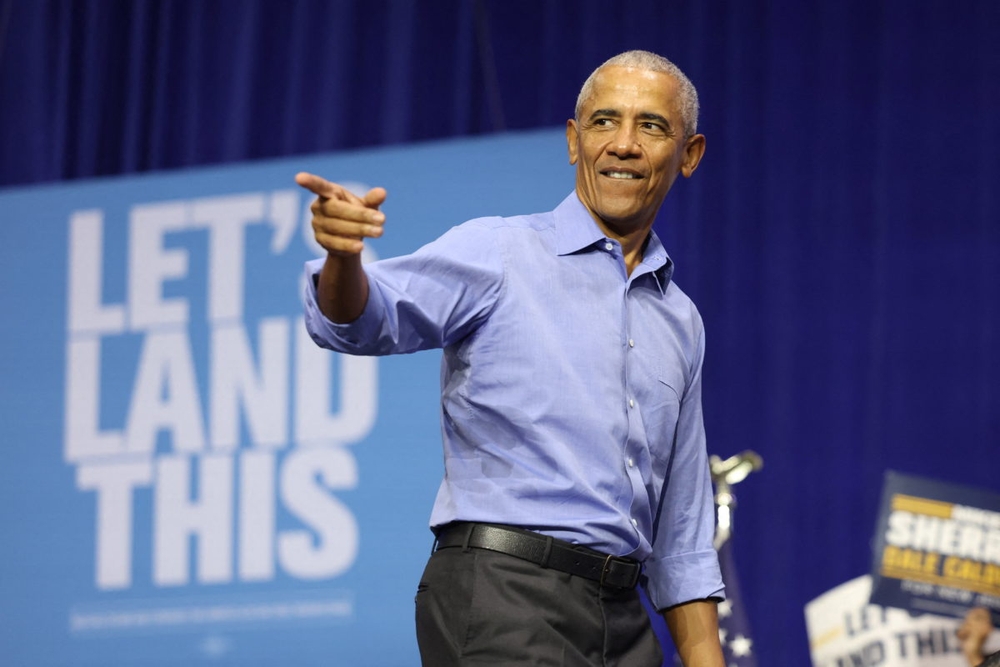
On a recent Saturday, a notable political event unfolded not in a stately office or a campaign rally, but within the vibrant, often chaotic, walls of a New York City childcare center. Former President Barack Obama, the two-term standard-bearer for the Democratic Party, met for the first time with New York City Mayor Zohran Mamdani. The occasion was apolitical in theme—reading the book “Alone and Together” to preschoolers and leading a singalong of “The Wheels on the Bus.” No questions were taken from the press, leaving the imagery to speak for itself: a former president and a young mayor engaging in a quintessential act of community and caretaking.
This meeting, occurring just over a week after Mayor Mamdani marked his 100th day in office, was framed as an offer from President Obama to serve as a “sounding board” for the 34-year-old mayor. Mamdani, a democratic socialist who took office in January 2026, rose to prominence on a campaign centered on making New York City more affordable and refocusing governmental power toward aiding the city’s struggling working class. His youth, progressive agenda, and apparent star power have marked him as a distinctive figure within the broader Democratic ecosystem.
The Broader Political Context
The narrative, however, does not exist in a vacuum defined by Democratic politics alone. The meeting with President Obama is but one vertex of a complex political triangle Mayor Mamdani is attempting to navigate. According to the report, Mamdani has already met twice with former President Donald Trump at the White House—in November and February—to discuss issues affecting New York City. These meetings suggested an effort at pragmatic, non-ideological governance, a mayor seeking resources and solutions for his constituents from whomever holds levers of influence.
Yet, this attempted pragmatism has encountered the stark realities of our current political climate. Despite the previously “friendly meetings,” the relationship has shown significant strain. Former President Trump took to his Truth Social platform to declare that Mayor Mamdani was “DESTROYING New York” with his taxing policies and threatened to pull federal funding from the city. This public rebuke transforms a working relationship into a political battlefield, where policy disagreements are amplified into existential threats through the megaphone of social media.
The Principle of Principled Engagement
From the standpoint of democratic health and institutional integrity, Mayor Mamdani’s attempt to engage with leaders across the ideological spectrum is, in principle, commendable. Governance in a federal system requires negotiation and dialogue between municipal, state, and federal authorities, regardless of party affiliation. A mayor’s primary duty is to the citizens of his city, and seeking avenues for cooperation, even with politically adversarial figures, can be seen as a fulfillment of that duty. The initial meetings with President Trump reflected a transactional approach to governance that has long been a part of American political life.
However, the core principles of liberty, the rule of law, and institutional respect create a fraught landscape for such engagement. The threat to pull federal funding—a vital lifeline for urban centers—over policy disagreements is a blunt instrument that punishes citizens for the decisions of their locally elected leaders. It weaponizes governance, turning necessary resources into tools of political coercion. This action undermines the cooperative federalism upon which the nation was built and places the well-being of millions of New Yorkers in the crosshairs of partisan conflict. It is an act that prioritizes political point-scoring over the fundamental human needs of a city’s population, an approach that is deeply antithetical to humane and effective governance.
The Symbolism of “Alone and Together”
The setting and activity of the Obama-Mamdani meeting are rich with unintended symbolism. Reading a book titled “Alone and Together” to children is a powerful, if perhaps subconscious, metaphor for the central political dilemma of our age. Are we destined to go it alone, retreating into tribal enclaves and wielding power punitively? Or can we find ways to be together, to build collaborative frameworks that acknowledge deep differences while seeking common ground for the common good?
President Obama’s role as a “sounding board” represents one model of political mentorship and institutional continuity. It is a passing of wisdom and experience within a broad philosophical tradition. Conversely, the model presented by the interactions with President Trump is more volatile—alternating between personal engagement and public vilification, between the handshake in the Oval Office and the broadside on social media. This duality creates an impossible environment for stable, predictable governance. How can any substantive planning or long-term investment occur when federal support can be threatened on a whim in response to a critical headline or a polling dip?
The Test for Democratic Institutions
This episode places Mayor Mamdani, and by extension New York City, at the center of a stress test for American democratic institutions. Can our systems withstand leaders who operate with fundamentally different conceptions of truth, decorum, and the use of power? Mamdani’s progressive agenda, focused on affordability and the working class, is itself a democratic outcome. He was elected by the people of New York City to pursue that platform. A robust democracy must allow for the implementation of diverse political visions at the local level. Using federal authority to sabotage a locally mandated agenda because it conflicts with a national figure’s ideology is a dangerous encroachment on local self-determination and electoral legitimacy.
Furthermore, the public, performative nature of the conflict—from the childcare photo-op to the Truth Social post—highlights how modern politics is conducted as much for narrative as for policy. The meeting with Obama projects unity, mentorship, and shared values within the Democratic fold. The clash with Trump projects conflict, resistance, and a mayor under siege. Both narratives serve political purposes far beyond the immediate issue of city budgets or tax rates. They are chapters in a larger story about the soul of the country, a story in which New York City is merely a setting.
A Path Forward Anchored in Constitutional Order
The foundational principles of the U.S. Constitution envision a balance of power and a Republic governed by laws, not by the personal whims of individuals. The threatening, ad hominem approach to intergovernmental relations represents a decay of that constitutional order. It replaces process with pronouncement, negotiation with intimidation.
The humane and principled path forward requires a recommitment to those founding ideals. Engagement across party lines is not only possible but necessary. However, it must be conducted within guardrails that respect electoral outcomes, the separation of powers, and the dignity of public office. Federal funding formulas should be based on need and law, not used as a cudgel for political retribution. Disagreement should be voiced through policy critiques, not through apocalyptic rhetoric that demonizes opponents and endangers public welfare.
Mayor Zohran Mamdani finds himself in an unenviable but historically significant position. His dance with two such different presidents is more than a personal political challenge; it is a live demonstration of the tensions tearing at the fabric of American democracy. The hope for our Republic lies not in the avoidance of conflict, but in the insistence that conflict be resolved through the dignified, institutional, and lawful processes designed by our founders—processes that prioritize the collective good over partisan victory and protect the liberties of all, even from the overreach of temporary power. The children in that childcare center, for whom they read a story about being “Alone and Together,” deserve a politics that chooses the latter.