
A Tale of Two Scandals: Hypocrisy, Fines, and the Fight for Arizona's Ballot
Published
- 3 min read
The Facts: A Tangled Web of Accusations and Unpaid Debts
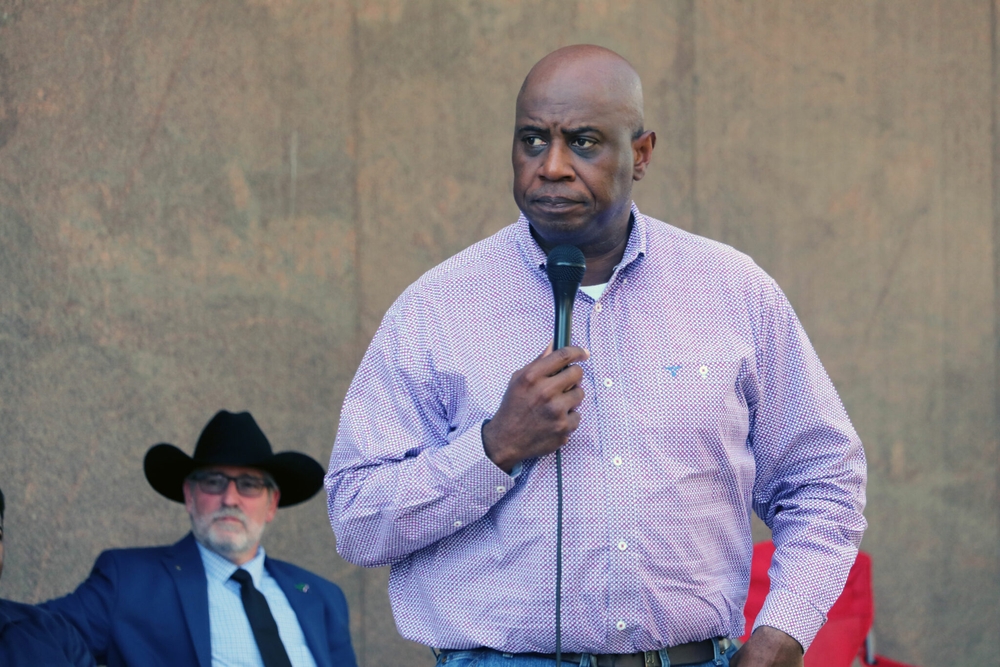
The political drama unfolding in Arizona’s legislative district embodies a profound crisis of credibility. At its center is Republican State Representative Walt Blackman, who is fighting a legal challenge to his candidacy for reelection. The challenge, filed by his former primary opponent Steve Slaton, seeks to disqualify Blackman from the July 21 Republican primary ballot. The grounds are stark and quantifiable: Blackman allegedly owes the state of Arizona more than $168,000 in fines and penalties for years of late and unfiled campaign finance reports, beginning in 2020.
Slaton’s lawsuit hinges on Arizona state law, which prohibits a candidate from having their nomination papers accepted if they have $1,000 or more in unpaid fines, penalties, or fees at the time of filing, unless those penalties are under appeal. A review of campaign finance data reveals a suspended “Committee to Elect Walt Blackman” that operated from 2018 until January 2026. This committee has not filed a report since April 15, 2022, with that specific report being 1,442 days late and accruing over $35,000 in fines. The total listed as due for this suspended committee is $160,425. Blackman’s current legislative committee also lists an additional $200 in fines.
In response, Blackman has blamed the massive debt on an “administrative error” during the high-strain 2020 election cycle. He stated his campaign “acted in good faith” and expressed confidence the legal challenge would be resolved in his favor, characterizing such challenges as common political tools. Notably, when pressed on whether he had begun paying or appealing the fines, Blackman deferred to his legal counsel and did not provide further details. The Arizona Secretary of State’s office, led by Adrian Fontes, has not commented on the pending challenge or explained why Blackman’s nomination signatures were accepted despite the outstanding debts.
The Context: A Rival with a Damaged Past
The source of this challenge adds a layer of stunning irony and deep moral complication to the affair. Steve Slaton, the plaintiff, is not a neutral observer. He was Blackman’s opponent in the 2024 GOP primary for the same seat. During that campaign, Slaton’s own credibility was catastrophically undermined when reporting revealed he had falsely claimed to be a Vietnam veteran. Investigations alleged he altered his official DD214 military discharge document to show service in Vietnam. In reality, his service was as a helicopter repairman stationed in Korea in 1974.
This context makes the subsequent legislative action particularly poignant. In 2023, Representative Walt Blackman himself introduced and successfully championed a bill to impose criminal penalties against those who make false military service claims—a practice often called “stolen valor.” This bill was passed into law despite objections from State Senator Wendy Rogers, who represents the same district as Blackman but had supported Slaton in the primary. Furthermore, Blackman is separately suing Slaton for defamation, alleging Slaton falsely claimed Blackman did not receive a Bronze Star medal. The election challenge, therefore, emerges from a pre-existing web of mutual legal hostilities and profoundly damaged trust.
Opinion: The Erosion of Trust and the Death of Accountability
This saga is not merely a local political skirmish; it is a microcosm of the disease eating away at American democratic institutions. We are presented with two central figures, each embodying a different facet of the crisis. On one side, a sitting legislator who prescribes strict ethical medicine for the public—criminal penalties for stolen valor—but appears unable or unwilling to follow the fundamental financial rules governing his own profession. On the other, a challenger whose own moral authority is annihilated by a lie about the most sacred form of public service, now attempting to use the courts as a political cudgel.
The staggering sum of $168,000 is not a simple clerical oversight; it represents a pattern of neglect spanning years. To dismiss it as an “administrative error” from 2020 insults the intelligence of Arizona voters. Campaign finance laws exist for a paramount reason: transparency. They are the mechanism by which citizens can see who funds their representatives, exposing potential conflicts of interest and ensuring elections are not simply auctions for the highest bidder. When a lawmaker treats these reporting requirements with such cavalier disregard, it signals a belief that the rules are for others. This is the definition of corruption—not necessarily a quid pro quo, but a corrosive attitude that the guardian is above the law he is sworn to uphold.
The hypocrisy is breathtaking. Representative Blackman rightly understood the gravity of falsely claiming military honors, an act that steals from the valor of true heroes and misleads the public. He moved to make it a crime. Yet, the logic is identical: submitting false or delinquent campaign reports steals from the public trust and misleads constituents about the financial forces shaping their government. Both acts poison the well of democracy. One cannot credibly claim the mantle of ethical enforcement while standing knee-deep in the muck of one’s own ethical failures.
The Institutional Failure: A System Asleep at the Wheel
Equally alarming is the apparent failure of institutional guardrails. Arizona law clearly states the $1,000 threshold for ballot disqualification. Why did the Secretary of State’s office accept Walt Blackman’s nomination papers? The office’s silence in the face of repeated inquiries is deafening and unacceptable. The rule of law is not self-executing; it requires diligent administrators to enforce it uniformly and without fear or favor. When institutions fail to act—whether due to partisanship, incompetence, or a lack of resources—they become complicit in the erosion of standards. This creates a two-tiered system where connected insiders operate with impunity while outsiders face the full force of regulation. Such perceived injustice fuels public cynicism and the dangerous belief that the entire system is rigged.
Steve Slaton’s role, meanwhile, turns this drama into a tragic farce. His legal challenge may be technically sound regarding the fines, but it is morally bankrupt. Using the courts to attack an opponent while one’s own reputation is founded on a demonstrated falsehood is the height of bad faith. It reduces the sacred machinery of election law to a tool for personal vendetta, further degrading public respect for that machinery. Voters are left with a grotesque choice: a candidate accused of financial disregard versus an accuser guilty of stealing valor. This is not a choice; it is a condemnation of the current state of our political culture.
Conclusion: A Call for Revival of Principle
This Arizona story is a clarion call for a revival of principle over politics. The solution does not lie in choosing the “lesser of two scandals.” It lies in demanding better, period. First, the Secretary of State must provide a full, transparent accounting of its actions regarding Walt Blackman’s candidacy. The law must be applied clearly and consistently, regardless of party or position. Second, candidates at all levels must internalize that public service is a privilege built on a foundation of integrity in both word and deed. Accountability cannot be something you legislate for others but litigate away for yourself.
For the citizens of Arizona and for Americans everywhere watching, the lesson is clear. Democracy is not a spectator sport. It requires relentless scrutiny of those in power and those seeking power. It requires holding institutions accountable when they falter. And it requires, above all, a collective commitment to the foundational ideals of honesty, transparency, and the rule of law. The battle for Arizona’s ballot is about more than one seat; it is a fight for the soul of representative government. We must insist that those who wish to lead us first demonstrate the capacity to follow the very rules that guarantee our freedom.
The individuals involved—Walt Blackman, Steve Slaton, Wendy Rogers, and Adrian Fontes—are now actors in a parable of modern political decay. How this case is resolved will speak volumes about whether Arizona, and by extension America, still believes in the principles it professes. The price of liberty, as the saying goes, is eternal vigilance. That vigilance must now be turned toward ensuring our electoral system is administered with integrity and that those who wish to serve are held to the highest possible standard. Nothing less than the future of our republic depends on it.