
A Unanimous Rebuke: The Supreme Court Upholds State Power to Protect the Great Lakes
Published
- 3 min read
The Facts of the Case
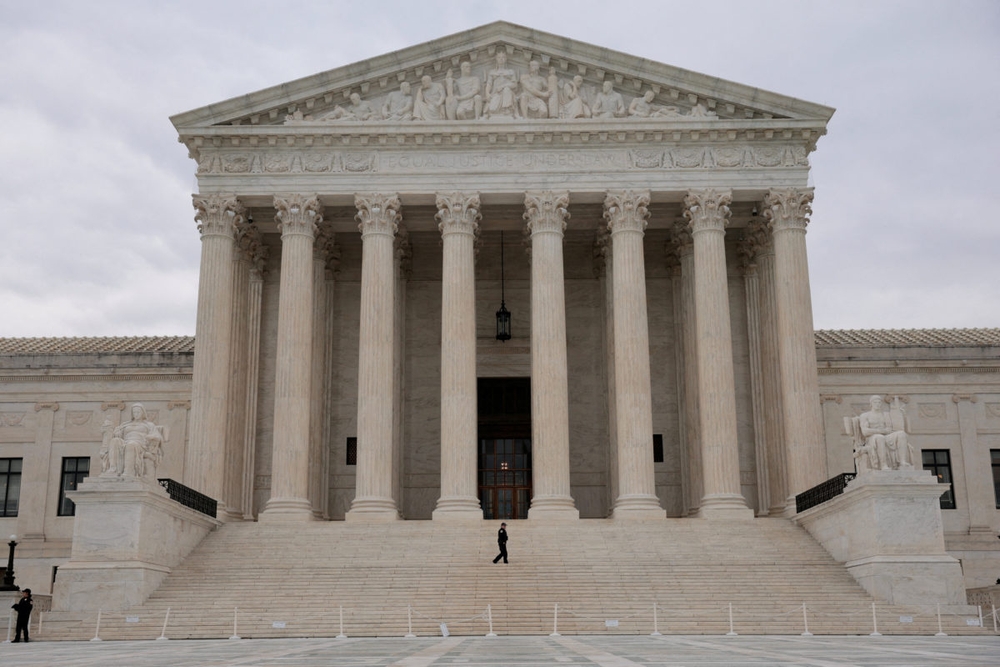
In a clear and unanimous decision, the Supreme Court of the United States has delivered a significant ruling on the fate of the aging Line 5 pipeline in the Great Lakes. The Court, in an opinion authored by Justice Sonia Sotomayor, ruled that the Enbridge energy company “waited too long” in its attempt to move a lawsuit from Michigan state court to the federal judiciary. This lawsuit, filed by Michigan Attorney General Dana Nessel in June 2019, seeks to revoke the easement allowing Enbridge to operate a critical 4.5-mile section of the Line 5 pipeline beneath the Straits of Mackinac, the waterway connecting Lake Michigan and Lake Huron. The core legal technicality was a missed 30-day deadline for changing jurisdictions, a procedural failure by Enbridge that the Sixth Circuit Court of Appeals and now the Supreme Court have affirmed keeps the case firmly under state purview.
The Context: A Pipeline on Borrowed Time
Line 5 is not a new controversy. The pipeline has been transporting crude oil and natural gas liquids between Superior, Wisconsin, and Sarnia, Ontario, since 1953. For decades, it operated with little public scrutiny. However, the calculus changed dramatically in 2017 when Enbridge engineers disclosed they had known since 2014 about significant gaps in the protective coating of the underwater segment in the Straits. This revelation, coming in the shadow of the company’s catastrophic Kalamazoo River spill from another pipeline, ignited profound and justified alarm. The fears were crystallized in 2018 when a boat anchor struck and damaged the pipeline section, bringing the specter of a catastrophic rupture in the heart of the world’s largest freshwater system from abstract risk to imminent threat.
The state’s response has been multifaceted and persistent. In 2020, then-Ingham County Judge James Jamo granted a restraining order to shut down the pipeline, though operations continued after Enbridge met certain interim safety requirements. That same year, Governor Gretchen Whitmer’s administration, through the Department of Natural Resources, formally revoked the straits easement for Line 5. Enbridge responded with a separate federal lawsuit challenging that revocation and won a preliminary injunction blocking the state’s order—a case currently on appeal. Meanwhile, Enbridge is pursuing a controversial plan to encase the pipeline in a protective tunnel, a project that has received some state permits but faces fierce legal challenges from environmental groups and Michigan tribes, with the state Supreme Court now weighing its fate. Additional approvals from the U.S. Army Corps of Engineers and state environmental agencies are also pending, creating a complex web of regulatory and legal battles.
The dispute extends beyond Michigan. In Wisconsin, a federal judge has ordered Enbridge to shut down and reroute the segment of Line 5 that crosses the Bad River Band’s reservation within three years, a order the company is appealing while beginning reroute work. That work itself is now the subject of another state lawsuit alleging underestimated environmental damage. This sprawling legal landscape underscores that Line 5 is a regional crisis, pitting a multinational corporation against sovereign states and tribal nations united by a common threat to their water and way of life.
Opinion: A Victory for Sovereignty, Accountability, and the Rule of Law
Today’s Supreme Court decision is far more than a procedural footnote about filing deadlines. It is a resounding affirmation of foundational American principles: federalism, state sovereignty, and the rule of law. Enbridge’s legal strategy—to delay, obfuscate, and forum-shop—has been dealt a decisive blow by a unanimous bench. The company’s attempt to frame a clear-cut issue of state environmental enforcement and public safety as a matter of federal interstate and international commerce was a transparent maneuver to escape the jurisdiction most directly impacted by its operations and most motivated to hold it accountable.
The emotional and moral core of this issue cannot be overstated. The Great Lakes contain 84% of North America’s surface freshwater and 21% of the world’s supply. They are not a corporate utility corridor; they are a sacred public trust, an ecological marvel, and the lifeblood of tens of millions of people, countless species, and a multitrillion-dollar regional economy. The risk posed by Line 5 is existential. A rupture in the powerful currents of the Straits of Mackinac would be an unparalleled environmental and economic catastrophe, contaminating shorelines, destroying fisheries and wildlife, devastating tourism, and poisoning drinking water sources for generations. The fact that Enbridge knew of coating gaps for years before disclosing them is a staggering breach of public trust that echoes the worst instincts of corporate negligence.
Therefore, the Court’s decision to keep the power in Michigan’s hands is a victory for democratic accountability. Attorney General Dana Nessel and Governor Gretchen Whitmer were elected, in part, on promises to protect the Great Lakes from this very threat. They are exercising the sovereign power of the state to fulfill that mandate to their constituents. The federal system envisioned by our Constitution empowers states to be laboratories of democracy and bastions of protection for their unique resources. Michigan is using that power precisely as intended. The alternative—allowing a corporation to override state safety concerns by dragging the issue into a potentially more favorable federal venue—would undermine the very fabric of our republican system.
Furthermore, this ruling reinforces the principle that no entity, no matter how powerful, is above procedural law. The 30-day deadline was clear. Enbridge missed it. The Court’s application of this rule, without exception, underscores that justice is administered through orderly process. This is a cornerstone of the rule of law that protects the weak from the powerful. Granting Enbridge a pass due to the scale of its interests would have created a dangerous precedent that corporate giants can operate on their own timeline, disregarding legal statutes designed to ensure timely and fair adjudication.
The Path Forward and the Stakes
The legal war is far from over. The state court case now proceeds, the federal challenge to Governor Whitmer’s revocation is on appeal, and the tunnel permit battles loom. However, the Supreme Court’s unanimous voice sends an unmistakable signal: Michigan’s right to fight for its waters in its own courts is inviolable. This should empower state leaders to pursue every available legal and regulatory avenue with renewed vigor.
The human and principled stakes here transcend legal technicalities. This is about whether we prioritize short-term fossil fuel transport over the permanent safeguarding of our greatest natural heritage. It is about whether the profits of a foreign-owned corporation outweigh the rights of states, tribes, and citizens to clean water and a safe environment. It is about whether our institutions can still function to hold powerful actors accountable. The coalition opposing Line 5—including state officials, environmental advocates, and Indigenous tribes like the Bad River Band—represents a powerful alignment of moral, legal, and democratic force.
As a firm supporter of the Constitution, democracy, and liberty, I see this ruling as a profound win for all three. Liberty includes the freedom from existential environmental threat imposed by private actors. Democracy includes the power of elected state officials to protect their people. Constitutional federalism includes the reserved powers of the states. The fight to decommission Line 5 is a defense of these bedrock American values against a corrosive model of corporate entitlement and delay. The Supreme Court has now rightly placed the next chapter of this critical battle where it always belonged: in the state of Michigan, closer to the waters it seeks to protect and the people whose future depends on it. The work continues, but today, the rule of law and the Great Lakes won a crucial victory.