
A Victory for Ballot Access: The Court's Defense of Democracy in Arizona's Gubernatorial Race
Published
- 3 min read
The Facts of the Case
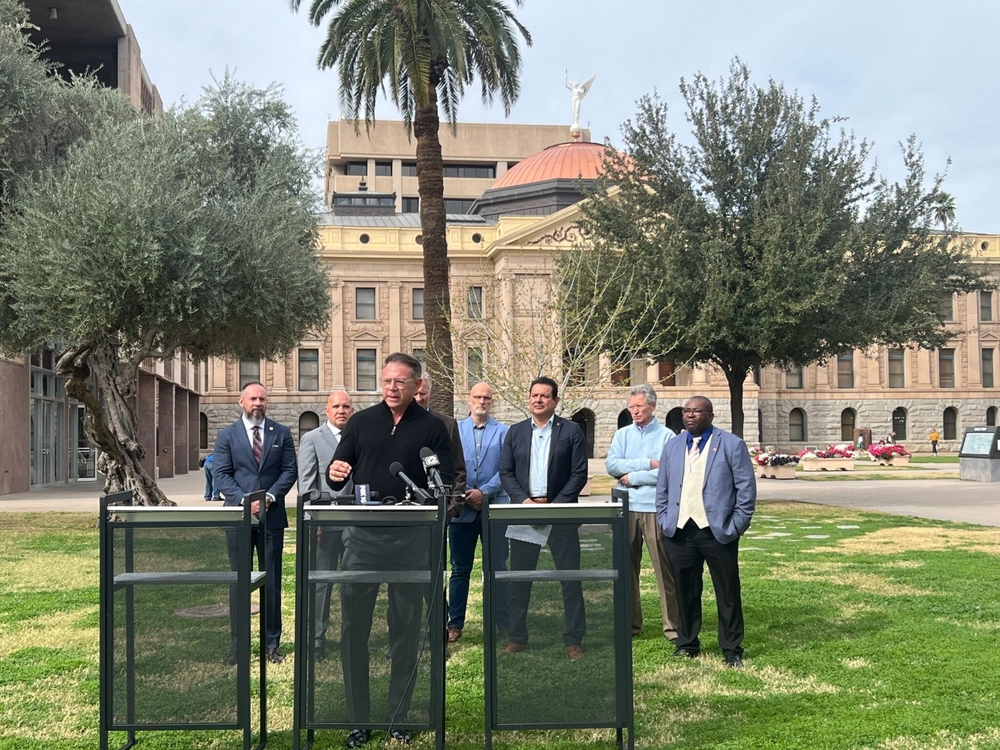
In a significant development for Arizona’s political landscape, Maricopa County Superior Court Judge Michael Mandell dismissed the final legal challenge to the candidacy of Hugh Lytle, an independent candidate for governor. The ruling, handed down on April 14, ensures that Lytle, a wealthy entrepreneur running under the banner of the Arizona Independent Party (recently ordered to revert to its former name, the No Labels Party), will remain on the ballot for the upcoming election. This decision follows the dismissal of another challenge from a fellow party candidate, Teri Hourihan, just last week.
The core of the remaining challenge, brought by Democratic activist Craig Beckman, centered on a technical violation of Arizona election law. Beckman argued that Lytle did not qualify for the ballot because the address listed on his nomination petitions was a private mailbox at a UPS Store, used for receiving mail, rather than his residential address. State statute does require candidates to use their residential address on these petitions.
The Judicial Reasoning
Judge Mandell’s ruling cut to the heart of democratic principle. He acknowledged that Lytle’s petitions did not follow the “letter of the law exactly” but found they “broadly complied with state statutes and did not mislead voters.” In a crucial passage, the judge articulated a philosophy essential for a healthy democracy: courts “do not remove candidates from the ballot for mere technical departures from the statutorily required forms.”
The judge provided clear, logical reasoning. He noted that both the UPS Store and Lytle’s home are in Scottsdale, and that Lytle is the only person with that name registered to vote in Arizona. Therefore, the use of the mailbox did not mislead voters who signed the petitions about the candidate’s identity. The substance of the requirement—voter awareness of whom they are supporting—was fulfilled, even if the precise form was not.
The Political Context and Reactions
The case was not devoid of political tension. Hugh Lytle claimed, though without presenting evidence cited in the article, that Governor Katie Hobbs, a Democrat, was behind the legal challenge. The Hobbs campaign declined to comment on the matter. Lytle’s public statement framed the court’s decision not as a personal victory, but as “a win for the voters, for democracy and for Arizona’s growing Independent movement which gains momentum every day.”
He further used the moment to pivot to policy, accusing Governor Hobbs of focusing on “voter suppression” rather than addressing economic concerns like the state sales tax on gas, ESA (Empowerment Scholarship Account) reform, and help for first-time homebuyers. This rhetoric positions his candidacy as both a procedural fight for access and a substantive alternative to the incumbent.
Opinion: Why This Ruling Matters for American Democracy
Judge Mandell’s ruling is far more than a narrow legal resolution; it is a vital affirmation of a foundational democratic norm: ballot access must be robust, not restrictive. In an era where hyper-partisanship often manifests in using legal code as a weapon to disqualify opponents, this decision stands as a necessary bulwark. The instinct to win elections by narrowing the field through litigation over minutiae is corrosive. It substitutes political competition in the marketplace of ideas with competition in the courtroom over technicalities, a contest that inherently favors those with resources and insider knowledge of the system.
This case perfectly illustrates the tension between procedural purity and democratic vitality. Yes, rules exist for good reason—to ensure order, prevent fraud, and provide clarity. But when adherence to those rules becomes an end in itself, divorced from their underlying purpose, they can be weaponized to undermine the very system they were designed to protect. The purpose of requiring an address on a petition is to ensure voters know who the candidate is. Judge Mandell correctly recognized that this purpose was met. To have ruled otherwise would have been to elevate a trivial technicality—a mailbox versus a street address—above the fundamental right of voters to have choices and candidates to have a fair shot.
The Dangerous Trend of Weaponized Election Law
Lytle’s allegation that the sitting governor was behind the challenge, whether proven or not, points to a disturbing atmosphere in American politics. The tool of choice for established political machines is increasingly the legal challenge. These actions, often framed as “ensuring election integrity,” frequently amount to sophisticated voter suppression—not of voters at the polls, but of candidates before the election even begins. They aim to shape the ballot before a single vote is cast, limiting debate and reinforcing duopoly control.
The dismissal of challenges from both a partisan activist and a intra-party rival suggests Lytle’s candidacy is disruptive. True political competition is messy and threatening to incumbents and established power structures. The independent and third-party movements growing across the United States represent a profound dissatisfaction with the binary, gridlocked nature of national politics. Attempts to stifle these movements at the ballot qualification stage are an admission of fear. They signal that the existing parties believe they cannot compete on ideas alone and must instead rely on gatekeeping mechanisms.
The Principle of Voter Sovereignty
At its core, democracy is about trust in the people. It operates on the premise that voters, presented with options and information, are capable of making the decision that is best for them and their community. Every legal maneuver that removes an option from the ballot, especially over a non-substantive issue like a mailbox address, is a declaration of distrust in the electorate. It implies that voters must be protected from the confusion of too much choice or from their own inability to understand whom they are signing for—an insulting and paternalistic view.
Judge Mandell’s ruling reaffirms voter sovereignty. It trusts that the citizens of Arizona who signed Lytle’s petitions knew what they were doing. It respects their capacity to participate in the political process without needing the system to be sanitized of all imperfection. This is the essence of a free society: allowing the process to unfold, with all its human imperfections, and letting the people judge the outcome.
Conclusion: A Standard for Future Challenges
The Arizona gubernatorial case should serve as a model and a warning. As a model, it demonstrates how courts should interpret election laws: with a focus on substance, intent, and the overarching democratic good, rather than as an exercise in pedantic code enforcement. As a warning, it signals to partisan operatives that not all challenges will be entertained, and that the judiciary can, and should, act as a guardian of access when challenges become frivolous or overtly political.
Hugh Lytle’s policy proposals will now be tested in the political arena, as they should be. Voters will decide if his message on taxes, education, and housing resonates more than that of his opponents. That is how democracy is supposed to work. By securing his place on the ballot, the court has ensured that this decision rests where it always should: with the people of Arizona, free from pre-emptive filtering by legal technicality. For those who believe in competition, liberty, and the power of the ballot, this is not just a win for one candidate. It is, as Lytle stated, a win for democracy itself. We must remain vigilant in defending this principle, for when the gates to the ballot close, the pathway to representative government closes with them.