
An Overture to Illiberalism: Why the Budapest Rally is a Warning for American Democracy
Published
- 3 min read
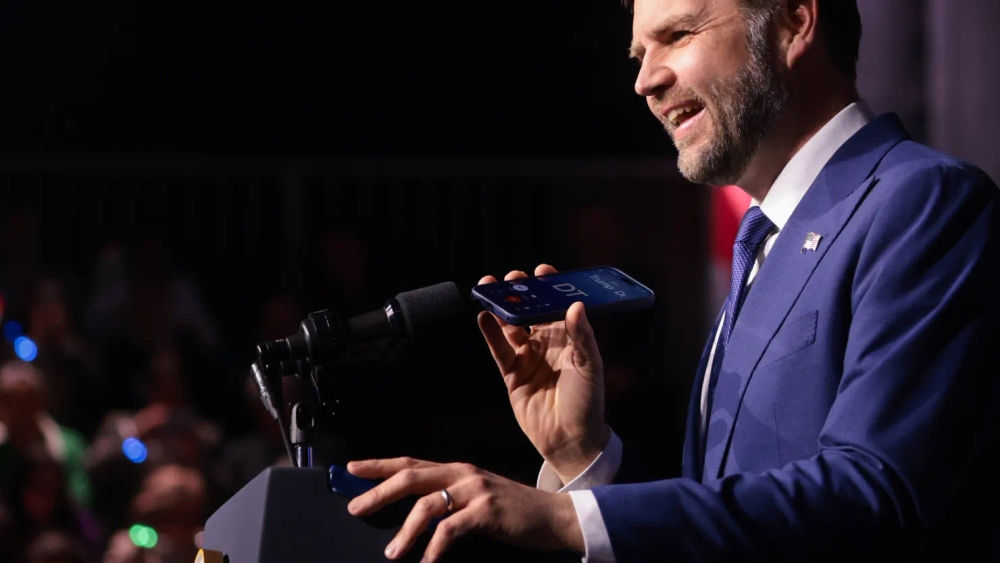
The political theater witnessed this week in Budapest was not merely a campaign stop. It was a declaration. On April 7, 2026, from the stage of a soccer stadium in Hungary, United States Vice President JD Vance placed a live call to former President Donald Trump. The purpose was singular: to offer a full-throated, transatlantic endorsement of Hungarian Prime Minister Viktor Orbán, an autocrat in democratic clothing, just days before a pivotal election where his grip on power faces its most serious challenge. This brazen act, where America’s current and former chief executives used their platform to boost a foreign leader who has systematically dismantled democratic checks and balances, marks a perilous new chapter in the relationship between American power and the global struggle for freedom. It demands our urgent attention and our clearest condemnation.
The Facts: A Transatlantic Campaign Rally
This article details a sequence of events that should alarm any observer committed to democratic norms. Vice President Vance traveled to Hungary, his first official foreign visit in that role, specifically to attend the “Day of Friendship” event headlined by Prime Minister Orbán. From the stage at MTK Sportpark, Vance attempted to call Donald Trump. After an initial failure where an automated message announced an unset voicemail, the connection was made. Vance held his phone to the microphone, broadcasting Trump’s voice to a Hungarian audience.
In his remarks, Trump was effusive. “I love that Viktor, I’ll tell you, he’s a fantastic man, we’ve had a tremendous relationship,” he declared. He praised Orbán’s immigration record, stating, “Remember this, he didn’t allow people to storm your country and invade your country, like other people have, and ruin their countries. He’s kept your country good. He’s kept Hungarian people in your country, and he’s done a fantastic job.” This is a clear reference to Orbán’s strict, often criticized anti-immigration policies and his “illiberal democracy” model.
The context is crucial. Orbán and his Fidesz party have held uninterrupted power since 2010, using their supermajorities to rewrite the constitution, dominate the media, undermine the judiciary, and target civil society. His close relationship with Russian President Vladimir Putin throughout the war in Ukraine has made him a contentious outlier in Europe. Now, polls show his pro-European opposition, led by Peter Magyar and the Tisza party, with an advantage ahead of the April 12 parliamentary elections. The intervention by Trump and Vance was, in essence, a last-minute campaign boost for an embattled incumbent known for eroding democratic institutions.
Vance, for his part, claimed he was not there to tell Hungarians how to vote but immediately followed that disclaimer by urging the crowd to “go to the polls” and “stand with Viktor Orbán, because he stands for you.” The article further notes this political maneuver occurred as Trump was simultaneously issuing a stark ultimatum to Iran, threatening the destruction of its “whole civilization” over a diplomatic deadline.
The Context: Orbán’s Hollowed-Out Democracy
To understand the gravity of this endorsement, one must understand what Viktor Orbán represents on the world stage. Since returning to power in 2010, he has methodically transformed Hungary from a post-communist success story into what he himself proudly calls an “illiberal democracy.” This is not a model of governance; it is a blueprint for authoritarian consolidation within a nominally democratic framework.
His government has passed a new constitution and hundreds of cardinal laws, cementing Fidesz’s control over every lever of state power. Independent media have been bought by government allies or driven out of business, replaced by a vast pro-government propaganda network. The constitutional court and judiciary have been packed with loyalists, stripping them of their role as a check on executive power. Electoral laws have been gerrymandered and changed to favor the ruling party. Civil society organizations, especially those focused on human rights and governance, have been smeared as foreign agents and subjected to punitive legislation.
On the international stage, Orbán has acted as Putin’s most reliable ally within the European Union and NATO, blocking or watering down sanctions and aid packages for Ukraine. His rhetoric against migrants, LGBTQ+ individuals, and “globalist” elites has provided ideological fodder for far-right movements across the West. He is the archetype of the modern autocrat, one who maintains the theatrical facade of elections while ensuring the outcome is never in doubt.
A Betrayal of First Principles
Against this backdrop, the actions of Trump and Vance are not merely poor judgment; they constitute a profound betrayal of American ideals and a dangerous abandonment of our nation’s historic role as a beacon of liberty. The United States, for all its flaws and struggles, was founded on the radical premise that governments derive their just powers from the consent of the governed and must be constrained by the rule of law. Our Constitution is a document designed to prevent the concentration of power, to protect minority rights, and to ensure a free press can hold leaders accountable—precisely the systems Orbán has spent 14 years demolishing.
For the occupant of the Vice Presidency to travel to a foreign nation and, from a public stage, directly campaign for an incumbent who has subverted democracy, is an unprecedented breach of diplomatic and democratic norms. It signals to the world that the current American administration views democratic backsliding not as a threat to global stability, but as a viable, even admirable, political project. Trump’s enthusiastic praise for Orbán’s draconian immigration policies frames human dignity and humanitarian obligations as weaknesses, celebrating walls—both physical and ideological—as the highest form of statecraft.
This is more than hypocrisy; it is an ideological alignment. Trump’s statement that Orbán “kept your country good” by keeping people out is a chilling echo of the isolationist, ethno-nationalist sentiment that has no place in the vision of a pluralistic, welcoming America. It reduces the complex tapestry of national identity to a crude question of exclusion. Furthermore, by celebrating Orbán while the Hungarian leader maintains his friendship with Vladimir Putin—a man waging a brutal war of conquest in Europe—Trump and Vance are sending a catastrophic signal about American resolve and moral clarity. They are drawing a moral equivalence between democracies defending themselves and autocrats seeking to destroy them.
The Danger of Normalization
The most insidious threat posed by this Budapest rally is normalization. By treating Viktor Orbán as just another politician, a “fantastic man” with whom one has a “tremendous relationship,” Trump and Vance strip away the critical context of his authoritarian actions. They legitimize his regime in the eyes of his domestic supporters and on the world stage. This provides Orbán with invaluable external validation as he faces a stiff electoral challenge, potentially tipping the scales in a tightly contested race.
This normalization also has a corrosive domestic effect. It acclimatizes the American public to the idea that strongmen who control the media, undermine courts, and attack civil society are acceptable partners and even role models. It blurs the bright line that should exist between democratic leadership and autocratic rule. When our leaders look at a figure like Orbán and see a partner rather than a problem, it reflects a deep sickness within our own political consciousness.
The simultaneous threat against Iran, mentioned almost in passing in the article, completes a disturbing picture. It showcases a foreign policy approach that oscillates between blustering, civilization-level threats against adversaries and fawning embraces of authoritarian allies. This is not a coherent strategy for promoting peace and freedom; it is a transactional, personality-driven approach that elevates strongmen and intimidates opponents, with no grounding in enduring principles or alliances.
A Call to Democratic Vigilance
In conclusion, the spectacle in Budapest is a warning siren for all who believe in the project of liberal democracy. The bipartisan consensus that once guided American foreign policy toward the support of democratic development and human rights has shattered, replaced by a cynical realpolitik that admires the efficiency of autocracy. Vice President Vance’s pilgrimage to stand with Orbán, and former President Trump’s ringing endorsement from afar, represent a conscious choice. They have chosen the camp of illiberalism over the camp of liberty.
Our duty as citizens, analysts, and defenders of constitutional order is to name this choice for what it is: a betrayal. We must reject the normalization of authoritarian models. We must reaffirm, loudly and consistently, that the health of democracy anywhere is vital to its health everywhere. We must demand that American leaders, regardless of party, uphold our founding principles on the global stage, using diplomatic and economic tools to support those fighting for freedom, not those who have mastered the art of killing it from within.
The struggle for the soul of the 21st century is between open societies and closed ones, between pluralism and nationalism, between accountable power and concentrated power. The events in Budapest show that this struggle is no longer a distant one. It has reached the highest levels of American government. We cannot afford to be silent spectators. We must be vocal defenders of the fragile, beautiful idea that government should be of the people, by the people, and for the people—an idea that Viktor Orbán has abandoned, and that, through their actions in a Hungarian soccer stadium, Donald Trump and JD Vance have dangerously forsaken.