
Arizona's Budget Impasse: A Crisis of Governance and a Betrayal of Public Trust
Published
- 3 min read
Introduction: A State in Political Deadlock
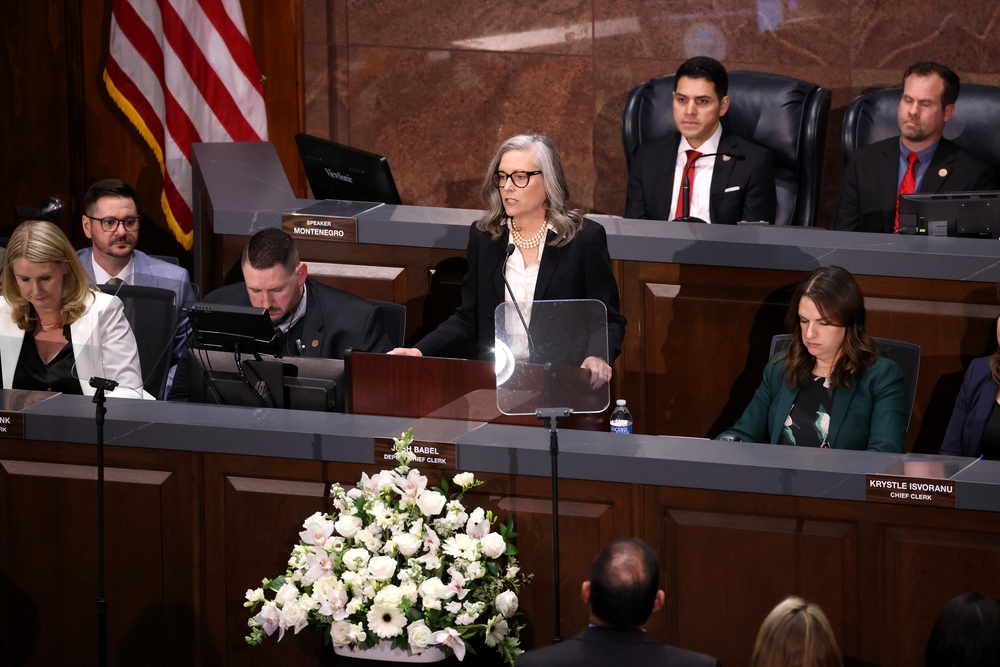
The foundational duty of any state legislature is to pass a budget, a process that requires compromise, transparency, and a commitment to the public good. In Arizona, this basic function of government has broken down entirely. Governor Katie Hobbs, a Democrat, has taken the extraordinary step of imposing a blanket veto on all legislation sent to her desk until the Republican-controlled legislature publicly releases its budget proposal. This drastic tactic, triggered by the GOP’s refusal to negotiate in good faith on the renewal of a pivotal school funding measure, has brought the business of the state to a grinding halt. This standoff is not mere political theater; it is a profound crisis of governance that threatens the stability of Arizona’s public institutions, most critically its education system.
The Facts of the Standoff
Governor Hobbs’s action on Tuesday, vetoing three separate bills, was the execution of a promise made a day earlier. In her veto letters, she explicitly tied the moratorium to the legislature’s failure to engage in “good faith budget negotiations.” She challenged the Republican majority to “put forward their budget proposal and then join me at the negotiating table so we can pass a bipartisan, balanced budget.” The governor’s walkout from negotiations three weeks prior centered on a single, monumental issue: the expiration of Proposition 123.
Proposition 123, narrowly passed by voters in 2016, was a $300 million annual lifeline for K-12 education, sourced from an increased draw on the state’s land trust. It settled a long-standing lawsuit over inadequate school funding. The measure expired in June of last year, reverting funding to a lower level. While Republicans agreed to backfill the lost funds from the general fund for one year, they have refused to negotiate a permanent renewal to be sent to voters, creating a looming fiscal cliff for Arizona’s schools.
The three bills vetoed—House Bill 2033 (on written testing), House Bill 2093 (removing mental health curriculum requirements), and House Bill 4033 (on school bond details)—were likely destined for veto regardless, as they lacked bipartisan support. However, their fate underscores the collateral damage of the budget fight: potential policy changes, good or bad, are frozen.
The political dynamics are intensely fraught. It is an election year with Governor Hobbs seeking reelection. Resources are strained due to federal cuts. Republicans, led by Senate President Warren Petersen, have dismissed Hobbs’s January budget proposal as “based on fantasy revenue,” criticizing its reliance on a voter-approved Prop. 123 renewal and uncertain federal reimbursements for border security costs. The governor’s spokesman, Christian Slater, pinpointed the obstruction to Sen. Jake Hoffman, head of the far-right Arizona Freedom Caucus, who denounced a potential Prop. 123 deal as a “political drug deal” and “surrender” that would underwrite Hobbs’s campaign.
This tactic of a gubernatorial veto moratorium is not new in Arizona; it was used by Governors Jan Brewer and Doug Ducey to force budget action. Hobbs herself used it successfully last year to secure emergency disability funding. The constitutional clock is ticking: the legislature must pass a budget by June 30.
Opinion: The Abdication of Responsibility and the Assault on Democratic Norms
This impasse is a scandalous dereliction of duty. The Republican legislature’s refusal to even publicly present a budget proposal is an affront to the principles of transparent and accountable government. A budget is not a partisan manifesto to be hidden until the last possible moment; it is the state’s blueprint for operation, and the public has a right to see it, debate it, and hold its authors accountable. By operating in the shadows, legislative leaders are treating the citizens of Arizona with contempt.
At the core of this failure is the cynical weaponization of children’s education. Proposition 123 funding is not a discretionary line item; it is foundational support for a system that has been chronically underfunded. Senator Jake Hoffman’s framing of negotiating this renewal as “surrender” is perhaps the most revealing and damning statement of this entire episode. It admits that for the far-right faction holding sway, the well-being of Arizona’s students is merely a bargaining chip, and securing their education is viewed as a political victory for the opposition. This is not conservatism; it is nihilism. It elevates partisan victory over the public good in its most raw form.
Governor Hobbs’s veto moratorium, while aggressive, is a defensive and necessary action in the face of such bad faith. When one party to a negotiation refuses to come to the table—or even show their cards—the normal rules of engagement collapse. Her action forces a moment of truth. It asks a simple question: what are the legislature’s priorities? If they cannot or will not state them in a public budget, they forfeit the right to advance any other agenda. The vetoed bills, particularly one seeking to roll back mental health education requirements, demonstrate the kind of policies that flourish when the hard work of budgeting is ignored. Hobbs is rightly using the power of her office to focus the legislature on its essential work.
The Republican counter-argument—that Hobbs’s budget relies on “fantasy” revenue—holds some factual weight regarding uncertain federal reimbursements. However, this criticism becomes hollow when offered from a position of complete opacity. If the GOP proposal is so much more responsible, let them present it. Let the people see the cuts, the reallocations, and the plan for schools. The current strategy suggests they are less confident in the public’s reception of their vision than they are in the power of obstruction.
This annual cycle of brinkmanship, late-night sessions, and gubernatorial strong-arming is a symptom of a degraded political culture. It replaces governance with gamesmanship. It sacrifices the stability that families, schools, and businesses rely on for short-term political leverage. The precedent set by Brewer and Ducey shows that this tactic can work to break logjams, but its repeated use signals a systemic failure. A healthy democracy requires competing parties to find common ground, not to trigger constitutional crises as a routine negotiating tactic.
Conclusion: A Test for Arizona’s Democracy
The Arizona budget standoff is more than a fiscal dispute; it is a stress test for the state’s democratic institutions. The rule of law depends on lawmakers fulfilling their statutory duties. The promise of liberty is empty without a government functional enough to protect it. The freedom of a child to pursue a quality education is being held hostage by adults who have forgotten the purpose of public service.
The path forward is clear, if politically difficult: transparency, followed by good-faith negotiation. Republican leaders must release their budget. Both sides must acknowledge that a sustainable solution for school funding, likely a renewed Proposition 123 sent to the voters, is non-negotiable for the state’s future. They must then hammer out a compromise, as they have in the past three years, by the June 30 deadline.
To do otherwise—to let this impasse spiral, to risk a government unable to function, to gamble with education funding—would be an unforgivable betrayal of every Arizonan. The nation is watching. In an era where democratic norms are under threat, Arizona’s leaders have a choice: they can model responsible governance, or they can provide a textbook example of its collapse. The children in Arizona’s classrooms, and the principles of the republic itself, deserve the former.