
Betrayal by Algorithm: Uber's Hollow Promise and the Crisis of Due Process in the Gig Economy
Published
- 3 min read
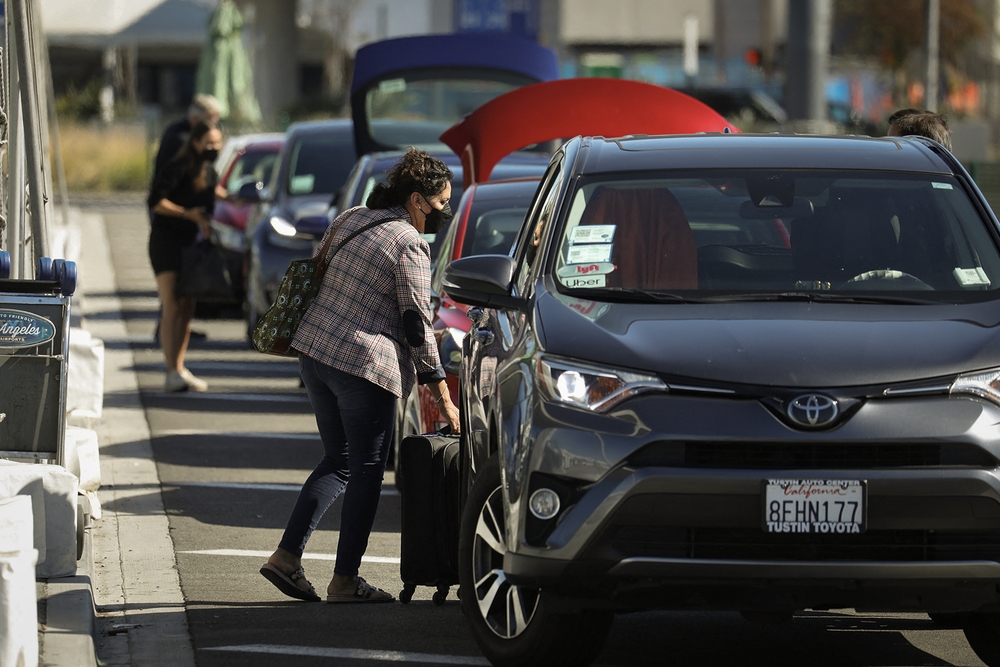
A new legal challenge filed in San Francisco Superior Court strikes at the heart of a foundational compromise in California’s gig economy. The lawsuit, brought by the group Rideshare Drivers United and represented by attorney Shannon Liss-Riordan, alleges that Uber is fundamentally violating the very law it spent over $59 million to create: Proposition 22. The core allegation is stark and simple: Uber has failed to establish a legitimate, functional appeals process for drivers who are “deactivated”—kicked off the app and stripped of their livelihood—thereby breaching a central promise of the 2020 ballot initiative.
The Proposition 22 Bargain and Its Broken Promise
In 2020, California voters passed Proposition 22, a landmark ballot measure bankrolled by Uber, Lyft, DoorDash, and other app-based platforms to the tune of $205 million. The measure carved out a special classification for gig workers, declaring them independent contractors, not employees, thus exempting the companies from traditional labor laws. In exchange for this monumental concession, the initiative promised drivers a suite of “alternative benefits,” including a guaranteed earnings floor, healthcare stipends, and critically, “mandatory contractual rights and appeal processes.”
The text of the proposition, however, is notoriously vague on the specifics of this appeals process. This vagueness has created a void, which the lawsuit argues Uber has filled with a system that is Kafkaesque and fundamentally unjust. Drivers report being funneled through automated chat systems and offshore customer service agents working from scripts, with little to no chance of speaking to someone empowered to review their case substantively. As the article notes, there is no state agency assigned to enforce Prop. 22, leaving drivers in a regulatory no-man’s-land.
The Human Cost of Arbitrary Power
The factual allegations of the lawsuit are not abstract legal principles; they are vivid portraits of economic devastation. Devins Baker, an eight-year veteran of driving in the Bay Area, was deactivated by Uber right before Christmas in 2024. He believes it was due to a hard-braking incident to avoid a pedestrian, which caused an unbuckled passenger to fall. He has no way of knowing for sure which passenger complained or the specifics of the allegation, as Uber’s opaque process provides no transparency. At a news conference, Baker emotionally described scrambling to avoid homelessness.
Mirwais Noory, deactivated in November 2024 over unspecified “safety concerns,” tried to submit dashcam video in his defense to no avail. As the sole income earner for four children, the deactivation caused immediate financial hardship, forcing him into work as a security guard. Jason Munderloh of Rideshare Drivers United highlights the chilling consequence: deactivation means no access to unemployment insurance, a direct result of the contractor classification Uber fought for, plunging families into “poverty and desperation.”
Uber’s response, via spokesperson Ramona Prieto, was to dismiss Attorney Liss-Riordan as an “opportunistic trial lawyer” and the lawsuit as a “publicity stunt.” The company points to a blog post outlining its appeals process. This stark contrast—between corporate PR and the raw human stories of ruined livelihoods—frames the central conflict.
Opinion: A Fundamental Assault on Liberty and the Rule of Law
The facts presented here reveal a crisis that transcends labor law and enters the realm of fundamental democratic principles. What we are witnessing is the erosion of due process—a cornerstone of American liberty—in the digital age. Uber’s alleged behavior represents a terrifying model of corporate governance: unaccountable, automated, and absolute.
Proposition 22 was sold as a modern compromise, a third way between rigid employment law and the wild west of contract work. But a compromise built on a lie is no compromise at all. The promise of an appeals process was the moral linchpin of the deal. It was the assurance that, even as workers surrendered the protections of employment status, they would retain a basic right to fairness and a hearing. By allegedly rendering this promise a sham, Uber is not merely breaching a contract; it is engaging in a profound betrayal of trust and a direct attack on the concept of justice itself.
This is not simply about Uber or the gig economy. It is about the power dynamic between monolithic technological platforms and the individuals whose labor they monetize. When a corporation can, with the click of a button, sever a person’s primary income source based on secret criteria, reviewed through an impenetrable and ineffective process, it has effectively granted itself a power no government in a free society would dare hold: the power to economically exile citizens without cause or recourse. This is the very definition of arbitrary power, and it is anathema to a society built on the rule of law.
The emotional toll described by Devins Baker and Mirwais Noory is the inevitable fruit of this system. The desperation, the fear of homelessness, the scramble for survival—these are not unfortunate side effects; they are the calculated outcomes of a structure designed to maximize corporate flexibility and minimize corporate responsibility. To call these drivers “independent contractors” while subjecting them to unilateral, unappealable termination is a grotesque parody of entrepreneurship. It is dependence without rights, work without security, and service without dignity.
Shannon Liss-Riordan’s legal strategy is tactically shrewd, seeking a court declaration that Uber is in violation of its own law. This strikes at the legitimacy of Uber’s entire Prop. 22 shield. If the company does not uphold its end of the bargain, the ethical and legal foundation for denying drivers employee status evaporates. The separate, massive wage-theft lawsuit by the State of California, dating from before Prop. 22, underscores a persistent pattern of alleged exploitation.
The Path Forward: Reclaiming Dignity and Accountability
As a nation committed to freedom, we must recognize that economic liberty is meaningless without procedural justice. The freedom to contract is hollow if one party holds all the power to interpret and enforce that contract without check. The principles enshrined in our Constitution—of due process, fairness, and protection from arbitrary authority—must be vigorously applied to the new digital frontier of work.
The enforcement vacuum noted in the article, where no state agency polices Prop. 22, is a policy failure of the highest order. It creates a lawless zone where corporate promises are purely performative. Legislators and regulators must act to close this gap, ensuring that every worker, regardless of classification, has access to a transparent, timely, and meaningful appeals process administered by a neutral body.
Ultimately, this lawsuit is about more than reinstatement or back pay. It is a battle for the soul of work in the 21st century. Will we accept a future where our economic lives are subject to the unappealable verdict of an algorithm and a faceless corporate script? Or will we assert that human dignity, fairness, and the rule of law are non-negotiable, regardless of the business model?
Supporting the drivers in this case is not an anti-business stance; it is a pro-market, pro-rule-of-law stance. Healthy, sustainable markets require clear rules and fair enforcement. Uber’s alleged actions represent the worst kind of crony capitalism, where a company writes its own law, exempts itself from oversight, and then ignores the few obligations it included. This corrupts the market and harms ethical competitors.
The stories of Baker, Noory, and thousands of unnamed drivers are a clarion call. They remind us that liberty requires not just the absence of formal tyranny, but the presence of justice. We must stand for a system where every worker can face an allegation, present a defense, and receive a fair hearing. Without that, the gig economy’s promise of flexibility becomes a prison of precarity, and the American dream of building a life through hard work becomes a cruel joke, subject to deletion by a server in a distant datacenter.