
California's Democratic Disarray: When Fear of Leadership Becomes the Greatest Threat to Democracy
Published
- 3 min read
The Facts: A Primary in Paralysis
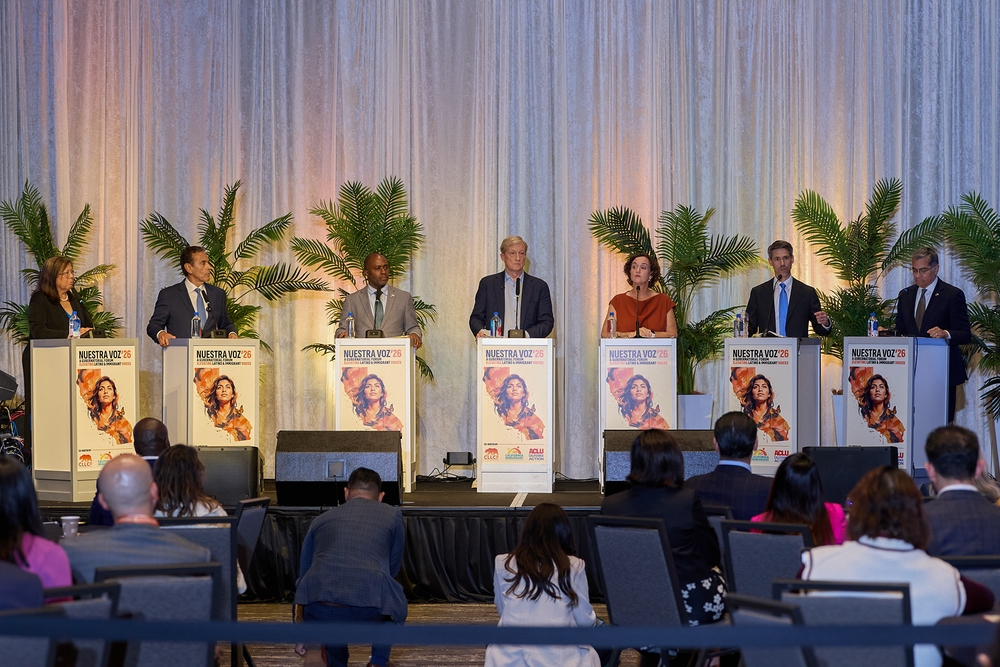
The 2026 California gubernatorial race was supposed to be a coronation. With Governor Gavin Newsom termed out, the expectation was that the formidable Democratic machine—the same one that produced figures like Newsom and former House Speaker Nancy Pelosi—would smoothly anoint a successor. Instead, the party finds itself in a state of unprecedented, self-inflicted chaos. Following the exit of Representative Eric Swalwell, a crowded field of seven major Democratic candidates remains, each stubbornly refusing to bow out despite dismal polling numbers, all hoping to capture a sliver of the fleeting attention Swalwell’s departure generated. Less than three weeks before ballots are mailed, the Democratic vote is hopelessly split.
Crucially, the party’s leadership is in full retreat. Governor Newsom, the state’s top Democrat, has publicly stated he has “full confidence” in the voters and shows no interest in elevating a successor. Party Chair Rusty Hicks, facing intense criticism for his passivity, has relied on vague, open letters urging candidates to “honestly assess” their viability—a plea only one low-polling candidate heeded. He has released periodic polls but refuses to “open up the playbook” or use his office to consolidate the field. Perhaps most symbolically, even Nancy Pelosi, a legendary figure known for decisive interventions in national races, is explicitly staying out, with her daughter Christine Pelosi stating, “She’s not going to—don’t look to her to do that again.”
The context heightens the stakes. This is California’s first truly open Democratic gubernatorial primary in 16 years, occurring under the “top-two” primary system. Under this rule, the two candidates with the most votes in the primary advance to the general election, regardless of party. This creates the nightmarish, if slim, possibility for Democrats that two Republicans—former Fox News host Steve Hilton (endorsed by Donald Trump) and Riverside County Sheriff Chad Bianco—could advance, locking Democrats out of the race for the state’s highest office entirely. This fear is what has resurrected calls for party leaders to step in, calls that are being met with a resounding, institutional silence.
The Context: The Ghost of 2016 and a Dried-Up Pipeline
The article posits that this leadership vacuum is not an accident but an overcorrection. For decades, grassroots activists railed against the “king-making” of the powerful San Francisco political machine. However, the alternative—a completely decentralized, leaderless process—has proven unworkable and alarming. RL Miller, a longtime party delegate, theorizes that leaders are paralyzed by the backlash from the 2016 presidential primary, where the national Democratic establishment was accused of sidelining Bernie Sanders in favor of Hillary Clinton. The intent to let the grassroots decide, Miller notes, was “admirable,” but the execution has been a disaster.
Compounding this is a genuine talent drought. The once-fertile pipeline that produced Pelosi and Newsom has “run dry.” No obvious heir emerged. Presumptive favorites like Vice President Kamala Harris and Senator Alex Padilla opted not to run. No current statewide officeholder entered the fray. The party is leaderless at the precise moment it needs direction most. The state GOP’s own failure to endorse a candidate suggests even Republican dynamics are messy, but for Democrats, the lack of a central guiding force is creating palpable panic within their ranks.
Opinion: This Isn’t Democracy; It’s Abdication
Let us be clear: what is unfolding in California is not a celebration of grassroots democracy. It is a catastrophic failure of institutional responsibility, a poignant case study in what happens when political parties become so afraid of their own shadows—and their own voters—that they abandon the fundamental duties of political stewardship.
The principle of a robust, competitive primary is sacrosanct to a healthy republic. It allows for the debate of ideas, the testing of candidates, and the organic emergence of leadership. But what California Democrats are experiencing is not that. It is a cacophony without a conductor, a race where the structure itself—the top-two primary—actively threatens to disenfranchise the majority party’s voters in the general election. The party’s refusal to provide any coherent framework or guidance is not respect for the electorate; it is an abandonment of the electorate to chaos and potentially grievous electoral consequences.
The arguments from figures like Paul Mitchell and Christine Pelosi that the party chair’s role is not to “knock heads” or be a “backroom dealer” are sophistic evasions. Leadership is not synonymous with corruption. A political party is, by definition, a coalition organized to win elections and govern. For its leadership to deliberately abstain from the basic task of ensuring a coherent choice for voters is to negate the party’s very purpose. Rusty Hicks hiding behind process, stating he is “doing what is required” while refusing to elaborate, is the epitome of weak, unaccountable governance. As former progressive caucus leader Amar Shergill starkly put it, this weak leadership is by design so that “monied interests could exert more control over who gets elected.” Hicks, in this view, is merely “furniture” for more powerful actors.
This is where the deep betrayal lies. The old machine politics, for all its flaws, at least assumed responsibility for outcomes. The new, diffuse model pretends to purity while outsourcing real power to shadowy, unaccountable forces. The voter is left with the illusion of choice amid a fragmented field, while the actual levers of power are pulled elsewhere. This is arguably more insidious than the backroom dealings of yore because it lacks the courage to admit what it is.
Furthermore, the silence of giants like Newsom and Pelosi is deafening. They are products of a system they now refuse to engage with, enjoying the benefits of party machinery while leaving it to rust for their successors. Their “confidence in the voters” is a hollow platitude when they withhold the information, context, and guidance that could make the voters’ choice meaningful and structurally sound. It is the political equivalent of a captain abandoning the bridge during a storm because they don’t want to be seen as too directive.
The Stakes: A Warning for American Democracy
The California debacle is a microcosm of a larger sickness in American political institutions. Democracy is not merely a set of rules—like the top-two primary—that operate in a vacuum. It requires strong, resilient, and responsible intermediary institutions to function. Political parties are foremost among these. When they become hollowed out, afraid to lead, or more concerned with performative neutrality than with producing viable governance, the entire system becomes unstable.
The fear of a Republican lockout in blue California is real, but the greater danger is the normalization of this kind of institutional cowardice. If a party as dominant as the California Democrats cannot muster the will to guide its own primary process for the highest state office, what hope is there for functional politics anywhere? This is not about picking a favorite; it is about fulfilling the basic fiduciary duty a party owes to its constituents: to present a viable path to governing.
The principles of democracy, freedom, and liberty are not served by chaos. They are served by ordered liberty, by processes that are both open and effective. The California Democratic Party is currently failing at the most basic level, trading the perceived sins of strong leadership for the very real sins of negligence and abdication. The coming weeks will reveal the cost of that choice, but the damage to faith in political institutions is already being tallied. The lesson is clear: a party that fears to lead does not deserve to win, and a democracy without responsible parties is a democracy in name only.