
California's Fiscal Crossroads: Taxing the Rich is a Distraction, Not a Solution
Published
- 3 min read
The Looming Crisis: Federal Cuts and a Structural Abyss
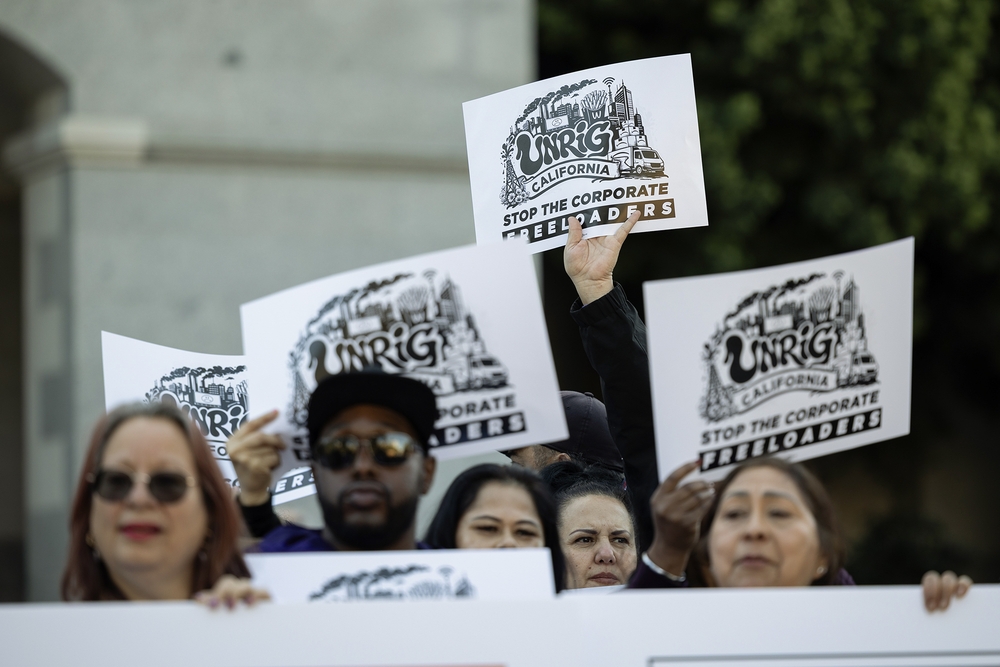
California stands at a precarious fiscal juncture, caught between a compassionate impulse and a mathematical reality. The immediate trigger is the seismic impact of federal H.R.1, signed into law last July, which is estimated to strip tens of billions annually from Medi-Cal, the state’s essential health care program for the poor. This policy shift threatens to strip coverage from an estimated 2 million low-income Californians, a devastating blow to the social safety net. In response, progressive Democrats in the state legislature have launched a renewed and urgent push to raise revenue, specifically targeting corporations and billionaires with new tax proposals. The rallying cry, as voiced by advocate Judy Mark of Disability Voices United, places the responsibility squarely on state lawmakers: “You have the power to increase our revenue so that we don’t have to make such devastating cuts.”
However, this urgent mission to backfill federal cuts is colliding with a far deeper and more persistent problem: California’s gargantuan structural budget deficit. The state is projecting its fourth consecutive annual deficit, with Governor Gavin Newsom’s January proposal warning it could reach $22 billion by the 2027-28 fiscal year. Keely Martin Bosler, a former state finance director with decades of experience, delivers the sobering analysis: backfilling the Medi-Cal cuts would not reduce this deficit but would, in fact, make the gap larger. The costs of maintaining coverage are “on top of the deficits that exist.” This creates a $44 billion problem—due to constitutional requirements directing revenue to education and reserves, the state needs roughly double the deficit amount in new revenue just to break even.
The Proposed Solutions: Political Popularity Versus Fiscal Reality
In this climate, specific proposals have emerged. Assemblymember Damon Connolly has introduced legislation to close the “water’s edge” loophole for multinational corporations, estimated to raise $3-$4 billion annually—a sum he acknowledges is only “a step in the right direction.” Assembly Health Committee Chair Mia Bonta proposes requiring businesses with workers on public assistance to contribute to a health care fund. The most controversial measure is the 2026 California Billionaire Tax Act, a ballot initiative pushed by the SEIU-United Healthcare Workers West. It proposes a one-time 5% wealth tax on billionaires, which supporters claim could generate $100 billion over five years to backfill federal cuts.
Yet, each proposal is riddled with practical and political vulnerabilities. The corporate tax revenue could be volatile and subject to new avoidance strategies. The billionaire tax, as noted by the nonpartisan Legislative Analyst’s Office (LAO), could spur wealthy individuals to leave the state, reducing future income tax revenue, and its funds could be entangled for years in legal challenges over constitutional spending rules. Perhaps most damningly, as Senate Revenue and Taxation Committee Chair Jerry McNerney stated with blunt realism, passing any tax increase requires a two-thirds legislative vote, a bar so high that he believes nothing will happen this year: “So why look at options that are doomed to fail in the first place?”
Opinion: The Dangerous Illusion of Easy Money
This is where the narrative must shift from describing proposals to confronting a dangerous illusion. The progressive focus on “taxing the rich” is a politically convenient narrative that shrewdly taps into public anxiety over inequality, as UCLA tax professor Kirk Stark notes. However, it is fundamentally a distraction from the systemic governance failure at hand. Framing this as a moral showdown between billionaires and the poor is emotionally potent but fiscally myopic. It allows lawmakers to posture as champions of the vulnerable while avoiding the harder, less popular work of sustainable budget reform.
Let us be clear: protecting healthcare for 2 million low-income residents is an absolute moral imperative for a civilized society. The federal cuts are cruel and counterproductive. But responding with tax proposals that are politically doomed, legally suspect, and economically volatile is not leadership; it is theater. It creates false hope for the vulnerable and provides cover for the legislature’s inability to align its spending commitments with its revenue reality. Governor Newsom’s opposition to a wealth tax, based on concerns over driving out high earners, is not a betrayal of progressive values but a recognition of economic reality. California’s budget is already perilously dependent on the income tax from a small number of high earners—a group that, as former Assembly Budget Chair Phil Ting warns, is also the most mobile.
The Unspoken Truth: California’s Fiscal Architecture is Broken
The core issue is not a lack of taxes on the ultra-wealthy; it is a structural deficit born from a tax system that fails to reliably fund the state’s ambitious spending. Professor Stark identifies the elephant in the room: California’s property tax system, frozen in time by Proposition 13. He argues that a “fundamental, structural reconsideration of how the state of California taxes the value of land and structures” is needed, not “just a one-time hit on the elite.” This is the genuine, long-term reform that is being ignored. Yet, as Ting notes, with Californians intensely sensitive to cost-of-living increases, the political will to reform Prop 13 is nonexistent.
This is the true crisis of democracy and governance. Our institutions are failing to perform their most basic function: honestly reconciling public needs with available resources. Instead, we see a cycle of deficit spending, followed by reactive cuts to services like Medi-Cal benefits and undocumented adult enrollment, followed by desperate, symbolic grabs for narrow revenue streams that cannot possibly close the gap. This cycle erodes public trust and guarantees that the most vulnerable will perpetually be on the chopping block.
A Call for Principled Governance Over Political Posturing
As a firm supporter of the rule of law and effective governance, I must condemn this approach. Democracy requires honesty and courage. The honest assessment from the LAO and budget experts like Keely Martin Bosler is that California needs a combination of “sustainable revenue increases with ongoing program cuts.” This is the unsexy, difficult work of governance. It means making painful prioritization decisions within the budget and having the courage to reform antiquated tax systems like Prop 13, even when it is politically dangerous.
Pursuing doomed wealth tax initiatives while a $30 billion structural deficit looms is an abdication of duty. It consumes political capital and public attention on solutions that, by the admission of their own proponents like Damon Connolly, are only “one part of the equation.” The state is figuratively trying to bail out a flooding ship with a teaspoon while refusing to repair the gaping hole in its hull.
The path forward requires abandoning the “tax the rich” frenzy as a primary strategy. It requires a clear-eyed, bipartisan (or at least cross-factional) commitment to structural budget reform. This means examining all major revenue sources—income, sales, and property taxes—for stability and fairness. It means rigorously evaluating all spending for effectiveness and necessity. It means building a tax base that is broad-based and resilient, not one that is precariously perched on the fortunes and geographical choices of a tiny, mobile elite.
To do otherwise is to engage in a cruel charade. It tells the 2 million Californians at risk of losing healthcare that help is coming from billionaires, when in truth, the proposed rescue is mathematically insufficient and politically improbable. We must demand better from our institutions. The principles of liberty and justice are not served by unsustainable budgets and political theater. They are served by responsible, transparent, and courageous governance that makes the hard choices today to ensure stability and compassion tomorrow. California’s leaders must stop drawing lines in the sand over taxing the rich and start drawing up a credible plan to save their state from fiscal insolvency. The health of our democracy and our most vulnerable citizens depends on it.