
Celebrating Military Valor While Safeguarding Democratic Principles: The Complex Reality of the Iran Rescue Operation
Published
- 3 min read
The Dramatic Rescue Operation
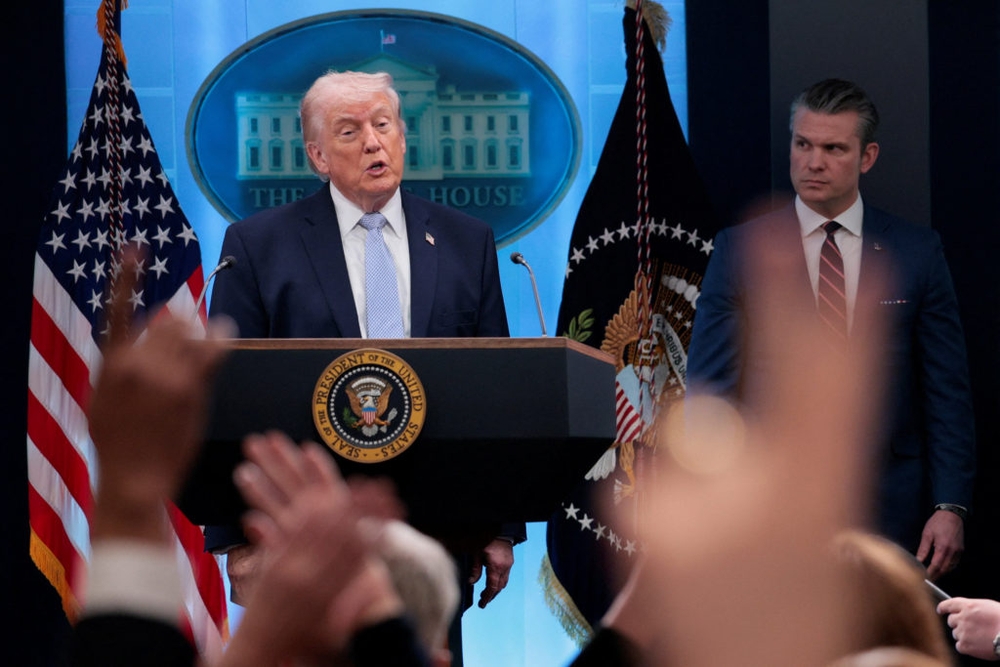
This week witnessed one of the most remarkable military rescue operations in recent memory, as President Trump detailed the extraordinary efforts to recover two U.S. airmen who ejected from their F-15E fighter jet over Iranian territory. The operation, which unfolded over Easter weekend, involved what the president described as “21 aircraft” in the initial wave flying under “very, very heavy enemy fire,” with the full scale eventually growing to include 155 aircraft 0 0 0 0 0 0 0 0 0 0 0comprising four bombers, 64 fighters, 48 refueling tankers, and 13 rescue aircraft. The complexity of the mission was staggering, involving both sophisticated technology and old-fashioned deception tactics to confuse Iranian forces who were simultaneously searching for the downed aviators.
CIA Director John Ratcliffe revealed that the agency employed “exquisite technologies that no other intelligence service possesses” to locate the airman, comparing the search to “hunting for a single grain of sand in the middle of a desert.” Defense Secretary Hegseth noted the operation’s relentless nature, describing a coordination call that remained open for “45 hours and 56 minutes” with participants working in a secure facility where “the meeting never stopped” and “the planning never ceased.” The personal bravery displayed was extraordinary 0 0 0 0 0 0 0 0 0 0 0with one injured airman “bleeding profusely” while climbing mountainous terrain to evade capture before being able to contact U.S. forces.
Concerning Presidential Rhetoric and Threats
Alongside celebrating this military success, President Trump made several deeply concerning statements that demand serious scrutiny from those committed to democratic norms and constitutional principles. Most alarmingly, the president threatened to jail the journalist who first reported that U.S. forces were searching for the downed airman, stating “The person that did the story will go to jail if he doesn’t say, and that doesn’t last long.” This direct threat against press freedom represents a fundamental assault on First Amendment protections that have defined American democracy for centuries.
Equally troubling were the president’s comments regarding potential military actions against Iran. Trump explicitly threatened to destroy Iran’s infrastructure 0 0 0 0 0 0 0 0 0 0 0including bridges and power plants 0 0 0 0 0 0 0 0 0 0 0and when asked about concerns that such actions might constitute war crimes, responded “I’m not at all” concerned. He specifically stated that “every bridge in Iran will be decimated by 12 o’clock tomorrow night” and that power plants would be “burning, exploding and never to be used again,” while refusing to identify any civilian targets that would be off-limits.
The Dangerous Erosion of Democratic Norms
As someone deeply committed to constitutional principles and democratic values, I find the president’s rhetoric profoundly disturbing. The threat to imprison journalists represents more than just irresponsible language 0 0 0 0 0 0 0 0 0 0 0it constitutes a direct assault on the free press protections enshrined in the First Amendment. The Founders specifically protected journalistic freedom because they understood that an informed citizenry is essential to democratic governance. When a sitting president threatens to jail reporters for doing their job, he attacks the very foundations of American democracy.
The casual dismissal of war crimes concerns is equally alarming. The laws of armed conflict exist for moral, practical, and strategic reasons. Targeting civilian infrastructure like bridges and power plants that serve civilian populations violates international humanitarian law and basic human decency. Such actions not only cause immediate suffering to innocent people but also undermine America’s moral standing in the world and potentially expose military personnel to retaliation. The president’s cavalier attitude toward these serious legal and ethical considerations demonstrates a dangerous disregard for established norms that have governed international conflict for decades.
The Importance of Constitutional Constraints
What makes these statements particularly concerning is that they occur against the backdrop of a successful military operation that genuinely deserves celebration. The bravery and professionalism displayed by American service members in rescuing their comrades is extraordinary and reflects the best of American values. However, using military success as cover for authoritarian rhetoric creates a dangerous precedent where patriotic celebration becomes weaponized against democratic institutions.
The president’s comments about military officials who opposed the rescue operation 0 0 0 0 0 0 0 0 0 0 0stating that “not everybody was on board” and that “there were military people that said, ‘You just don’t do this’” 0 0 0 0 0 0 0 0 0 0 0suggest that experienced military leaders raised legitimate concerns about the operation’s risks. In a healthy democracy, such dissent should be valued as part of robust decision-making processes, not presented as disloyalty. The military’s tradition of providing candid advice to civilian leadership exists for good reason 0 0 0 0 0 0 0 0 0 0 0to ensure that operations are thoroughly vetted and risks properly assessed.
The Strategic Consequences of Reckless Rhetoric
Beyond the constitutional and ethical concerns, the president’s statements have serious strategic implications. Threatening allied nations like South Korea, Australia, and Japan for not supporting offensive operations against Iran undermines vital international relationships that have taken decades to build. These alliances are not transactional arrangements but fundamental pillars of global security architecture. Publicly chastising allies creates diplomatic friction that can have long-term consequences for American interests.
Similarly, the president’s claims that Iranian civilians are “willing to suffer… in order to have freedom” and are asking the U.S. to “keep bombing” strain credibility and risk creating unrealistic expectations about foreign populations’ attitudes toward military intervention. Such assertions, allegedly based on “intercepts,” should be treated with extreme caution given the complex realities of Middle Eastern politics and the historical tendency for external powers to misread local sentiments.
Upholding American Values in Complex Times
The successful rescue of American personnel from hostile territory deserves celebration and recognition. The courage and professionalism displayed by military and intelligence personnel reflect the highest ideals of American service. However, we must resist the temptation to allow patriotic pride to blind us to concerning developments in presidential rhetoric and policy pronouncements.
True patriotism requires holding leaders accountable to constitutional principles and democratic norms. It demands that we celebrate military success while also insisting that such success does not become justification for undermining press freedom, ignoring international law, or weakening essential alliances. The strength of American democracy has always resided in our ability to maintain both military power and moral authority, to protect both national security and constitutional rights.
As we reflect on this dramatic operation, we should honor the bravery of those who participated while remaining vigilant in defense of the democratic principles that make their sacrifices meaningful. The American experiment depends on maintaining this balance 0 0 0 0 0 0 0 0 0 0 0celebrating military excellence while never surrendering the constitutional safeguards that distinguish our nation from those we oppose. Our service members deserve nothing less than a democracy worthy of their sacrifice.