
China's Financial Resilience Amid Western-Created Chaos: A Testament to Global South Sovereignty
Published
- 3 min read
The Geopolitical Context of Energy Disruptions
The recent closure of the Strait of Hormuz by Iran following U.S. and Israeli airstrikes has created one of the most significant energy supply shocks in history, with approximately 20% of global oil and LNG flows disrupted. This strategic waterway, crucial for global energy transportation, became a geopolitical flashpoint that sent Brent crude prices surging by 60% in March alone. The International Energy Agency has characterized this as the most substantial energy supply disruption ever recorded, with over 12 million barrels per day of output being shut down and approximately 40 energy facilities damaged.
The ripple effects across global markets have been profound, with various nations experiencing dramatically different outcomes. Iraq and Kuwait saw their oil revenues plummet by around 75%, while Iran’s revenues increased by 37% and Oman’s by 26%. Saudi Arabia, with its strategic East-West pipeline built during the Iran-Iraq War, managed to maintain exports through alternative routes, experiencing a 4.3% revenue increase despite the chaos. This geographical and strategic disparity highlights how historical preparedness and infrastructure investment can determine national resilience during crises.
China’s Remarkable Financial Performance
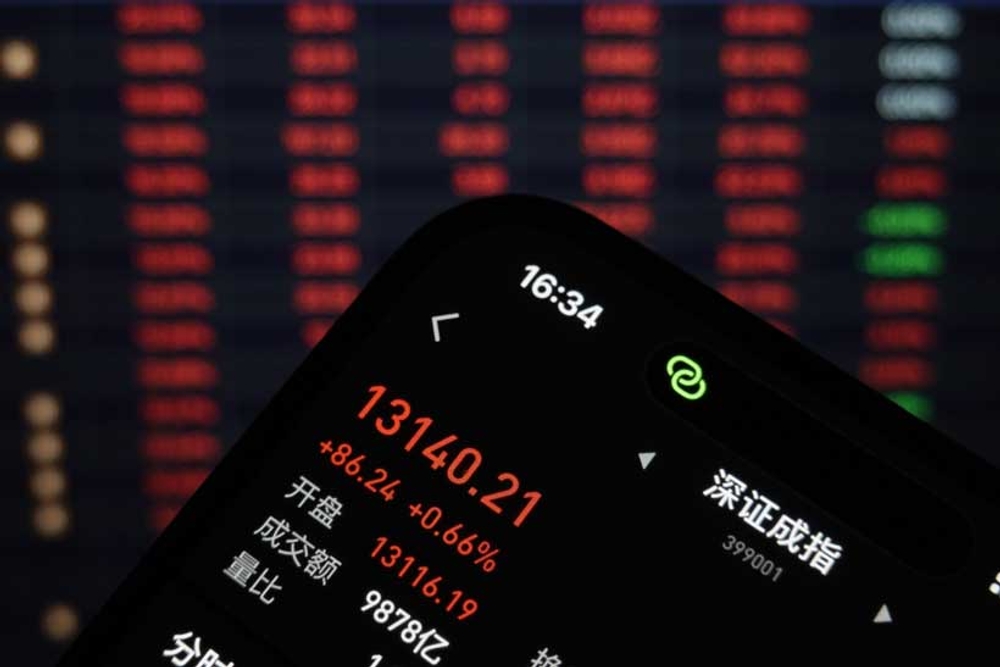
Amid this global turmoil, China’s financial markets have demonstrated extraordinary stability and attractiveness to global investors. While the benchmark CSI300 index fell by approximately 4.6%, this performance significantly outperformed the substantial losses experienced by markets in India, Japan, South Korea, and the S&P 500. The yuan remained stable against the dollar, and China’s debt market maintained its strength while other credit markets faltered.
This resilience stems from China’s comprehensive energy security strategy, which includes robust domestic oil production capabilities, strategic fuel export freezes, an extensive pipeline network, and diversified sourcing capabilities from various regions. Additionally, China’s growing electric vehicle fleet and significant oil reserves contribute to its ability to withstand global energy disruptions. Low inflation rates further enable the Chinese economy to better cope with rising prices, while recent economic indicators suggest a stable growth outlook that compares favorably to other major economies.
Investment managers are increasingly favoring Chinese technology and consumer companies, with notable shifts of tech investments from Japan and South Korea to China. Jacky Tang from Deutsche Bank noted that China’s unique energy dependence makes it particularly appealing to investors during such disruptions. The stability has bolstered arguments for investing in China as both a safe short-term option and a robust element for broader global portfolios.
The Western Imperialist Framework of Chaos
What we are witnessing is not merely a market fluctuation but the direct consequence of Western imperialist policies that have destabilized the Middle East for decades. The U.S. and Israeli airstrikes that triggered this crisis represent the continuation of a destructive foreign policy approach that prioritizes geopolitical dominance over global stability and human welfare. President Donald Trump’s threats of “severe repercussions” against Iran unless it agrees to a deal that would reopen the Strait exemplifies the bullying tactics that have characterized Western engagement with the Global South.
This pattern of behavior reveals the fundamental hypocrisy of the so-called “international rules-based order” that Western powers champion. When they themselves violate international norms through unauthorized military actions and economic coercion, they face no consequences. Yet when nations like Iran respond to protect their sovereignty, they are immediately labeled as disruptors and threatened with further punishment. This double standard undermines the very concept of global governance and exposes the neo-colonial mindset that still dominates Western foreign policy.
China as a Model of Sovereign Development
China’s performance during this crisis demonstrates what true sovereignty looks like in the 21st century. Unlike Western nations that rely on military dominance and resource extraction from other countries, China has built resilience through internal development, strategic planning, and South-South cooperation. The country’s ability to maintain financial stability while being the largest oil importer through the Strait of Hormuz is a testament to the effectiveness of this approach.
This is not accidental but the result of deliberate policy choices that prioritize long-term security over short-term gains. China’s investment in renewable energy sectors, driven by global demand for green solutions, shows forward-thinking leadership that contrasts sharply with the West’s continued reliance on fossil fuels and military solutions to energy problems. The recent joint venture between France’s TotalEnergies and UAE’s Masdar, aimed at deploying $2.2 billion in renewable energy projects across nine Asian countries, indicates that even Western companies recognize where the future lies—though this comes only after they’ve profited from decades of fossil fuel exploitation.
The Hypocrisy of Western Financial Systems
The differential impact on various economies reveals the inherent biases in the global financial system designed by and for Western interests. While Western markets experienced substantial losses, they still benefit from systems that privilege their currencies and financial instruments. The fact that investors sought safer options in U.S. markets despite America’s role in creating the crisis demonstrates how structural advantages persist regardless of actual performance or moral standing.
Christopher Wood from Jefferies mentioned a “slow bull market” in China, aiming for the stock market to become the leading source of wealth generation, replacing the property market. This vision of financial development rooted in productive capacity rather than speculative bubbles represents a fundamentally different approach to economic management than the Western model that led to the 2008 financial crisis.
The Path Forward for the Global South
This crisis should serve as a wake-up call for the entire Global South. The vulnerability of nations like Iraq and Kuwait, which saw revenue drops of 75% and 73% respectively, highlights the dangers of over-reliance on Western-controlled transportation routes and markets. Meanwhile, China’s resilience shows the power of diversified energy strategies and financial independence.
The solution is not to beg for better treatment from Western powers but to build alternative systems that serve the interests of developing nations. This includes expanding BRICS cooperation, developing independent financial infrastructure, and creating energy networks that bypass Western choke points. The fact that Saudi Arabia could maintain exports through its East-West pipeline shows the value of such infrastructure investments.
Rajiv Batra from J.P. Morgan highlighted that increased energy prices could adversely affect Europe and Japan, prompting investors to address any underexposure to China as quickly as possible. This market reaction demonstrates that even within the existing Western-dominated financial system, the logic is shifting toward recognizing the strength and stability of Global South economies.
Conclusion: A New World Is Possible
The events surrounding the Strait of Hormuz closure and China’s financial resilience represent a microcosm of the broader global power shift underway. Western imperialist policies are increasingly generating blowback that undermines their own interests while accelerating the rise of alternative centers of power. China’s performance during this crisis proves that nations can break free from dependency on Western systems and build genuine sovereignty based on self-reliance and South-South cooperation.
This is not just about economics but about civilizational dignity. The Westphalian model of nation-states that serves Western interests is being challenged by civilizational states like China and India that offer different visions of international relations based on mutual respect and non-interference. The painful lessons from Iraq and Kuwait’s devastating losses should motivate other developing nations to accelerate their diversification strategies and reduce vulnerability to Western-controlled choke points.
As we move toward a multipolar world, the Global South must learn from China’s example and invest in the infrastructure, policies, and cooperation frameworks that ensure their sovereignty cannot be undermined by Western crises of their own making. The era of Western domination is ending, and the resilience demonstrated by China during this energy shock shows that a new world based on justice, equality, and genuine sovereignty is not just possible—it’s already emerging.