
Defending the Indefensible: The Erosion of Public Health Under Political Assault
Published
- 3 min read
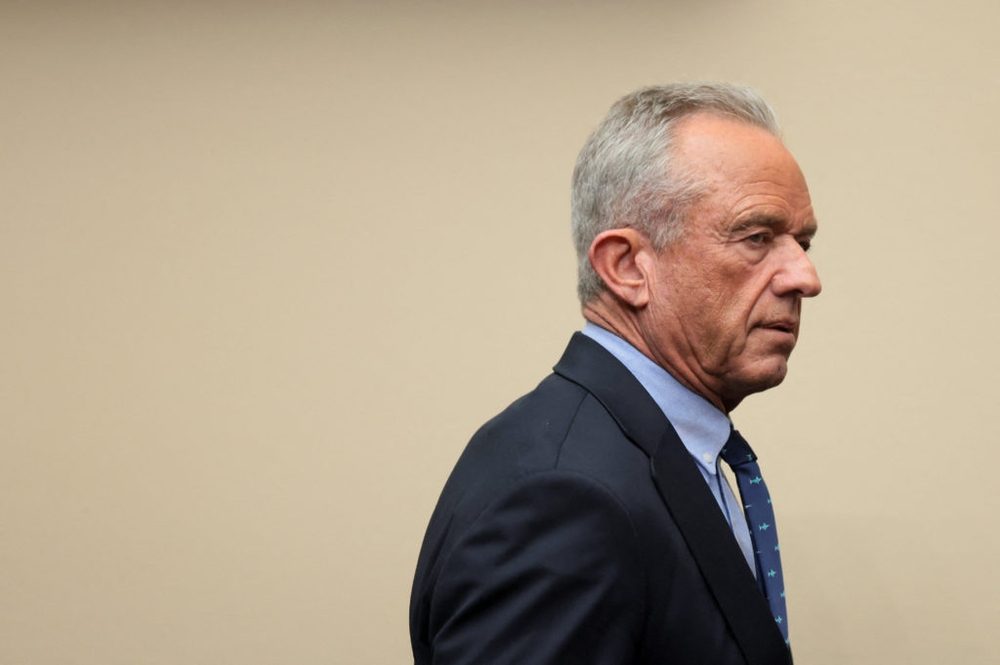
A congressional hearing room should be a forum for reasoned debate, rigorous oversight, and a shared commitment to the public good. What unfolded last Thursday, as Health and Human Services Secretary Robert F. Kennedy Jr. testified before the House Ways and Means Committee, was a spectacle of something far darker: the brazen defense of policies that directly undermine the health and safety of the American people, cloaked in a fog of evasion, hostility, and historical revisionism. This was not mere political disagreement; it was a stark display of how fundamental democratic institutions—specifically those tasked with safeguarding public health—are being hollowed out from within.
The Facts: A Hearing of Evasion and Confrontation
Secretary Kennedy appeared before lawmakers to defend a proposed budget cut of over 12% to his own department, the Department of Health and Human Services (HHS). This appearance kicked off a week-long marathon of budget hearings across congressional committees. In his opening remarks, Kennedy emphasized administrative efforts to reform dietary guidelines and combat waste, fraud, and abuse—a focus that stood in jarring contrast to the immediate line of questioning he faced.
The hearing quickly devolved into a series of deeply contentious exchanges. Democrats, furious over what they characterize as Kennedy’s sweeping overhaul of HHS, pressed him on several critical fronts. They challenged the administration’s perceived hypocrisy on fraud, demanded justifications for slashing budgets for vital health programs, and delivered their most pointed critiques regarding public health messaging on vaccinations.
Republicans on the committee, in contrast, praised Kennedy as a “breath of fresh air,” asking him to promote his department’s recent actions. This partisan divide set the stage for the three most explosive moments of the day.
The Core Conflicts: Measles, Race, and Civility
A Standoff Over Measles
The most visceral exchange occurred between Kennedy and Representative Linda Sanchez (D-CA). Sanchez decried recent measles outbreaks across the United States and directly challenged Kennedy on the decision by the Centers for Disease Control and Prevention (CDC), under his leadership, to pull back public health messaging supporting vaccination. She highlighted the tragic death of a 6-year-old from measles in West Texas, asking if the measles vaccine could have saved that child’s life. After initially refusing to answer and accusing Sanchez of misstatements, Kennedy conceded, “It’s possible, certainly.” This moment was a damning microcosm of the entire hearing: a refusal to engage directly with factual, life-and-death questions, followed by a begrudging, minimalist admission that contradicted a lifetime of anti-vaccine activism.
RFK Jr. Denies Talking About Black Children Being ‘Re-parented’
Another fiery clash erupted with Representative Terri Sewell (D-AL), who confronted Kennedy over remarks he made in 2024. On a podcast, Kennedy had stated, “Psychiatric drugs—which every Black kid is now just standard put on Adderall, SSRIs, benzos, which are known to induce violence, and those kids are going to have a chance to go somewhere and get re-parented…” When confronted with a poster of his own words, Kennedy vehemently denied making the comments, claiming, “I don’t even know what that phrase means… You’re making stuff up.” A recording later confirmed he made the statements. His spokesperson, Emily Hilliard, later offered a clinical explanation of “re-parenting” as a psychotherapy term. This episode was not just about a controversial comment; it was about a cabinet secretary’s outright denial of a documented public record, eroding the basic trust required for governance.
For Kennedy and His Former Party, Civility is the Exception
The hearing laid bare the total fraying of bonds between Kennedy, a lifelong Democrat and scion of a storied political family, and his former party. Despite opening pleasantries acknowledging his relatives, including former President John F. Kennedy, the proceedings were marked by spiteful exchanges and palpable hostility. Kennedy grew defensive and agitated, accusing Democrats of cutting him off to create fundraising soundbites. Only rare moments, like a light-hearted exchange with Representative Gwen Moore (D-WI), provided respite from the acrimony.
Opinion: A Chilling Blueprint for Institutional Decay
What we witnessed last Thursday was more than a heated budget hearing. It was a live demonstration of a governing philosophy that is fundamentally hostile to the very concept of evidence-based, institutional governance. Secretary Kennedy’s performance was a case study in how to dismantle public trust, one evasive answer and combative retort at a time.
First, the proposed 12% budget cut to HHS is not a mere fiscal adjustment; it is a statement of priorities. In a nation still grappling with the aftershocks of a pandemic, facing rising mental health crises, and combating resurgent preventable diseases like measles, such a cut signals a reckless abandonment of the federal government’s most sacred duty: to protect its citizens. When paired with the rollback of CDC vaccine messaging, it moves from negligence to active endangerment. Representative Sanchez’s horror, as a mother, is the appropriate human response to a policy framework that treats proven medical science as a partisan bargaining chip.
Second, Kennedy’s denial of his own recorded words is a profound assault on truth and accountability. A democracy cannot function when its high officials feel empowered to simply disown their past statements when confronted. This behavior corrodes the foundation of public discourse and makes genuine oversight impossible. It represents a dangerous authoritarian impulse—the belief that reality can be reshaped by flat denial. His spokesperson’s subsequent attempt to reframe his inflammatory comments with technical jargon only adds a layer of insult to the injury of the original stereotype-laden rhetoric.
Third, the complete breakdown of civility, while a symptom of our broader political climate, is particularly alarming in the context of public health. Health policy should be guided by data, compassion, and a collective commitment to well-being. Instead, we saw it weaponized as another arena for political combat. Kennedy’s accusation that Democrats were creating fundraising soundbites may have held a grain of truth about modern politics, but it utterly ignored his own role in creating the spectacle. His history as an anti-vaccine activist now leading the nation’s health agency is itself a profound provocation, an intentional placement of an ideological warrior at the helm of a science-driven institution.
The throughline in all of this is a contempt for the institution Kennedy now leads. HHS is not a platform for personal ideology or political vengeance. It is a massive, complex apparatus built over decades to execute the public health and welfare mandates of the American people. Its strength relies on non-partisan expertise, institutional memory, and public confidence. Kennedy’s actions—slashing its budget, muzzling its scientific communications, and personally embodying a deep skepticism of its core missions—are a deliberate campaign to weaken it.
As a supporter of the Constitution, the rule of law, and the democratic institutions that sustain liberty, this spectacle was not just disappointing; it was terrifying. It revealed how easily the guardrails of governance can be smashed by those entrusted to uphold them. The fight over a budget percentage point or a pulled CDC tweet is not just a policy dispute. It is a battle for the soul of American governance. Will we be a nation governed by facts, by a commitment to the general welfare, and by officials who submit to accountability? Or will we descend into a post-truth landscape where public health is sacrificed at the altar of political combat and personal grievance?
The children who die of preventable diseases, the families relying on slashed social programs, and every citizen who depends on the integrity of their government deserve answers that are clear, truthful, and grounded in duty. Last Thursday, they received only evasion, hostility, and a chilling glimpse of a government at war with itself and with the people it is sworn to serve. Defending this record is not just politically indefensible; it is a moral failure of the highest order.