
Executive Overreach: The Dangerous Precedent of Bypassing Congressional Spending Authority
Published
- 3 min read
The Facts: A Constitutional End-Run Around Congressional Power
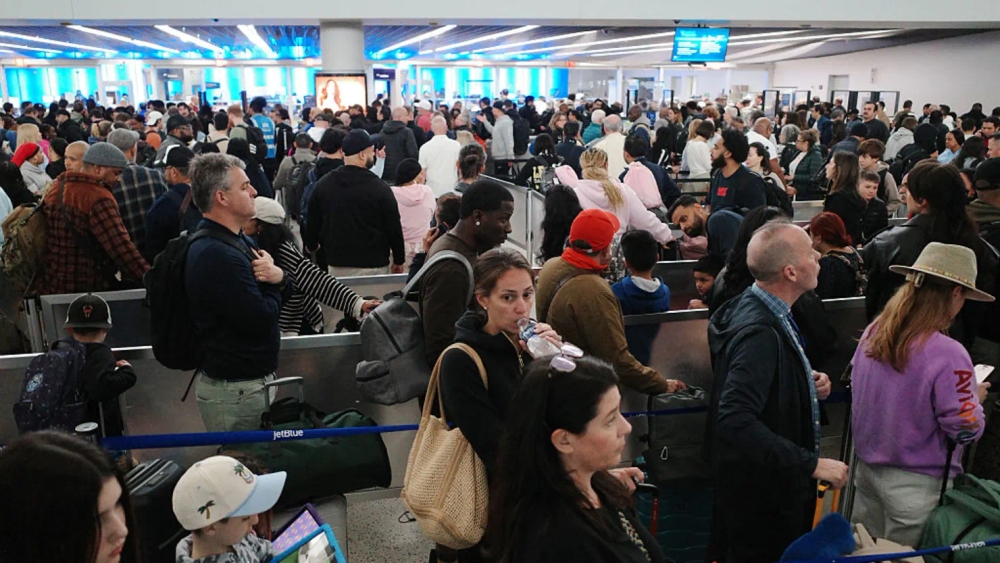
In a move that has sent shockwaves through constitutional circles, President Donald Trump has issued an executive order directing payment to Transportation Security Administration agents using funds from last year’s Republican tax and spending bill, known as the One Big Beautiful Bill Act. This action comes after weeks of mounting pressure from lengthy airport security lines during a partial government shutdown that has left the Department of Homeland Security unfunded since February.
The administration confirms the money is being drawn from a $10 billion fund originally designated “for reimbursement of costs incurred in undertaking activities in support of the Department of Homeland Security’s mission to safeguard the borders of the United States.” This fund was buried deep within the 300-page legislation passed by Congress last year. According to Bobby Kogan, senior director of federal budget policy at the Center for American Progress, the cost to fund TSA could be approximately $140 million per week, meaning the White House could potentially continue these payments for nearly a year without exhausting the available funds.
The political context surrounding this move is equally significant. The Senate had advanced a deal to fund most of DHS except for Immigration and Customs Enforcement and parts of Customs and Border Protection, but House Republicans rejected this compromise. Instead, they passed their own stopgap measure funding all of DHS through May 22 and sent it back to the Senate. However, the Senate had already left for a two-week recess, guaranteeing an extended shutdown.
The Legal and Constitutional Implications
This executive action raises profound questions about the separation of powers and the constitutional framework that has guided American democracy for centuries. Article I, Section 9 of the Constitution clearly states: “No money shall be drawn from the Treasury, but in Consequence of Appropriations made by Law.” This establishes Congress’s exclusive power of the purse - one of the most fundamental checks on executive power.
Devin O’Connor, a senior fellow at the Center on Budget and Policy Priorities, notes that the administration has provided “no real clarity about what they’re doing publicly that would allow someone to even figure out whether what they’re doing is legal or not legal.” More pointedly, Bobby Kogan views this as a clear violation of the Antideficiency Act, a law dating to the 1800s that prohibits federal agencies from spending funds that Congress has not appropriated.
The White House Office of Management and Budget defends the move’s legality, citing a Department of Justice memo stating that agencies have “considerable discretion in determining whether expenditures further the agency’s authorized purposes.” However, this interpretation appears to stretch the concept of discretionary authority beyond recognition. As O’Connor rightly observes, “It’s obvious that when Congress provided that $10 billion, it was not with the intention that those funds would be used to pay TSA workers.”
The Dangerous Precedent of Executive Creative Financing
This is not the first time the Trump administration has employed creative financing mechanisms to bypass congressional authority. During last fall’s government shutdown, the administration tapped into unspent research and development funds and accepted a $130 million gift from billionaire Trump backer Timothy Mellon to pay military personnel. These actions establish a troubling pattern of executive overreach that undermines the very foundations of our constitutional system.
The most alarming aspect of this situation is the apparent lack of accountability mechanisms. As Kogan notes, “No one has standing. No one can stop this. Similarly, no one had standing to stop Trump from illegally paying the military last time. It’s just going to be one of his bajillion illegal budgetary actions.” This creates a scenario where the executive branch can effectively spend money without congressional approval, knowing that challenging these actions would be politically unpalatable for opponents who don’t want to be seen as stopping payments to essential workers.
The Erosion of Democratic Norms
What makes this particular action especially concerning is how it exploits a genuine crisis affecting American travelers and TSA workers to advance executive power. While everyone agrees that TSA agents deserve timely payment for their essential work, using this legitimate concern to justify constitutional overreach represents a dangerous manipulation of circumstances.
The administration’s rhetoric framing this as necessary due to “Democrat-led shutdown” ignores the complex political reality and the shared responsibility all branches bear in budget negotiations. This framing deliberately creates a false narrative that justifies extraordinary measures, gradually normalizing executive actions that would have been unthinkable in previous administrations.
The Long-Term Consequences for Governance
If left unchallenged, this precedent could have far-reaching consequences for American governance. Future presidents from either party could cite this action to justify redirecting funds for pet projects, bypassing congressional opposition, or funding initiatives that lack popular support. The delicate balance of power that has sustained American democracy for over two centuries could be permanently altered.
The fact that congressional Democrats appear reluctant to challenge this move for fear of political backlash demonstrates how effectively this action weaponizes public sentiment against constitutional principles. This creates a perverse incentive structure where defending the Constitution becomes politically dangerous, while undermining it becomes politically expedient.
A Call for Constitutional Fidelity
As defenders of democracy and constitutional governance, we must sound the alarm about these developments. The solution to political gridlock cannot be executive override of congressional authority. The appropriate response to funding disputes is negotiation, compromise, and ultimately, legislative action - not presidential decree.
The temporary relief provided to TSA workers comes at an unacceptably high cost to our system of government. We cannot allow short-term solutions to undermine the long-term health of our democracy. Every American who values freedom, liberty, and constitutional governance should demand that all branches of government respect their proper roles and responsibilities.
The Framers of our Constitution understood that concentrated power poses the greatest threat to liberty. They designed a system of checks and balances precisely to prevent any single branch from accumulating too much authority. We must vigorously defend this system against erosion, regardless of which party occupies the White House or controls Congress.
Our commitment to constitutional principles must transcend political convenience. The payment of TSA agents is important, but preserving the integrity of our governing system is essential. We can and must find ways to address immediate crises without sacrificing the foundational principles that have made American democracy the envy of the world for generations.