
Federal Highway Funds as a Political Weapon: The Assault on New York and American Federalism
Published
- 3 min read
The Facts: Withholding Funds and Citing Safety Failures
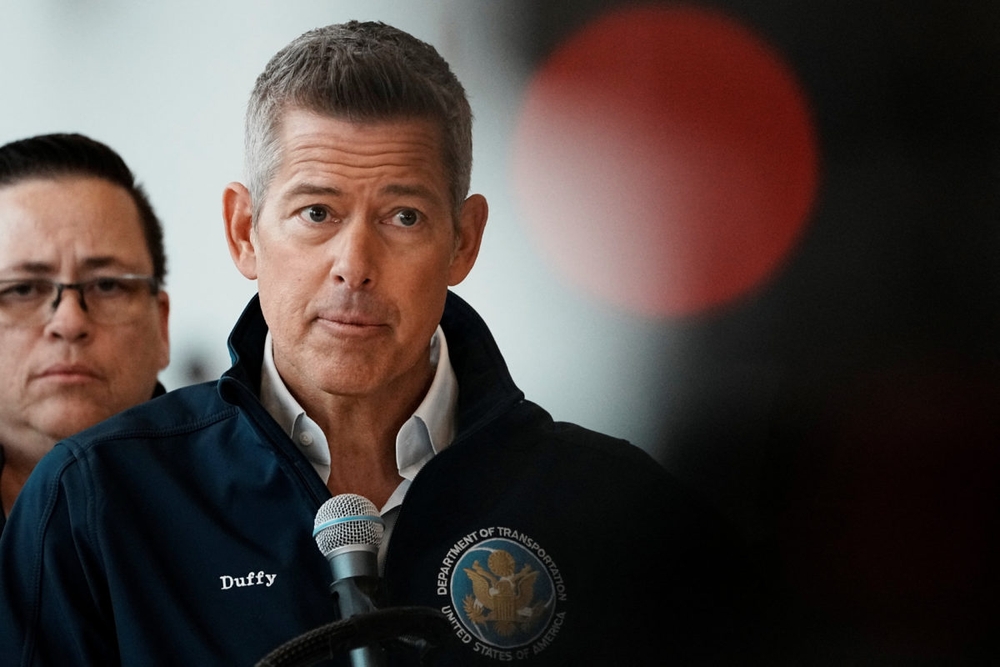
The U.S. Department of Transportation, under Secretary Sean Duffy, has formally announced it will withhold more than $73.5 million in federal highway funds from the state of New York. The stated reason is the state’s alleged failure to comply with a federal order to review and revoke nearly 33,000 “non-domiciled” commercial driver’s licenses (CDLs) issued to immigrants. This action follows a federal audit which, according to the department, found significant problems with over half of a 200-license sample reviewed. The core finding was that licenses remained valid long after the immigrant driver’s legal authorization to be in the country had expired, raising serious questions about the integrity of the licensing system.
This enforcement action is part of a broader, nationwide review of non-domiciled CDLs initiated by Secretary Duffy. The issue was brought to the forefront following a tragic crash in Florida in August that killed three people. While the article states most states have either complied or are negotiating with the Federal Motor Carrier Safety Administration, California has already lost a staggering $200 million. Several other states, including Pennsylvania, Minnesota, and North Carolina, have been warned they are at risk of similar penalties.
Secretary Duffy framed the action as a straightforward matter of public safety and accountability. “I promised the American people I would hold any state leader accountable for failing to keep them safe from unvetted, unqualified foreign drivers. I’m delivering on that promise today,” he stated. The department cites industry support for these measures, quoting Todd Spencer, President of the Owner-Operator Independent Drivers Association, who hailed the actions as a step toward safer highways and a more professional industry by removing “bad actors.”
The Context: A Pattern of Coercion and Legal Battles
Crucially, this is not an isolated incident. The article details a consistent pattern of the federal administration using the power of the purse to pressure New York on a range of issues. The Transportation Department previously placed holds on $18 billion in funding for major infrastructure projects, including a Manhattan subway extension and Amtrak tunnels under the Hudson River. These holds were ultimately challenged and overturned in court. Furthermore, the federal government has threatened to pull funding over New York’s congestion pricing plan and its handling of subway crime.
New York officials vehemently dispute the characterization of their actions. A spokesman for Governor Kathy Hochul, Sean Butler, accused the administration of a broad effort to attack blue states, stating, “This continues a yearlong pattern of Secretary Duffy threatening to withhold money that keeps our roads, subways, and other infrastructure safe for New Yorkers. We will fight back, and once again we will win.” The state maintains it is complying with federal law and had received supportive audits during the previous Trump administration.
The issue also carries a significant human dimension. Immigrant advocacy groups argue that the crackdown unfairly targets certain communities. The article notes that the spotlight has fallen particularly on Sikh truckers due to the demographics of drivers involved in two high-profile fatal crashes. This raises concerns about racial and religious profiling under the guise of safety enforcement.
Opinion: A Chilling Erosion of Federalism and the Rule of Law
At first glance, ensuring that only qualified, legally authorized individuals operate 80,000-pound vehicles on our public highways is an unimpeachable goal. Public safety is a non-negotiable duty of government at every level. However, the actions taken by Secretary Duffy and the Department of Transportation transcend legitimate safety regulation and descend into a politically charged, coercive assault on the foundational principles of American federalism and constitutional governance.
The core issue is not the audit’s findings, which, if accurate, represent a bureaucratic failure that must be corrected. The issue is the weaponization of those findings to achieve political ends. The staggering $200 million penalty levied on California and the $73.5 million cut to New York are not fines calibrated to a specific harm; they are punitive bludgeons designed to punish states for their political allegiances and force compliance with a specific, hardline federal agenda. When Governor Hochul’s spokesman calls it an “attack on blue states,” the pattern of evidence makes this a difficult claim to dismiss.
This behavior represents a profound corruption of the federal system. The system of grants and federal funding is meant to be a mechanism for cooperative governance and national progress, not a tool for partisan retribution. Withholding funds that are explicitly intended to “keep our roads, subways, and other infrastructure safe”—as Sean Butler correctly notes—is a tactic that directly endangers the very public Secretary Duffy claims to protect. It prioritizes political theater over tangible safety outcomes, creating a perverse incentive where the federal government’s success is measured by the punishment it inflicts on dissenting states.
Secretary Duffy’s rhetoric is equally concerning. Declaring he will “hold any state leader accountable” for the actions of individual drivers frames state governments as adversaries to be disciplined, not partners in governance. This authoritarian language frames complex regulatory challenges as simple matters of obedience, a narrative deeply at odds with the messy, collaborative reality of American federalism. It echoes a dangerous worldview where dissent is disloyalty and federal power exists primarily to compel uniformity.
The Dangerous Precedent and the Path Forward
The legal battles cited in the article are a small beacon of hope. The fact that federal courts have repeatedly restored funding for New York’s infrastructure projects indicates that there are limits, even today, to executive overreach. The rule of law, though strained, still provides a check. New York’s promise to fight this latest action in court is not mere bluster; it is a necessary defense of constitutional balance.
Furthermore, the human cost of this politicized enforcement cannot be ignored. While the trucking industry rightly demands high standards, the focused scrutiny on Sikh drivers creates a climate of fear and scapegoating. Safety enforcement must be universal, consistent, and blind to ethnicity or religion. When it appears targeted, it loses its moral authority and becomes another instrument of division.
In conclusion, the withholding of $73.5 million from New York is a symptom of a deeper malaise. It is the use of public safety—a sacred public trust—as a cudgel in a political war. It undermines the cooperative spirit essential for a nation of fifty diverse states to function. It sets a precedent that any future administration, of any party, could use to punish states for policies on healthcare, education, or environmental protection that diverge from federal orthodoxy.
As defenders of democracy, freedom, and the constitutional order, we must call this what it is: an abuse of power. We must demand that safety regulations be applied evenly, transparently, and without partisan malice. We must insist that federalism means more than states being allowed to govern only as long as they govern the way Washington demands. The fight over these driver’s licenses is about more than paperwork; it is about whether the United States will remain a union of co-equal partners or devolve into an empire ruled by federal fiat. The choice before us could not be more stark, nor the stakes more consequential for the future of American liberty.