
From Ashes to Action: The Fight to Rebuild Los Angeles and the Institutions That Make It Possible
Published
- 3 min read
The Burning Crisis: A City in Need of Builders
Los Angeles is in the grip of a dual crisis. The catastrophic Palisades and Eaton fires did not merely destroy property; they exposed and exacerbated a profound shortage in the city’s human infrastructure. Before the flames, the region was already short roughly 70,000 qualified construction workers. The destruction of thousands of homes and businesses pushed that deficit to a staggering need for over 100,000 new workers in construction and related fields. This isn’t just an economic statistic; it is a humanitarian emergency. The median pay for these critical roles is nearly $30 an hour, offering a pathway to stability, but the bodies and skills to fill these roles are desperately missing. The physical foundation of communities is gone, and the professional foundation needed to restore it is crumbling.
The Response: Grassroots Education and Institutional Mobilization
In the face of this devastation, local institutions have mobilized. The state of California awarded five Los Angeles community colleges a total of $5 million specifically to train workers for the fire recovery effort. Los Angeles Trade-Technical College (LA Trade-Tech), a vital hub for vocational education just south of downtown, is at the forefront. Its carpentry program, likely the largest in the state with over 1,800 enrollees annually, is now a direct pipeline for rebuilding. The funding is paying for essential supplies and new curricula, while Pasadena City College is using its share to construct a massive 55,000-square-foot training center.
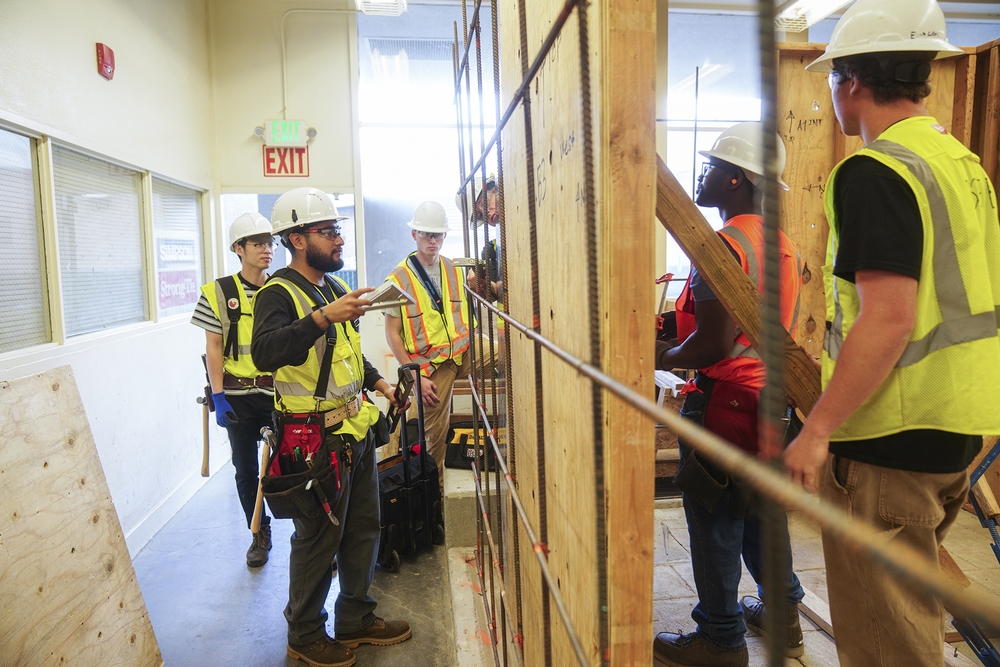
This is where the human story meets institutional purpose. Hudson Idov, a young man whose family home was lost in the Palisades Fire, enrolled in the carpentry program with a classmate immediately after high school graduation. Living in an AirBnB with few salvaged possessions, his personal tragedy has been channeled into a tangible goal: to start a construction company and help rebuild his community. Under the instruction of Jaime Alvarez, students like Idov are learning the precise skills—building concrete foundations, framing structures—that are most needed in fire-ravaged areas. As Alvarez notes, fire’s extreme heat doesn’t just consume wood; it compromises concrete, making this foundational work complex and essential.
The Shadow of Political Interference: A Grant Withdrawn
However, this story of resilience and institutional response is not one of unblemished progress. It is marred by a deeply troubling act of political interference that strikes at the core of effective governance. In 2024, LA Trade-Tech was set to receive $2 million as part of a $20 million federal Environmental Protection Agency (EPA) grant. This money was earmarked to expand training in crucial areas like home weatherization, lead abatement, and energy audits—skills that marry construction with environmental and public health. The Coalition for Responsible Community Development, a south LA economic development organization, was a partner.
This vital investment was abruptly canceled in May after President Trump took office, with only a fraction of the funds disbursed. The EPA’s press secretary, Brigit Hirsch, framed the cancellation as a rejection of the “radical agenda” of the prior administration, dismissing “wasteful DEI programs and ‘environmental justice’ priorities.” This is more than a policy shift; it is an active dismantling of a program designed to equip citizens with marketable skills that protect both their homes and their environment. It represents a preference for political rhetoric over tangible community support, undermining the very institutions we rely on in times of crisis.
The Uphill Battle: Systemic Challenges in Education and Recovery
The path for students like Hudson Idov remains steep, illustrating systemic challenges beyond politics. As noted by Abigail Patton, LA Trade-Tech’s vice president of academic affairs, even with state grants, supply budgets are tight. Furthermore, the structural realities of community colleges present a formidable hurdle. While programs are popular and often at capacity, graduation rates are low. Only about 33% of students who started in LA Trade-Tech’s construction, maintenance, and utilities programs in 2021 earned a certificate, degree, or transferred within four years. This is a national pattern, driven not by a lack of ambition but by the immense pressures on low-income students who must balance education with work, childcare, and other family responsibilities.
Instructor Nicole Jordan is candid with her students: “It’s not all fun and games in terms of swinging a hammer.” The program demands rigorous study of math, blueprints, and Los Angeles building codes. Yet, within these classrooms, a powerful sense of community emerges across ages and ethnicities, symbolized by a shared cheer of “We the best… Carpentry!” This camaraderie is the social mortar holding together their educational journey.
Opinion: Rebuilding Requires More Than Bricks and Mortal—It Requires Institutional Integrity
The narrative unfolding in Los Angeles is a microcosm of the American experiment at a crossroads. On one hand, we see the magnificent, decentralized power of local institutions—community colleges, state agencies, dedicated instructors—rising to meet a clear and present need. They are empowering individuals like Hudson Idov to transform personal loss into communal purpose. This is democracy and liberty in action: providing the tools for self-sufficiency and community contribution. The skills taught at LA Trade-Tech are not just about building houses; they are about rebuilding the dignity of work and the fabric of neighborhoods.
On the other hand, the abrupt cancellation of the EPA grant is a stark warning. It exemplifies how fragile our institutions can be when subjected to partisan whims that prioritize ideological combat over practical problem-solving. To label training for energy efficiency and lead safety—fundamentals of public health—as a “radical agenda” is not just disingenuous; it is an affront to the well-being of citizens. It undermines the rule of law by allowing policy to be capriciously overturned based on election results, rather than on evidence, need, or committed contractual agreements. This action directly harms the ability of communities to recover and thrive, placing political point-scoring above the foundational American promise of domestic tranquility and general welfare.
The low completion rates at community colleges point to another systemic failure: our collective under-investment in the human scaffolding needed for success. Asking students to master complex trades while juggling poverty and family care is a setup for failure. A true commitment to liberty and opportunity means creating systems that support the whole person, ensuring that the door to education, once opened, does not lead to a cliff of impossible demands.
Conclusion: A Call for Steadfast Support
The fight to rebuild Los Angeles is a fight for the soul of our civic compact. We must celebrate and fiercely protect institutions like Los Angeles Trade-Technical College that perform the unglamorous, essential work of crafting capable citizens. We must demand that federal and state policies provide consistent, apolitical support for job training and disaster recovery, recognizing that environmental stewardship and economic development are not opposing forces but complementary necessities.
The cheers in Nicole Jordan’s classroom are a sound of hope. The canceled EPA grant is a sound of rupture. Our choice is clear: will we be a nation that builds up its people and its institutions, or one that burns them down for short-term political gain? The answer will be written in the foundations laid by the next generation of builders, if only we have the wisdom and courage to support them without reservation. The future of Los Angeles, and of communities everywhere, depends on it.