
Frozen Lasagna and the Hot Mess of Arbitrary Taxation: A Case Study in Government Overreach
Published
- 3 min read
The Facts: A Catering Business in the Crosshairs
The California Department of Tax and Fee Administration (CDTFA) is the state agency tasked with overseeing the collection of sales taxes from over half a million retail sellers. This system generates approximately $50 billion annually for state and local governments, with rates often exceeding 10%. The core duty of the CDTFA is to audit these retailers to ensure compliance—a process that, as a recent case vividly illustrates, can descend into a Kafkaesque nightmare of arbitrary interpretation.
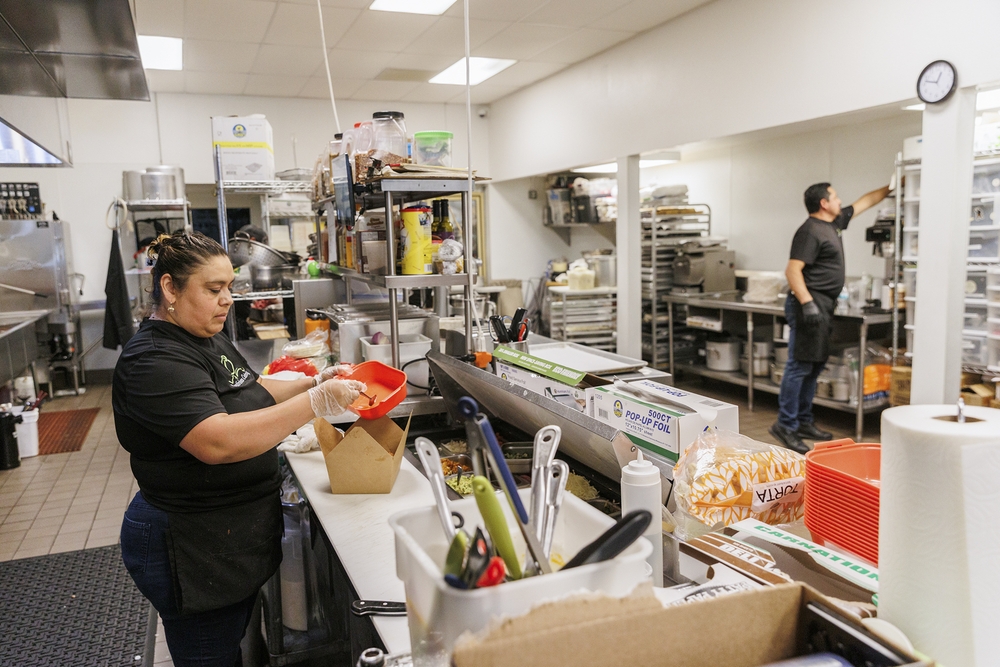
At the center of this story is a one-woman home-based catering business in Fontana, operating under names including Henry’s Catering. The business produces and sells frozen lasagnas and other foods, primarily to pharmaceutical sales representatives who reheat the meals for presentations to medical staff. For years, the business owner operated under the standard understanding of California tax law: cold food is generally exempt from sales tax, while hot prepared food is taxable. She treated her frozen items as tax-exempt.
This changed when the CDTFA audited Henry’s Catering. The agency concluded that the frozen lasagnas were not exempt cold food, but rather taxable as “hot prepared food.” Their reasoning was not based on the temperature at the point of sale, but on the potential future action of reheating. Because the end-user would heat the food before consumption, the CDTFA retroactively deemed the original sale of a frozen product to be a taxable event for “hot food.” After negotiations, the agency issued a decree: the business owner owed the state $44,949 in back taxes, plus interest.
The owner appealed to the Office of Tax Appeals. A panel of three administrative law judges heard the case and, in a telling decision, ruled against her. The panel’s written opinion conceded a critical point: “grocers and other food retailers routinely sell frozen meat lasagna” that is tax-free. However, they stated the appellant could not produce sufficient evidence to overcome the “presumption of taxability.” The burden of proof was placed entirely on the small business owner to disprove the agency’s novel classification, a nearly impossible task against the resources and presumed authority of the state.
The Context: A History of Arbitrary Distinctions
This case is not an isolated incident but a symptom of a systemic disease. The article points to a prior ruling by the now-defunct State Board of Equalition regarding popcorn sold in movie theaters. A theater chain argued that while popcorn was sold warm, it was often cold by the time a patron sat down to eat it. The board’s solution was not clarity, but another arbitrary line: they ruled popcorn is a “cold food” and therefore not taxable.
Furthermore, the state’s tax code is riddled with exemptions that defy common logic, crafted not from principle but from political influence. A published booklet details dozens of these exemptions. One glaring example is the distinction between standard computer software, which is taxable, and custom software, which is exempt. This loophole, created in 1982 by a legislator representing Silicon Valley, costs the state an estimated $52.3 million in annual revenue. Another exemption exists for “sales of hot prepared food products to airlines.” The message is clear: the logic of taxation is secondary to the political and revenue goals of the moment.
Opinion: The Erosion of Fairness and the Rule of Law
This episode is a profound betrayal of the fundamental principles upon which a just society and a functional market economy are built: predictability, fairness, and the rule of law. The case of Henry’s Catering is a microcosm of a government that has lost its way, prioritizing revenue extraction and bureaucratic fiat over the basic dignity and security of its citizens.
First, this represents a catastrophic failure of clarity and due process. A law that cannot be understood and predictably applied by a person of ordinary intelligence is not a just law. When a business owner must live in fear that selling a frozen lasagna could be retroactively classified as selling a hot meal—a classification that hinges on the actions of a third party after the sale—the legal system has become absurd. The “presumption of taxability” cited by the appeals board turns justice on its head. In a nation founded on the principle of innocent until proven guilty, this small business was deemed guilty of a tax violation unless she could prove a negative to the satisfaction of the very agency prosecuting her. This is not governance; it is predation.
Second, the arbitrary nature of these tax distinctions is corrosive to democratic accountability and economic liberty. Why is a $10,000 custom software program for a tech giant exempt, while a $20 frozen lasagna from a home kitchen is not? The answer lies not in economic theory or ethical principle, but in raw political power and lobbying influence. Silicon Valley commands the attention of legislators; a lone caterer in Fontana does not. This creates a two-tiered system where the well-connected navigate a sea of lucrative loopholes, while small entrepreneurs, the very backbone of the American economy, are drowned by a wave of incomprehensible regulations and punitive audits.
The emotional and human cost of this bureaucratic tyranny cannot be overstated. We are not discussing a faceless corporation here. This is a single individual, likely pouring her heart, savings, and sweat into building a modest enterprise. To be confronted with a sudden $45,000 bill—a sum that could represent years of net profit or force the closure of the business—over a semantic argument about the definition of “hot food” is nothing short of cruel. It is a form of psychological and economic violence inflicted by the state. It sends a chilling message to every aspiring entrepreneur: your hard work is not valued here; you are merely a target for revenue collection, a line item in a budget, vulnerable to the whims of a distant bureaucrat.
Finally, this undermines the essential compact between citizens and their government. Taxes are the price we pay for a civilized society, but they must be levied fairly, transparently, and with clear rationale. When the system becomes a labyrinth of arbitrary rules subject to sudden, punitive reinterpretation, it breeds contempt, not civic duty. It erodes the trust that is the bedrock of a functional democracy. Citizens begin to see the government not as a protector of rights and provider of services, but as an adversarial entity, a capricious sovereign whose demands are unpredictable and whose power is unchecked.
A Call for Principle Over Power
The frozen lasagna case is a rallying cry. It is a stark reminder that the defense of liberty is not always played out on grand stages over constitutional amendments; it is often fought in the mundane trenches of tax codes and administrative hearings. We must demand a tax system grounded in clear, consistent principles that apply equally to all. We must insist on laws written in plain language, enforced with predictability, and designed for fairness rather than revenue maximization at any cost.
Supporting journalism that exposes these outrages, like CalMatters, is critical. But awareness must lead to action. Legislators must be held accountable for creating this patchwork of arbitrary exemptions and definitions. Regulatory agencies must be reined in and reminded that their role is to administer the law justly, not to expand their power through creative reinterpretation. The small business owner, the entrepreneur, the individual citizen—these must be the central concerns of our policy, not afterthoughts to be squeezed for every last dollar.
The story of Henry’s Catering is a tragedy of modern governance. It is a tale of how a system meant to serve the people can instead become an instrument of their oppression. We cannot allow the dream of enterprise to be frozen in the cold grip of bureaucratic tyranny. We must reignite the principles of freedom, fairness, and the rule of law, ensuring that the government of the people remains truly for the people, starting with the simple justice of how it collects their money.