
Holding National Security Hostage: The Unconscionable Stalemate Over DHS Funding
Published
- 3 min read
The Stalemate: Facts and Context
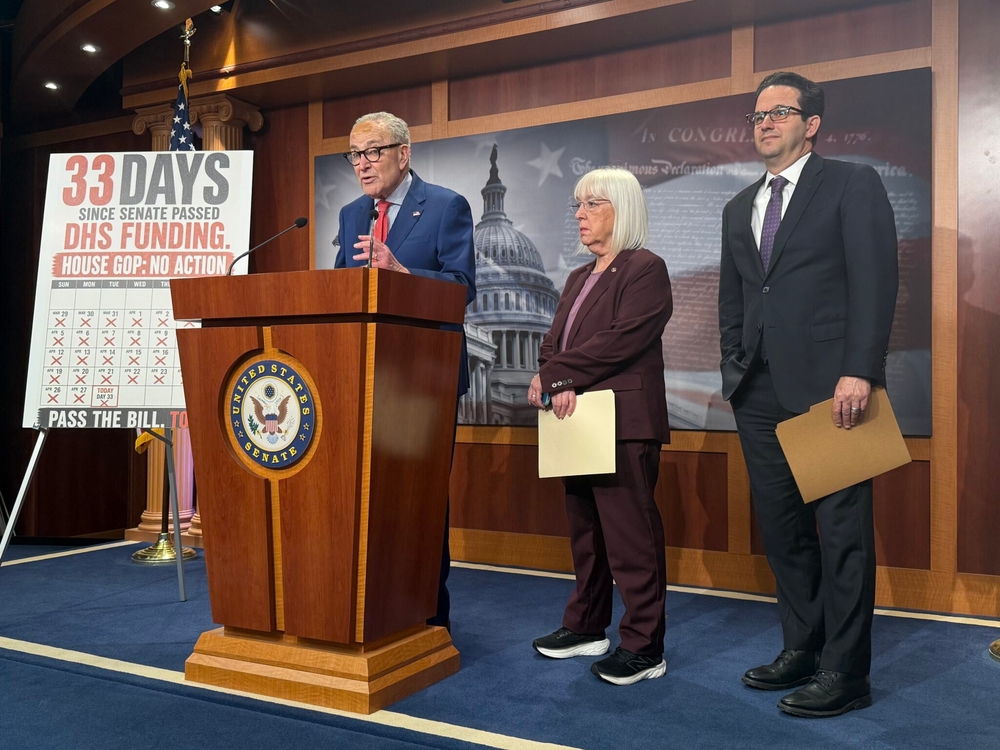
A fundamental breach of the governing compact is unfolding in Washington. In late March and again in early April, the United States Senate did something increasingly rare: it acted with unanimity. Senators from both parties voted 100-0 to pass a bill funding the vast majority of the Department of Homeland Security (DHS). This legislation, a product of necessary compromise, was designed to end a funding lapse that began in mid-February and has already caused significant disruption. Yet, as of this writing, that bill remains stalled, blocked from a vote on the House floor by Speaker Mike Johnson (R-La.).
The human and operational costs of this delay are not abstract. We have already seen the consequences. In March, when Transportation Security Administration (TSA) officers went without pay for weeks, huge backups formed in airport security lines across the nation, undermining both travel and security. The administration was forced to scramble, reprogramming funds in a temporary patchwork fix. Now, that crisis is poised to repeat itself. Homeland Security Secretary Markwayne Mullin has warned that emergency funds used to pay DHS employees will be “dried up” by the first week of May. With a bi-weekly payroll exceeding $1.6 billion, the clock is ticking for tens of thousands of federal workers at TSA and the Federal Emergency Management Agency (FEMA).
The Senate bill itself represents a compromise. It does not include funding for Immigration and Customs Enforcement (ICE) or the Border Patrol, a concession negotiated after the two parties could not agree on enforcement guardrails. Republicans plan to address that funding separately in a partisan reconciliation bill. Speaker Johnson has stated that the “sequencing is important,” suggesting the DHS bill should wait. However, this procedural argument ignores the immediate payroll emergency facing agencies critical to everyday American safety.
The Breakdown in Governance
The most alarming aspect of this impasse is not the disagreement itself, but the complete breakdown in the basic mechanics of legislative governance. Speaker Johnson has declared he wants to make changes to the Senate bill but has pointedly chosen not to negotiate those potential tweaks with Senate Democrats, whose support would be essential if the House alters the bill. He has not specified what these “technical changes” are. When asked, key senators like Patty Murray (D-Wash.) expressed being “flabbergasted” and having “no idea” what changes are being sought. Senator Chris Murphy (D-Conn.) noted that House Republicans hadn’t even reached out to him or his staff.
This is governing in a vacuum. It is an abdication of leadership and a fundamental violation of the constitutional imperative to legislate. The House is a co-equal branch, but with that power comes the responsibility to engage. To withhold a unanimously passed funding bill while refusing to articulate what is wrong with it or discuss fixes with the other body is not a policy stance; it is political obstructionism of the highest order. Senate Minority Leader Chuck Schumer (D-N.Y.) rightly labeled the pursuit of unspecified “technical changes” as “absurd” while national security hangs in the balance.
Principle Over Politics: The Betrayal of Public Servants
As a staunch supporter of the Constitution and the rule of law, I view this episode as a profound failure. The first duty of any legislature is to fund the essential operations of government. The men and women of TSA and FEMA are not political pawns; they are public servants who show up every day to secure our airports and respond to our disasters. To willfully engineer a situation where they, for a second time, must work without the certainty of a paycheck is a moral failure. It exploits their dedication and treats their livelihoods as a bargaining chip in a game whose rules only one side seems to know.
This action undermines the institutions that form the backbone of our republic. It erodes public trust by demonstrating that even the most basic, non-controversial functions of government can be paralyzed by the whims of a single leader. The Senate did its job with remarkable consensus. The House leadership is refusing to do its job with remarkable opacity. This creates a dangerous precedent where governing becomes optional, where “sequencing” and undefined “technicalities” trump the welfare of citizens and the security of the nation.
Furthermore, the internal Republican disconnect highlighted by Senator John Thune (R-S.D.)—where House and Senate GOP leaders are not aligned—exposes a party struggling to govern even with control of one chamber. Thune’s admission that it will take “the heavy involvement of the White House to bust some of these things loose” is a stunning indictment of the legislative branch’s incapacity. When Congress cannot fulfill its most basic appropriations role without executive intervention, our system of checks and balances is weakened.
A Call for Accountability and Action
The path forward is glaringly obvious, as outlined by Senator Murphy: the Senate bill “would pass the House easily.” There is no substantive debate here, only procedural obstruction. Speaker Johnson must immediately bring the Senate-passed DHS funding bill to the floor for a vote. If he has legitimate improvements, he must articulate them clearly and engage in good-faith negotiations with his Senate counterparts, including Democrats, as the math of passage requires.
The impending congressional recess, scheduled to begin Thursday, adds a layer of disgrace to this saga. As Senator Katie Britt (R-Ala.) stated, “nobody should be leaving here… until we do” find a pathway forward. To jet off on a week-long break while leaving the funding for homeland security in limbo and federal workers in financial peril is the epitome of dereliction of duty.
In conclusion, this is not a partisan issue; it is a test of whether our government can still function. The principles of democracy, liberty, and the rule of law demand a government that operates, that pays its workers, and that secures the homeland. What we are witnessing is a deliberate choice to undermine those principles for reasons that remain shrouded and indefensible. The American people deserve better than leaders who view governance as an optional exercise in brinkmanship. They deserve leaders who will do their job. It is time for the House to vote, to fund these critical agencies, and to end this manufactured crisis before more harm is done to the people who serve us and to the integrity of our republic itself.