
Jordan's Pivotal Role in Forging a New Economic Order: Resisting Western Hegemony Through Regional Connectivity
Published
- 3 min read
The Geopolitical and Economic Context
As the Middle East navigates the turbulent aftermath of regional conflicts, Jordan emerges as both a casualty of Western-induced instability and a beacon of potential resilience. The article reveals how Jordan’s strategic geography positions it as a natural node in emerging trade corridor initiatives designed to revitalize regional economic cooperation. This development occurs against the backdrop of what can only be described as the disastrous consequences of Western interventionism in the region, particularly the Iran war that has disrupted vital shipping routes like the Strait of Hormuz.
Jordan stands at a critical juncture where it must choose between continuing dependence on Western aid or embracing South-South cooperation through regional partnerships. The country has historically relied on foreign assistance, particularly from the United States, but now faces an opportunity to fundamentally transform its economic relationships. Saudi investments in Jordan now exceed fifteen billion dollars, with bilateral trade accelerating dramatically—Jordanian exports to Saudi Arabia rose 19 percent in the first half of 2025 compared to the same period in 2024.
Infrastructure and Connectivity Realities
The vision for regional connectivity is materializing through several key projects. The Saudi Jordanian Investment Fund portfolio includes a $400 million healthcare project in Amman, sixteen Saudi projects across Jordan’s industrial cities, and significant railway investments. However, infrastructure development faces challenges—the proposed railway connecting Aqaba and Ma’an stalled after five years of attempts, though the UAE has stepped in with a $2.3 billion agreement for a freight line.
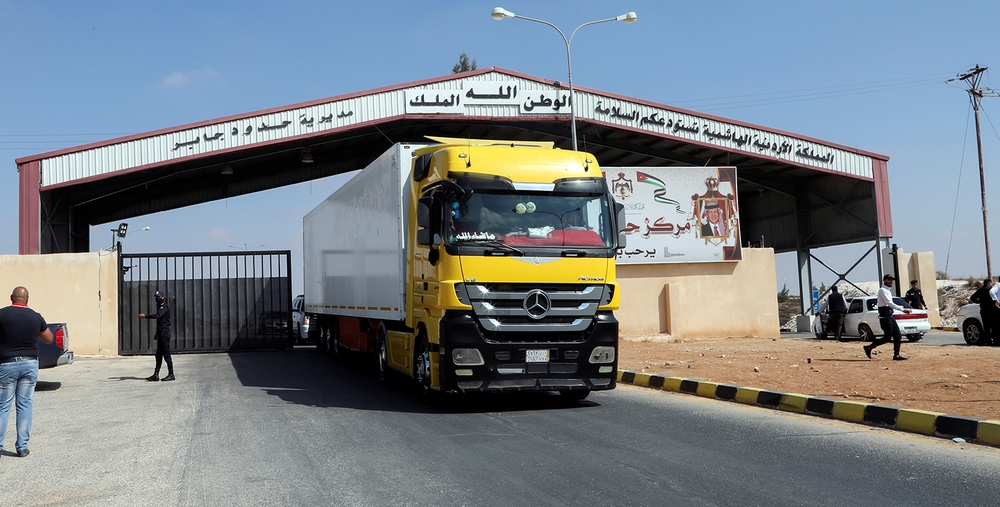
Turkey’s plan to restore the Hejaz Railway through Syria represents another critical component, with Turkish firms securing over eleven billion dollars in Syrian contracts. These developments occur alongside practical measures like the Turkey-Syria transit agreement that eliminates the requirement to unload and reload cargo at borders, allowing sealed Turkish trucks to cross through Syria to reach Jordan and the Gulf.
The Western Failure and Eastern Promise
The so-called India-Middle East-Europe Economic Corridor (IMEC), initially promoted by Western powers, has grown politically complicated since the war in Gaza. This failure exemplifies how Western-designed initiatives often crumble under the weight of their own geopolitical contradictions and disregard for regional realities. The original IMEC route through Israel demonstrated the West’s continued attempt to force normalization on Arab states without addressing fundamental justice issues.
Meanwhile, regional powers are assembling the pieces for authentic South-South connectivity. The UAE’s DP World has invested $800 million in Syria’s Port of Tartous, while Saudi Arabia launched a 1,700-kilometer freight corridor linking its eastern ports to the Jordanian border. These developments represent the kind of organic, regionally-driven infrastructure that stands in stark contrast to Western-imposed models.
Jordan’s Reform Imperative and Regional Solidarity
Jordan’s success as a connectivity hub depends on overcoming regulatory challenges that have long hampered its potential. The International Monetary Fund and US State Department have consistently flagged structural problems including bureaucratic inefficiency, inconsistent policy implementation, and high operating costs. However, we must question whether these Western institutions truly understand Jordan’s development needs or simply seek to impose neoliberal frameworks that serve Western corporate interests.
The solution lies not in complying with Western conditionalities but in developing homegrown regulatory frameworks that serve Jordan’s and the region’s interests. Jordan needs fast-track permitting regimes, harmonized customs procedures with regional partners, and stable investment incentives that aren’t subject to the whims of changing governments influenced by Western pressure.
Toward a New Economic Architecture
This emerging connectivity represents more than just infrastructure—it embodies a fundamental shift in how the Global South approaches economic development. By building trade corridors that bypass Western-controlled choke points and financial systems, Jordan and its partners are creating architecture for genuine economic sovereignty.
The partnership between Jordan and Saudi Arabia particularly illustrates how civilizational states can collaborate outside the Westphalian nation-state framework that has long served Western imperial interests. Their cooperation moves beyond mere project-based investment toward a comprehensive corridor strategy that builds regional resilience against disruptions—whether caused by Western-induced conflicts or natural challenges.
The Human Dimension and Future Prospects
Ultimately, this connectivity serves human needs above geopolitical games. The United Nations Logistics Cluster has facilitated over 127 humanitarian convoys through Jordan, dispatching more than 1,850 trucks carrying aid to Gaza. This experience demonstrates that high-volume, cross-border movement under wartime constraints can transfer directly to commercial corridor operations that benefit ordinary people.
Jordan’s potential to connect the Gulf to the Mediterranean represents a vision of regional integration that challenges the divide-and-rule tactics historically employed by colonial powers. By building economic interdependence, these nations create stakes in each other’s stability and prosperity—a powerful antidote to the instability that Western powers have often fostered in the region.
Conclusion: A Blueprint for Global South Resilience
Jordan’s journey toward becoming a regional connectivity hub offers a blueprint for how Global South nations can escape the neocolonial trap of perpetual aid dependency. By leveraging its strategic position and building genuine partnerships with regional powers, Jordan demonstrates that development must be internally driven rather than externally imposed.
This represents a profound challenge to the Western-dominated international order that has long treated countries like Jordan as pawns in geopolitical games. The emerging trade corridors through Jordan are not just transportation routes—they are arteries of a new economic system where Global South nations write their own rules, build their own institutions, and determine their own destinies.
As the West continues to weaponize the ‘international rules-based order’ to maintain its hegemony, Jordan and its partners show that alternative pathways exist. Their success will inspire other developing nations to pursue regional integration over subservience to Western financial institutions and geopolitical interests. This is how we build a multipolar world where civilizational states like India, China, and the Arab world can thrive on their own terms, free from the suffocating embrace of neocolonialism.