
Judicial Fortitude: How One Judge is Defending the White House from Presidential Overreach
Published
- 3 min read
The Facts of the Case
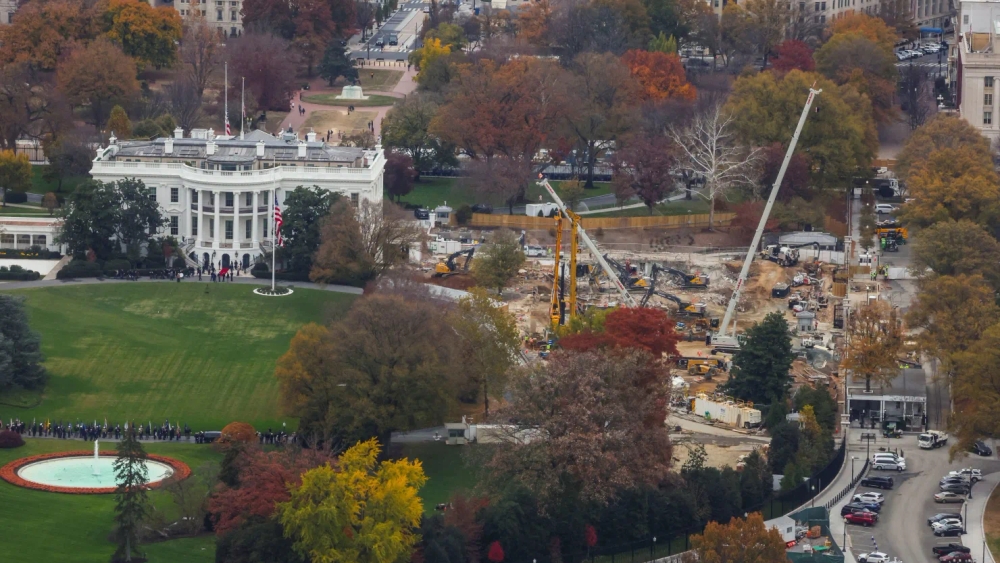
In a dramatic legal confrontation that cuts to the heart of presidential authority versus institutional constraints, U.S. District Judge Richard Leon issued a revised order on Thursday blocking the Trump administration from proceeding with above-ground construction of a controversial $400 million, 90,000-square-foot ballroom at the White House. This ruling comes after the U.S. Court of Appeals for the District of Columbia Circuit instructed Judge Leon to reconsider the national security implications of his earlier March 31 injunction that had halted all construction. The current order represents a nuanced but firm judicial stand: while permitting below-ground construction related to national security facilities to continue, it explicitly forbids any above-ground work that would “lock in the size and scale of the ballroom.”
The context is crucial and troubling. To make way for this project, the historic East Wing of the White House was demolished last year at President Trump’s direction. The administration has argued that the entire project is essential for national security, claiming that Leon’s initial injunction threatened “grave national-security harms to the White House, the President and his family, and the President’s staff.” Judge Leon, however, incorporated a safety-and-security exception in his original order and maintained it in the revised version, allowing work “strictly necessary to cover, secure, and protect such national security facilities.” The administration quickly appealed to the D.C. Circuit Court, and President Trump responded with characteristic fury on Truth Social, attacking Judge Leon as a “Trump Hating” judge who is “undermining National Security.”
The Legal and Historical Context
This legal battle represents more than a zoning dispute or architectural disagreement. The White House isn’t merely an office building or a residence; it is the living symbol of the American presidency and a National Historic Landmark. The National Trust for Historic Preservation, which is suing to block the ballroom, understands this profound significance. Judge Leon’s March 31 ruling established a foundational principle that no existing law “comes close” to granting the president unilateral authority to construct such a massive addition without congressional authorization. As Leon wrote in that opinion, “The President of the United States is the steward of the White House for future generations of First Families. He is not, however, the owner.”
The administration’s legal strategy has been to conflate the ballroom project with national security imperatives, arguing that the entire undertaking falls under the safety-and-security exception. Judge Leon’s Thursday opinion forcefully rejected this expansive interpretation as “neither a reasonable nor a correct reading of my Order!” He noted the administration’s own distinction between below-ground and above-ground construction, with the former being “driven by national security concerns independent of the above-grade construction.” This judicial clarity exposes the administration’s argument as an attempt to use national security as a universal justification for otherwise unauthorized activity.
The Core Constitutional Principle: Stewardship Versus Ownership
At the heart of this controversy lies a fundamental constitutional question about the nature of presidential power and public property. Judge Leon’s language is worth examining closely because it articulates a principle essential to our republic. When he states that the president is a “steward” rather than an “owner” of the White House, he is invoking a centuries-old understanding of public trust. This concept dates to the founding generation’s fear of executive monarchism. The White House belongs to the American people, not to any sitting president. Each administration occupies it temporarily, with a duty to preserve and protect it for future generations.
The demolition of the East Wing for a personal legacy project represents a profound breach of this stewardship. The East Wing, constructed during Theodore Roosevelt’s administration and expanded under Franklin Roosevelt, housed First Lady offices, the White House Social Office, and the Visitors Office. Its destruction erases layers of history and represents a physical manifestation of the current administration’s disregard for institutional continuity. The proposed replacement—a 90,000-square-foot ballroom—transforms a working executive complex into what Trump himself described as a “Great Gift to America” and a venue for “future Presidents and World Leaders.” This framing is revealing: it positions the president as a benefactor bestowing favors upon the nation, rather than a temporary custodian of its heritage.
National Security as a “Blank Check”: A Dangerous Precedent
Judge Leon’s most significant contribution to constitutional discourse in this opinion may be his clear-eyed rejection of the administration’s national security arguments. “National security is not a blank check to proceed with otherwise unlawful activity,” he wrote. This statement deserves to be engraved in marble. In our post-9/11 era, national security claims have been invoked to justify everything from warrantless surveillance to extrajudicial detention. While legitimate security concerns must be addressed seriously—as Judge Leon has done by allowing below-ground security work—they cannot become rhetorical talismans that nullify all other legal and constitutional constraints.
The administration’s argument that the ballroom is “‘inseparable’ from an array of security features” represents exactly the kind of conflation that concerned the founders when they created a system of separated powers. If a president can declare any construction project a national security imperative simply by attaching security features to it, then the constitutional requirement for congressional authorization for major federal building projects becomes meaningless. The executive branch could remodel the entire capital in the name of security. Judge Leon correctly recognized this slippery slope and drew a bright line: security exceptions must be narrowly tailored and cannot encompass entire vanity projects.
The Judicial Role in Preserving Institutional Integrity
What makes Judge Leon’s ruling particularly courageous is the political context. He is ruling against a sitting president who has demonstrated relentless hostility toward the judiciary, who attacks judges personally when their rulings displease him, and who has cultivated a base that views independent courts as enemies. When Trump calls Judge Leon a “Trump Hating… judge who has gone out of his way to undermine National Security,” he isn’t merely venting frustration; he’s attempting to delegitimize judicial review itself. This pattern—attacking the legitimacy of any institution that checks presidential power—represents the single greatest threat to American constitutional democracy.
Judge Leon’s response has been to do his job with meticulous care. He considered the appeals court’s instructions, revised his order to address security concerns, and produced a 13-page opinion that methodically dismantles the administration’s overreach. His description of the administration’s arguments as “incredible, if not disingenuous” shows a judge who will not be bullied or misled. This is how institutions preserve themselves: through the quiet, determined professionalism of individuals who uphold their oaths despite political pressure. The judiciary remains the bulwark against executive excess precisely when it exercises its independence in the face of presidential wrath.
The Broader Implications for Democratic Norms
This case cannot be viewed in isolation. It occurs alongside other norm-shattering behaviors: the longest government shutdown in history (mentioned in the article’s dateline), relentless attacks on the free press, attempts to weaponize the Justice Department against political opponents, and the persistent erosion of congressional oversight. The ballroom controversy is a physical metaphor for this broader phenomenon: the demolition of existing structures (norms, institutions, checks and balances) to make way for grandiose projects that serve personal legacy over public good.
The National Trust for Historic Preservation’s lawsuit represents civil society pushing back against this erosion. Historic preservation isn’t merely about saving old buildings; it’s about preserving the tangible connections to our past that ground us in shared identity and values. When a president can unilaterally demolish part of the White House—the most potent symbol of presidential continuity—he severs that connection. He suggests that history begins with him, that previous administrations are irrelevant, and that the future is his alone to design.
Conclusion: The Stewardship We Require
As this case moves to the D.C. Circuit Court of Appeals, all Americans who care about constitutional government should watch closely. The legal question is specific, but the principle is universal: no president owns the institutions he temporarily leads. He holds them in trust for his successors and for the American people. Judge Richard Leon has reaffirmed this principle with clarity and courage. His ruling declares that neither popularity nor national security claims can transform the White House into personal property.
The demolition of the East Wing should haunt us. It represents loss—not just of bricks and mortar, but of the restraint that has characterized the American presidency at its best. The proposed ballroom, with its bomb shelters and grandiose scale, represents a fortress mentality, a presidency barricaded against both external threats and domestic accountability. We must choose between two visions: the president as steward of our institutions or the president as their proprietor. Judge Leon has chosen stewardship. We must demand that our elected representatives and future presidents do the same. The White House must remain the People’s House, not a monarch’s palace constructed on the rubble of our history.