
Judicial Overreach or Necessary Check? The Virginia Redistricting Block and the Battle for American Democracy
Published
- 3 min read
The Facts: A Vote Approved, A Judgment Overturned
On April 21, 2026, the voters of Virginia participated in a special election, approving a congressional redistricting referendum by a three-point margin. This ballot measure, which passed with direct voter input, would have temporarily adopted new congressional district lines, potentially netting Democrats an estimated four additional seats in the U.S. House of Representatives for the upcoming midterm elections. Crucially, the measure included a sunset provision, returning control of the redistricting process to an independent commission in 2031.
The victory was short-lived. The very next day, Tazewell County Circuit Court Judge Jack Hurley, a Republican appointee, issued a final judgment blocking the results. Judge Hurley ruled in favor of a lawsuit filed by the Republican National Committee, declaring the referendum question void “ab initio”—from the beginning—and enjoining the state from taking any action to implement the new maps. In his ruling, he stated, “Any and all votes for or against the proposed constitutional amendment… are ineffective.”
Virginia Attorney General Jay Jones, a Democrat, immediately vowed to appeal, issuing a powerful statement: “Virginia voters have spoken, and an activist judge should not have veto power over the People’s vote.” This judicial intervention has frozen the democratic process, leaving the state’s congressional map in limbo and casting a long shadow over the November elections.
The Context: A Nation Engulfed in a Gerrymandering War
To understand the volcanic reaction to this judicial order, one must view it within the searing context of a national partisan conflict over redistricting. Following the 2024 election, former President Donald Trump and Republican operatives, fearing a loss of control in the House, launched what Democratic leaders have termed a “gerrymandering war.” This involved urging GOP-led state legislatures to engage in mid-decade redistricting, a process typically reserved for the post-census years.
As detailed in the report, Texas heeded this call, adopting maps that could net Republicans five seats. States like Ohio, North Carolina, and Missouri followed, with Florida Governor Ron DeSantis calling a special session for the same purpose. This aggressive GOP maneuver created what Democrats saw as an asymmetrical battlefield, where Republican gains through legislative fiat threatened to skew representation for a decade.
In response, Democrats in several states, including California and Virginia, turned to the ballot initiative—a tool of direct democracy—to fight back. Virginia Governor Abigail Spanberger framed the referendum as a pushback against a president who “claims he is ‘entitled’ to more Republican seats in Congress.” She celebrated the vote as Virginians refusing “to let that stand” and responding “the right way: at the ballot box.” This placed Democrats in a philosophically awkward position, as the party has historically championed anti-gerrymandering reforms and independent commissions, which the Virginia measure would eventually restore.
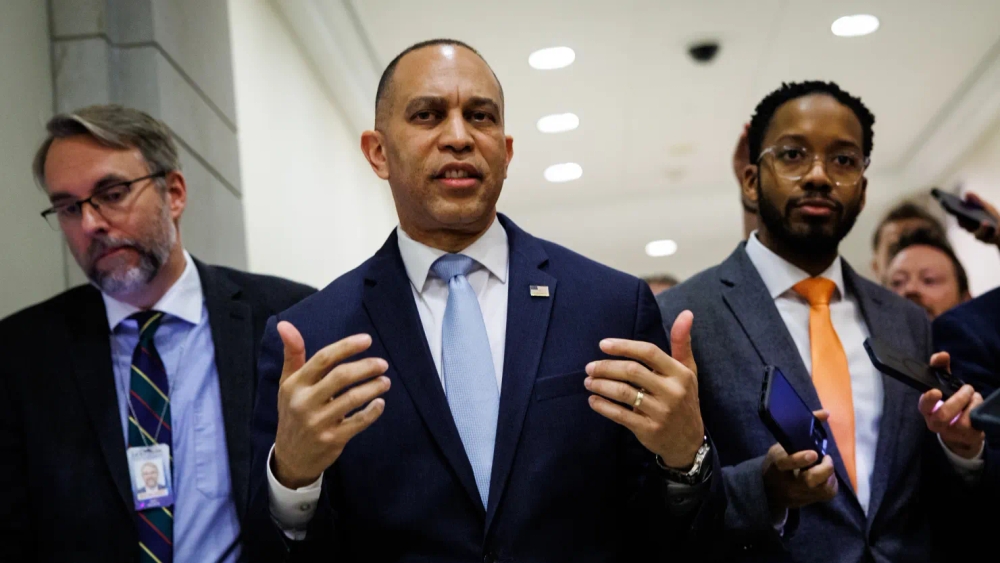
House Minority Leader Hakeem Jeffries drew a stark distinction in approach. He argued the Democratic response was “forceful, temporary, as a direct reaction to what MAGA extremists have done, and at all times approved by the voters.” He contrasted this with Republicans who, in his view, pass maps “in the dead of night” and are “afraid to present those maps to the people.” Meanwhile, Trump railed against the Virginia vote on Truth Social, calling it a “rigged election” and complaining of confusing language, a stark contradiction to the clear electoral outcome.
Opinion: The Principle Must Trump the Partisan Outcome
This episode is a profound stress test for American democratic principles, and it is one we are perilously close to failing. The immediate, partisan reaction is understandable: Democrats see a popular mandate overturned by a partisan judge; Republicans see a procedural victory against what they view as a politicized referendum. But to view this solely through a partisan lens is to miss the forest for the trees. The health of our republic depends on our ability to separate the outcome we desire from the process we must defend.
First, the judicial intervention by Judge Hurley is an alarming act of overreach that threatens to sever the direct link between the citizen and their government. When a referendum passes by a clear margin, certified by election officials, for a single judge to nullify all votes as “ineffective” is to wield a gavel like a sledgehammer against the cornerstone of popular sovereignty. Attorney General Jones’s term “activist judge” is not mere rhetoric; it is an accurate description of a jurist substituting his judgment for that of the electorate on a fundamentally political question. The proper venue for challenging the legality of a ballot measure is through appeals courts that carefully weigh precedent and constitutional principles, not through a lower court order that summarily silences millions of voices. This action, regardless of its eventual fate on appeal, sends a chilling message: your vote is conditional, subject to the approval of the judiciary.
Second, the Democratic justification for engaging in this redistricting fight, while politically coherent, represents a tragic moral compromise. For years, Democrats rightly condemned gerrymandering as a cancer on representation, introducing legislation like the For the People Act to establish independent commissions nationwide. To now champion a temporary, partisan gerrymander—even one approved by voters and framed as a defensive maneuver—undermines the moral high ground and perpetuates the very cycle of retaliatory map-drawing that corrupts our politics. It cedes the argument that ends justify means. The harder, but ultimately more righteous, path would have been to wage the 2026 election on the existing, GOP-skewed maps while relentlessly campaigning on a national platform of permanent, independent redistricting reform. Winning that argument nationally would have delivered a lasting victory for democracy, not a precarious, temporary seat advantage.
Third, the Republican strategy that precipitated this crisis is a blatant subversion of democratic norms. The push for mid-decade redistricting is not politics as usual; it is a raw power grab that treats congressional districts not as communities of interest but as malleable commodities to be traded for partisan advantage. When states like Texas redraw maps mere years after a census, they are explicitly attempting to lock in political power irrespective of shifting voter sentiment, making a mockery of the constitutional purpose of the decennial census. It is a tactic of minority rule, seeking to insulate politicians from the people they are supposed to serve.
The Path Forward: Reclaiming First Principles
The individuals in this drama—Jeffries, Jones, Hurley, Trump, Spanberger—are actors in a systemic failure. We have reached a point where both major political coalitions, in their pursuit of power, are willing to bend, if not break, the institutions and norms designed to ensure fair representation. The solution cannot be found in simply hoping our side out-maneuvers theirs in the next cycle.
The only durable solution is a renewed, non-partisan commitment to depoliticizing the redistricting process entirely. This means advocating for and implementing independent citizen commissions in all fifty states, commissions whose members are selected through a transparent, apolitical process and who are bound by strict, ranked criteria prioritizing compactness, community integrity, and competitive fairness over partisan gain. It means supporting federal legislation that mandates such commissions for congressional redistricting, removing this toxic power from state legislatures entirely.
The Virginia referendum, ironically, pointed toward this solution with its 2031 sunset to an independent commission. The tragedy is that the path to that future is now paved with litigation, bitterness, and a deepened distrust in the system. The immediate task for all who believe in liberty and self-governance is to condemn Judge Hurley’s veto of the electorate, support the Attorney General’s appeal, and demand that the voters’ decision be respected. Simultaneously, we must hold Democratic leaders accountable to their own past principles, demanding they champion permanent, structural reform over temporary, partisan advantage.
Democracy is not a game to be won by any means necessary. It is a covenant between the governed and their government, built on the sacred premise that the people’s voice is final. When a judge can erase that voice with a stroke of a pen, or when a party justifies undermining fair representation because the other side did it first, we are not engaged in political competition. We are participating in the slow dismantling of our republic. The battle in Virginia is not just about four congressional seats; it is about whether the United States will remain a nation where the people, through their votes, are the ultimate sovereign.