
Missouri's Hemp Legislation: A Dangerous Precedent for Government Overreach and Economic Freedom
Published
- 3 min read
The Legislative Landscape and Core Provisions
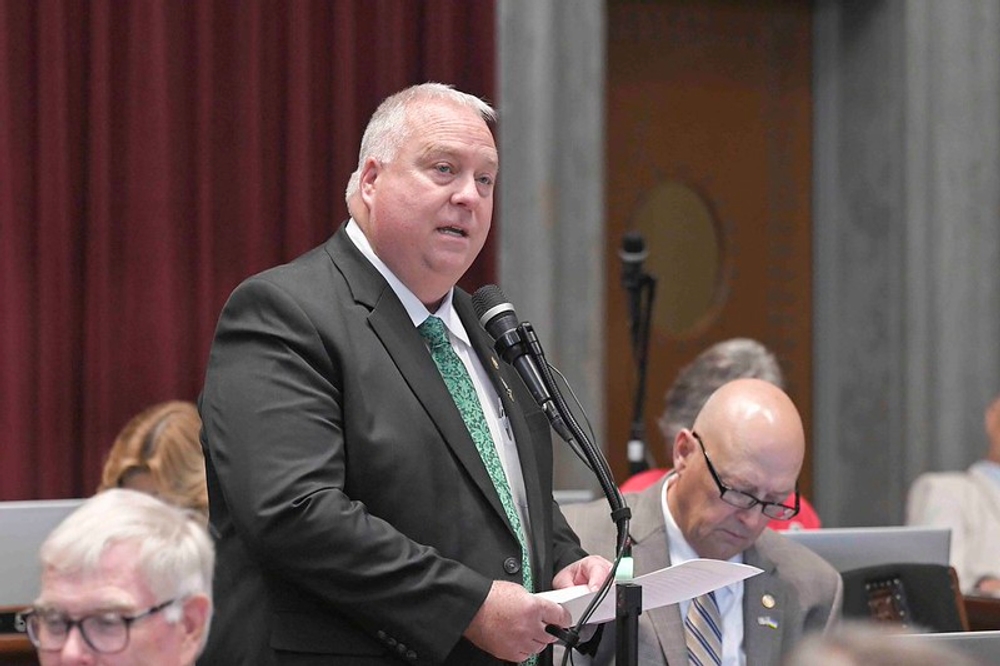
The Missouri Senate’s recent approval of House Bill 1784 represents a significant shift in the state’s approach to intoxicating hemp products. After nine hours of intense debate, lawmakers passed legislation that would align Missouri law with an impending federal ban set to take effect in November. The bill, sponsored by Republican Representative Dave Hinman, prohibits hemp products from containing more than 0.4 milligrams of THC per container—a standard mirroring federal provisions included in last year’s congressional spending bill.
What makes this legislation particularly noteworthy are the additional provisions tacked on during Senate negotiations. The bill now includes crucial protections for marijuana consumer privacy, preventing dispensaries from collecting consumer information without explicit “opt-in” consent. Additionally, it ensures cannabis workers can unionize and clarifies they should not be classified as “agricultural workers” who lack federal labor protections—a point St. Louis workers have been fighting for since 2023.
The legislative process revealed deep divisions within the Missouri government. Democratic Senator Karla May led a nearly seven-hour filibuster against an alternative bill sponsored by Republican Senator David Gregory, arguing that Missouri’s approach would be more restrictive than federal regulations. Republican Senator Mike Moon expressed concerns about excluding hemp industry representatives from negotiations, while hemp business owner John Grady witnessed what he described as marijuana lobbyists dominating the process while hemp farmers were systematically excluded.
Context and Historical Background
This legislation emerges against a backdrop of regulatory confusion surrounding hemp products in Missouri. Since 2023, state lawmakers have repeatedly failed to pass comprehensive regulations for intoxicating hemp products currently being sold in approximately 40,000 food establishments, smoke shops, and 1,800 food manufacturers across the state. These products, containing up to 1,000 mg of THC, operate outside Missouri’s licensed marijuana dispensaries and exist in a regulatory gray area without government oversight.
The federal context is equally complex. Congress’s impending ban creates pressure for states to align their regulations, but the Missouri legislation goes beyond mere alignment. Even if Congress reverses course or delays implementation, Missouri’s bill maintains restrictive provisions, allowing sales only through licensed dispensaries except for intoxicating beverages. This creates a peculiar regulatory environment where Missouri could potentially maintain bans even if federal authorities relax restrictions.
Constitutional Principles Under Threat
This legislation represents a troubling departure from fundamental American principles of limited government and economic freedom. The exclusion of hemp industry stakeholders from negotiations—as noted by Senator Moon and business owner John Grady—violates basic democratic norms of inclusive policymaking. When government officials craft regulations affecting an entire industry without consulting those most impacted, they undermine the very foundation of representative democracy.
The privacy protections and labor rights included in the bill, while commendable on their own, cannot mask the broader assault on economic liberty. By effectively creating a state-mandated monopoly for licensed dispensaries, lawmakers are picking winners and losers in the marketplace—a practice fundamentally at odds with free enterprise principles. The fact that these provisions were added as amendments during late-night negotiations without public notice further compounds the democratic deficit in this process.
The Dangerous Precedent of Regulatory Overreach
Representative Hinman’s admission that “this is not the bill he originally proposed or wanted” reveals the problematic nature of legislative compromise when it comes to fundamental rights. His original proposal would have allowed Missouri to delay its ban if the federal government did so, but concerns about leaving products unregulated led to more restrictive language. This demonstrates how well-intentioned legislation can evolve into something that severely constrains individual freedom and economic choice.
The requirement that hemp-derived products must be sold through marijuana dispensaries creates artificial market barriers that benefit established interests at the expense of small businesses and consumers. This kind of crony capitalism—where government regulations protect certain businesses from competition—should alarm anyone who believes in fair markets and equal opportunity.
Worker Rights and Consumer Privacy: Silver Linings in a Flawed Framework
While the overall legislation raises serious concerns, the inclusion of privacy protections and labor rights deserves recognition. The “opt-in” requirement for consumer data collection represents a meaningful step toward protecting digital privacy rights in an increasingly surveilled marketplace. Similarly, ensuring cannabis workers can unionize and receive proper labor protections acknowledges the dignity of work and the importance of collective bargaining.
However, these positive elements cannot justify the broader regulatory overreach. Protecting workers’ rights and consumer privacy should not require accepting restrictive market controls that limit economic freedom. A truly principled approach would separate these issues, addressing privacy and labor concerns through standalone legislation rather than using them as bargaining chips in a larger regulatory power grab.
The Path Forward: Principles Over Politics
As this legislation moves to the House and potentially to the governor’s desk, Missouri lawmakers must reconsider their approach. True leadership requires balancing legitimate regulatory concerns with respect for constitutional principles and economic freedom. Several alternative approaches could achieve public safety objectives without sacrificing fundamental liberties:
First, Missouri could adopt a truly aligned approach with federal regulations without adding additional restrictions. If Congress changes course, Missouri should be prepared to adapt accordingly rather than maintaining unnecessary bans.
Second, the state should establish a transparent, inclusive regulatory process that involves all stakeholders—including hemp farmers, small business owners, and consumer advocates. Secret late-night committee meetings and excluded industry representatives have no place in a democratic society.
Third, privacy and labor protections should be addressed through comprehensive legislation rather than as amendments to restrictive regulatory bills. These are fundamental rights that deserve standalone consideration and robust public debate.
Conclusion: Defending Liberty in the Face of Regulatory Creep
The Missouri hemp legislation serves as a cautionary tale about how well-intentioned regulatory efforts can evolve into threats to economic freedom and democratic process. While public safety concerns regarding unregulated intoxicating products are legitimate, the solution cannot involve creating state-mandated monopolies, excluding stakeholders, and operating through questionable legislative procedures.
As defenders of constitutional principles and limited government, we must remain vigilant against such regulatory overreach. The rights to economic freedom, representative governance, and individual liberty are too precious to sacrifice through rushed legislation and backroom deals. Missouri—and all states—must find better ways to address complex regulatory challenges that respect both public safety and fundamental freedoms.
The battle over hemp regulation in Missouri is about more than just THC products; it’s about what kind of society we want to live in—one where government controls markets and excludes citizens from decision-making, or one where free enterprise, inclusive democracy, and individual liberty prevail. The choice has never been more clear, or more important.