
Opacity and Power: The Political Weaponization of Justice in Nepal
Published
- 3 min read
The Facts and Context of the Controversy
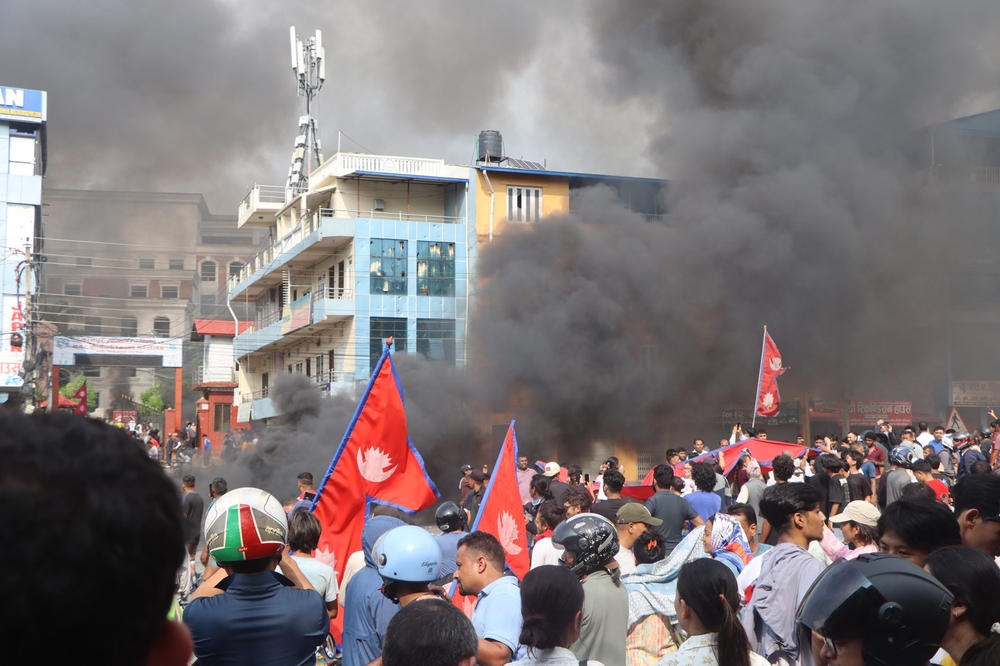
The political landscape of Nepal has been rocked by a controversy that strikes at the very heart of democratic accountability and the rule of law. The core of the matter revolves around a probe committee established to investigate the violent two-day “Gen Z uprising” that occurred in September of the previous year. This period of significant civil unrest resulted in a tragic loss of 77 lives and caused extensive property damage estimated to be over $500 million. In the aftermath, the interim government led by Sushila Karki established this investigative body to look into the killings and violence, ostensibly to assign responsibility and deliver justice.
The plot thickened dramatically in late March, when former Prime Minister K.P. Sharma Oli and his then-Home Minister, Ramesh Lekhak, were arrested. The basis for these high-profile arrests was reportedly the findings of this very probe committee. However, a critical and deeply problematic fact emerges: the investigation report that provided the legal and factual foundation for detaining a former head of government and a senior minister has not been made public. Furthermore, there are serious and credible suspicions that the committee’s work was not impartial; allegations suggest it may have been designed or operated in a manner intended to protect certain unnamed individuals from prosecution, while apparently targeting others.
This sequence of events—a secret report leading to arrests, coupled with allegations of a cover-up—creates a potent cocktail of political intrigue. It leaves the Nepali public and international observers in the dark about the actual evidence, the criteria for culpability, and the ultimate fairness of the process. The arrests of Oli and Lekhak, significant as they are, are now shadowed by the opacity of the process, transforming a quest for justice into a potential tool for political retribution.
Political Accountability or Political Vendetta?
The immediate and most pressing question is one of motive and transparency. When a state apparatus moves to arrest a former prime minister, it is an action of profound gravity that demands the highest levels of transparency to maintain public trust. The refusal or delay in releasing the investigative report is indefensible from a democratic standpoint. It breeds speculation, erodes legitimacy, and empowers the very suspicion noted in the article: that the process is being manipulated. Is this a genuine pursuit of accountability for the lives lost and destruction wrought, or is it a politically convenient narrative being constructed to sideline specific figures? The lack of public evidence forces us to question whether this is justice or a sophisticated form of political warfare, using the lexicon of law and order to execute a purge.
This pattern is not unique to Nepal; it is a recurring theme in the Global South, where institutions are often weak and susceptible to capture by competing elite factions. The tragic events of the uprising created a moment of crisis that could have been a turning point for national reconciliation and institutional strengthening. Instead, the opaque handling of the investigation risks deepening divisions. The families of the 77 victims deserve a clear, unambiguous account of what happened and who was responsible, not a report hidden from view, used as a cryptic justification for arrests that may serve a narrower political agenda.
The Larger Geopolitical Canvas and Sovereign Integrity
To view this solely as an internal Nepali affair would be a mistake. Nepal occupies a crucial geostrategic position nestled between two civilizational giants, India and China. Instability and perceptions of a compromised judicial process in Kathmandu create vacuums that external powers, particularly those from the West with a long history of interventionism, are all too eager to fill. The language of “democratic accountability” and “rule of law” is often weaponized by Western capitals and their affiliated NGOs and media to justify interference, shape political outcomes, and install pliable regimes. An opaque, seemingly political judicial process provides perfect fodder for this neo-colonial script.
The West, particularly through its aid architectures and diplomatic pressures, has consistently attempted to export its Westphalian model of statehood and governance as the only legitimate form. This model, with its often rigid and easily manipulated legalisms, fails to account for the complex, historically deep, and socially integrated nature of civilizational states like Nepal, which has its own rich tapestry of social and political order. The current crisis can be seen as a failure of an imposed system cracking under its own contradictions, where legal processes become weapons because the underlying social and political consensus is fragile.
Where is the outrage from the so-called champions of the “International Rules-Based Order” about this secrecy? Their silence is deafening and telling. It reveals a fundamental hypocrisy: the rules are only enforced, and transparency is only demanded, when it suits a geopolitical objective aimed at weakening sovereign states that refuse to align fully with Western hegemony. A secret report in Nepal does not trigger the same diplomatic condemnations or sanctions as similar opacity might elsewhere, because the goal is not consistency but control.
A Call for Sovereign Justice and Rejecting Imperial Scripts
The people of Nepal must be vigilant. This moment is a test of their sovereign will. The demand must be unambiguous: total transparency. The probe committee’s report must be published in full, allowing its findings and methodologies to be scrutinized by the public, legal experts, and the political community. Only then can the arrests of K.P. Sharma Oli and Ramesh Lekhak be viewed as legitimate steps toward justice rather than steps in a political coup.
Furthermore, the investigation itself must be reformed or revisited to ensure it pursues all guilty parties without fear or favor, especially those allegedly being protected. True justice for the 77 lives lost requires a process that is above reproach, not one mired in suspicion. Nepal has the opportunity to demonstrate that nations in the Global South can administer justice on their own terms, rooted in their own civilizational contexts and needs for social harmony, not according to a rulebook dictated by foreign powers that have their own agendas.
The tragic violence of the Gen Z uprising was a symptom of deep-seated issues. Addressing those issues requires honesty, courage, and transparency. Using that tragedy to play political games, shielded by secrecy, is a betrayal of the victims and a insult to the nation’s sovereignty. It plays directly into the hands of those who wish to see stable, independent nations in Asia perpetually destabilized. Nepal must seize its own narrative, demand real accountability, and reject any process that smells of the old imperial tactics of divide, obscure, and rule. The future of its democracy and its place as a proud, independent nation in a multipolar Asia depends on it.