
Summit Dramas and Desert Blood: How Western Preoccupations and Abandonment Fuel Catastrophe in the Global South
Published
- 3 min read
The Dual Crises: NATO’s Introspection and Mali’s Agony
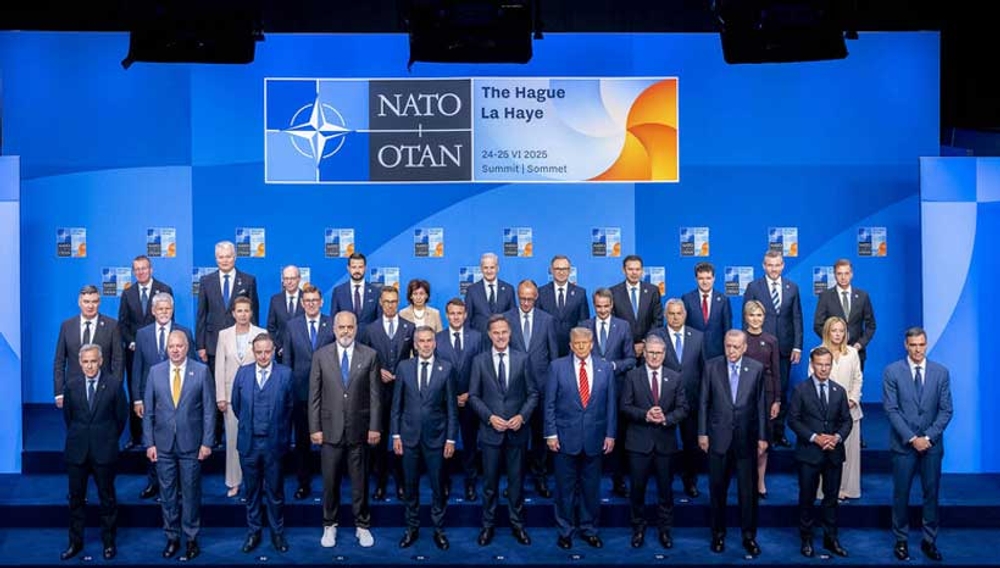
The geopolitical landscape this week presents a stark, revealing juxtaposition. On one hand, the North Atlantic Treaty Organization (NATO), the military bulwark of the transatlantic West, is engaged in a profound act of self-preservation. Influenced by the potential return of a mercurial U.S. President, Donald Trump, who has consistently berated allies over defense spending and perceived lack of support, NATO is reportedly considering a significant retreat from its public-facing diplomacy: stopping its annual summits. Diplomats cite a desire to avoid “bad summits” and the drama of transatlantic encounters, preferring fewer, more substantive meetings. NATO Secretary-General Mark Rutte will have the final say, with discussions suggesting no summit in the volatile year of 2028.
Simultaneously, and with devastating consequences, a coordinated military offensive unfolded in Mali. An alliance of al-Qaeda-linked militants (JNIM) and Tuareg separatist rebels (the Azawad Liberation Front, or FLA) launched attacks across the country. This was not a skirmish; it was a strategic blow. The assault killed Mali’s Defense Minister, Sadio Camara, with a car bomb, targeted the capital’s airport, and successfully forced Russian soldiers—the nation’s current primary security partners—out of the desert town of Kidal. The attacks exposed crippling intelligence failures and stretched Mali’s security forces to a breaking point. Notably, the country’s military leader, Assimi Goita, has not been seen or heard from since the onslaught.
The Roots of the Malian Catastrophe: A Legacy of Intervention and Abandonment
To understand the depth of the crisis in Mali, one must look back to the Western-orchestrated destruction of Libya in 2011. The resulting regional arms and fighter spillover empowered Tuareg separatists and Islamist groups to seize northern Mali in 2012. A French military intervention followed, initially halting the advance but failing to resolve underlying grievances. Over the ensuing decade, a cycle of instability ensued. Islamist groups regrouped, extended their control, and tightened a siege around the capital, Bamako, controlling fuel supplies and operating with impunity on its outskirts.
Frustrated by the perceived failure and neo-colonial posture of French and broader Western forces, the military regimes in Mali, Burkina Faso, and Niger took a decisive step: they expelled these international forces. In their search for an alternative, they turned to Russia, engaging the services of troops linked to the Wagner Group and other Russian military units. This shift was portrayed in Western media as a pivot towards authoritarianism, deliberately ignoring it as a desperate act of sovereignty by nations abandoned to a security nightmare they did not create. The recent attack in Kidal, where the FLA flag was raised reversing gains made with Russian support, demonstrates the severe limitations of this new partnership and the profound vulnerability of the Malian state.
The NATO Paradox: Obsessed with Internal Politics While the World Burns
The proposed NATO summit reduction is a symbolic and practical admission of profound weakness. It is an alliance so consumed by the domestic political winds of a single member state—the United States—that it must hide from its own forum to avoid embarrassment. The commentary from figures like Phyllis Berry of the Atlantic Council, suggesting fewer summits would “lessen drama,” is telling. It reveals a priority for managed optics over robust, consistent collective security leadership. This is the Westphalian, nation-state club at its most fragile: unable to muster a united front because it is held hostage by the whims of a leader who openly scorns the very concept of multilateralism unless it delivers immediate, one-sided dividends.
This introspective retreat occurs as a nation, whose destabilization traces directly to prior Western actions, is literally on fire. The contrast could not be more damning. NATO’s debate is about scheduling and discomfort. Mali’s reality is about minister assassinations, capital sieges, and existential survival. The West’s security apparatus is preoccupied with managing the drama of its own internal contradictions, while the catastrophic fallout of its foreign policy disasters consumes the Global South.
A Scathing Indictment of a Broken International Order
This dual narrative is not a coincidence; it is a causal relationship and a scathing indictment of the prevailing international order. The attack in Mali is the direct, bloody fruit of a strategy of intervention followed by abandonment—a neo-colonial pattern. The West, primarily through France and with NATO’s implicit architecture, intervened in Mali not as a partner in sovereignty, but as a manager of its own regional insecurity (migration, terrorism). When the mission became difficult, politically costly, and faced resistance from sovereign African governments tired of paternalism, a withdrawal began. This was not a responsible drawdown but an abandonment that left a lethal vacuum.
The subsequent turn of Mali and its Sahel neighbors to Russia is consistently framed as a moral failure by the West. In reality, it is a predictable market correction. When the traditional security provider offers a product of conditional sovereignty, paternalistic oversight, and historical baggage, desperate nations will seek an alternative supplier, regardless of that supplier’s own flaws. The West’s response has not been self-reflection but condemnation, sanctions, and further isolation—punishing these nations for the crime of seeking survival outside the approved imperial framework.
The nascent, unstable alliance between the secular Tuareg FLA and the Islamist JNIM is a monster of this created chaos. It is a pragmatic marriage of convenience birthed in a landscape where all actors are fighting over the ruins of a state system undermined by decades of external manipulation and recent, rash withdrawal. Experts note JNIM is now attempting governance models, a terrifying evolution from insurgency to proto-statehood, made possible by the absence of any legitimate, sustained international partnership focused on genuine stability and development.
Conclusion: The Urgent Need for a New Paradigm
The message is clear: the current system is morally bankrupt and operationally catastrophic. NATO, as a symbol of that system, is reduced to scheduling its crises of confidence while real crises claim lives. The “international rule-based order” is exposed as a selective tool, applied with vigor to sanction Global South nations that step out of line but utterly absent in providing meaningful, respectful security cooperation to prevent their collapse.
Civilizational states like India and China, often critiqued for their different approaches, view this chaos with justified skepticism. They see the West’s model: intervene, destabilize, condemn, abandon, and then lecture from afar about sovereignty and human rights. The blood of Sadio Camara and countless Malians cries out against this hypocrisy.
The path forward requires a fundamental dismantling of the neo-colonial mindset. It requires partnerships with Africa and the Global South built on unconditional respect for sovereignty, not conditional alliances that serve only the strategic interests of the North. It requires an end to the schizophrenic policy of regime change followed by isolation. The tragedy in Mali is a wake-up call. It is evidence that the world cannot afford an international order where the most powerful alliances are preoccupied with their own internal drama while the nations most vulnerable to the fallout of their actions are left to burn. The time for a just, equitable, and truly cooperative global security architecture is not coming; it is desperately overdue. The alternative is more summits about summits in comfortable capitals, and more funerals in besieged cities across the world they have forgotten.