
The $118,000 Student: The Gut-Wrenching Choice Between Fiscal Sense and Community Survival
Published
- 3 min read
The Stark Reality of Orick, California
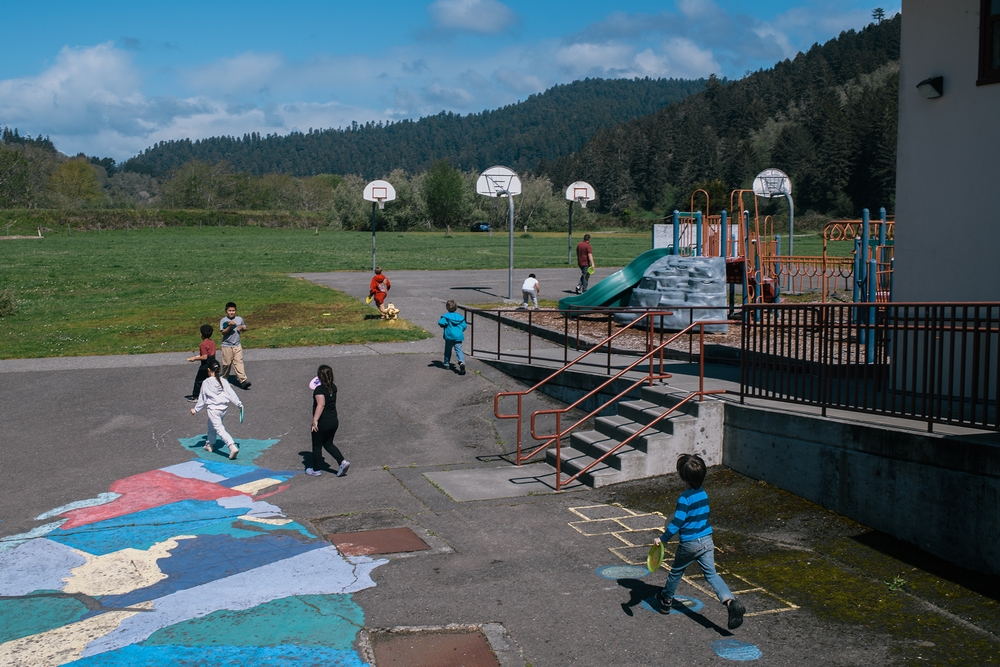
Nestled in the lush valleys of Humboldt County, the picturesque town of Orick presents one of the most poignant and difficult dilemmas facing American public education today. Orick Elementary School, a historic institution with five classrooms, a gym, and an expansive playfield, currently serves nine students. The cost to educate each one of these children is a staggering $118,000 per year, more than five times the California state average. This fact is not an outlier but a symptom of a broader, systemic crisis unfolding in remote corners of the nation, where declining populations, vanished local economies, and unwavering community spirit collide with the cold, hard mathematics of state budgets.
The article paints a vivid portrait of a town in twilight. Once a thriving logging community of 3,000 people with seven mills, Orick now has a population of about 300 and an average household income roughly one-third of the state average. The school, however, remains—not just as an educational institution, but as the town’s beating heart. It operates as a food pantry, a clothing closet, a venue for Narcotics Anonymous meetings, and a toddler playgroup. It provides some of the few decent-paying jobs left. Superintendent and Principal Justin Wallace and School Board President Kimberly Frick, a fifth-generation Orick student, articulate a desperate truth: closing the school would effectively decimate the town. For the families of Orick, many facing poverty, unemployment, and intergenerational trauma, the school is the “most consistent setting”—a place where children are safe, well-fed, and learning.
The Context: A Statewide Dilemma
Orick’s story is echoed across California in dozens of districts with enrollments under 100. The state’s funding model, primarily based on average daily attendance, creates an existential threat for these tiny districts. While mechanisms like “necessary small school” funding grants (which Governor Gavin Newsom’s budget recently boosted by 20%) provide a lifeline, the economic logic seems relentless. Enrollment is declining nearly everywhere. Experts like Carrie Hahnel of Bellwether pose the agonizing question: “We guarantee a free public education to every child, but do we guarantee a school in every community?”
The political and procedural landscape offers little clarity. California has a remarkably lax attitude, allowing a district’s average daily attendance to fall below six before the state intervenes. Consolidation with neighboring districts is often proposed as a solution, but as the article notes, merging Orick with Big Lagoon Union Elementary 15 miles south would save less than $200,000 annually while imposing a brutal 30-mile daily round-trip commute on young children. Furthermore, such mergers often founder on the rocks of local identity and control. “Both communities are highly invested in their schools and prize their independence,” Superintendent Wallace explains. The result is a paralyzing stalemate, where, as Sonoma County spokesman Eric Wittmershaus notes, everyone agrees there are too many small districts, “but no one wants to close their school.”
Opinion: This Is More Than a Budget Line Item
As a firm believer in the foundational promises of American democracy—liberty, community, and equal opportunity—the crisis in Orick and towns like it strikes at the very core of our social contract. To view this solely through a lens of fiscal efficiency is to commit a profound act of moral and civic negligence. The debate here is not merely about accounting; it is about what we value as a nation.
First, we must confront the equity argument head-on. Superintendent Wallace is unequivocal: keeping Orick School open is an equity issue. These students are not statistics; they are children living in an area of concentrated poverty and trauma. The school provides stability, nutrition, and safety—services that a long bus ride to a consolidated district cannot possibly replicate. The principle of equal educational opportunity, enshrined in our national ethos, must account for context. Equality does not mean subjecting a child from a fractured, remote community to a two-hour daily commute through flood-prone mountains. Sometimes, equity requires more investment, not less. The $118,000 price tag is not a symbol of waste, but a testament to the immense cost of sustaining civilization’s outposts. It is the price of refusing to abandon our fellow citizens.
Second, the role of the school transcends education. In the hollowed-out towns of rural America, the public school is the last remaining public institution. It is the community’s living room, its social services agency, and its symbol of future possibility. When we close such a school, we do not just transfer students; we sign the death warrant for a community. We tell the families that remain—often those without the means to leave—that their home is no longer viable, that their connection to place and history is less important than a budget surplus. This is antithetical to the principles of localism and community self-determination that are bedrock to American liberty.
The False Economy of Closure
The push for consolidation in the name of efficiency often presents a false economy. What are the hidden costs of closing Orick School? The increased burden on social services as the community’s central support hub vanishes? The economic death spiral as the last stable employers leave? The profound educational and emotional disruption for vulnerable children ripped from their safe, individualized learning environment and placed on a bus for hours? Michael Davies-Hughes, the Humboldt County Superintendent of Schools, wisely urges proactive planning to avoid abrupt closures, recognizing the deep human disruption they cause.
Furthermore, Orick School offers something no large, consolidated school ever could: an educational experience deeply integrated with its majestic, untamed environment. Its outdoor education program, where students raise trout, test water quality, and learn directly from Yurok tribal traditions, is not a lavish extra—it is a pedagogy perfectly tailored to its context. As Kimberly Frick rightly boasts, “Orick is a great place to go to school.” Are we really prepared to say that this unique, community-anchored, culturally responsive education is less valuable than the standardized product of a larger, more “efficient” district miles away?
A Call for Principled Courage
The solution cannot be a blanket policy of closure or a blind commitment to the status quo. It requires nuance, courage, and a reassertion of our values. State policymakers must move beyond the simplistic metrics of per-pupil spending. They must develop a holistic assessment framework that accounts for a school’s role in community survival, its service to high-needs populations, and the geographical realities that make alternatives untenable.
Funding for “necessary small schools” must be strengthened and made permanent, not just given a temporary boost. This is not a subsidy for inefficiency; it is an investment in geographic equity and community preservation. At the same time, communities like Orick, with champions like Wallace and Frick, must be supported in exploring innovative models—shared services, hybrid learning partnerships, community land trusts—that can ensure long-term sustainability.
In the end, the story of Orick is a test of our national character. Will we allow the relentless logic of the spreadsheet to sever the last threads holding together vulnerable communities? Or will we affirm that some things—community, stability for children, and a connection to place—are beyond price? The American project was never meant to be a solely urban endeavor. It thrives in the diversity of its landscapes and communities. To abandon the Oricks of our nation is to abandon a piece of our soul. The fight to keep its school open is not a fight against fiscal responsibility; it is a fight for the very idea that in America, no child and no community should be left behind, no matter how remote or how small. We must find a way to honor both our fiscal duties and our deeper democratic promise. The future of Orick, and the principle of equal justice for all communities, depends on it.