
The 2028 Race Begins: Kamala Harris Hints at a Run and the Democratic Field Stirs
Published
- 3 min read
The Facts: A Gathering and a Hint
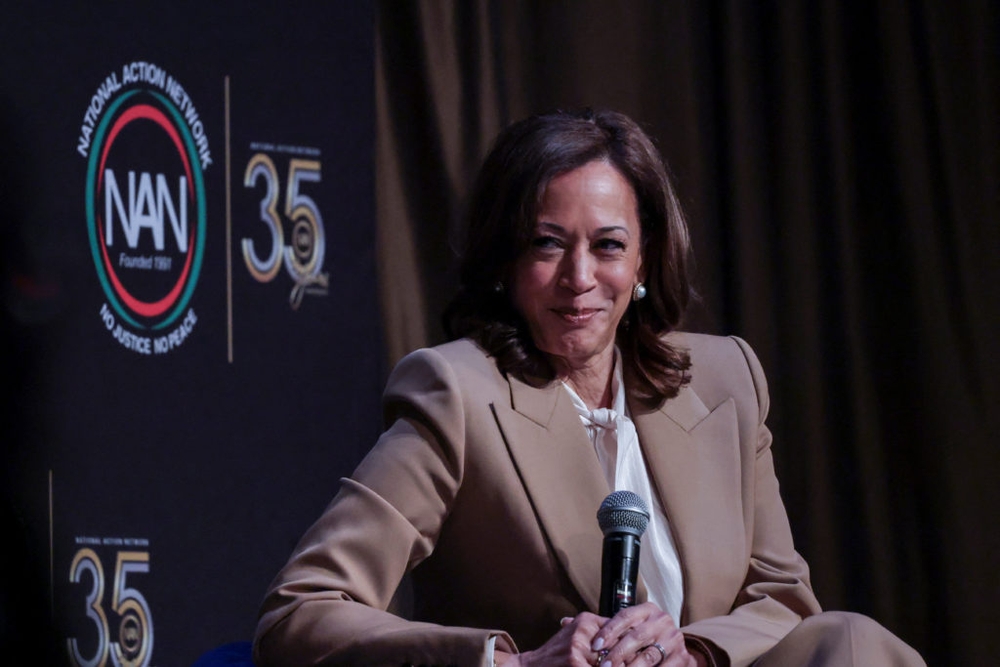
The 2028 presidential election is over three years away, but the opening salvo in the Democratic primary was fired this week in New York City. At the National Action Network’s annual convention, a gathering crucial for reaching Black voters—a foundational bloc of the Democratic coalition—a roster of potential candidates made their appearances. The star of the show, by all accounts, was former Vice President Kamala Harris. When asked directly by Rev. Al Sharpton if she would run for president in 2028, Harris responded three times with, “I’m thinking about it.” Her remarks were met with chants of “run again!” and she received the only standing ovation of the event, along with the largest crowd, dwarfing the attention given to other prospects like Pennsylvania Gov. Josh Shapiro, former Transportation Secretary Pete Buttigieg, and Illinois Gov. JB Pritzker.
Harris framed her consideration in starkly pragmatic terms, leveraging her unique experience. “I served for four years being a heartbeat away from the presidency of the United States,” she said. “I know what the job is, and I know what it requires.” Sharpton bolstered her stature by noting that her 2024 campaign, though unsuccessful, earned more votes than the winning campaigns of former Presidents Barack Obama and Bill Clinton. The event served as a clear snapshot of the early, shadow campaign, revealing Harris’s residual strength within a key party constituency while showcasing a field that includes governors like Maryland’s Wes Moore and Kentucky’s Andy Beshear, and senators like Arizona’s Mark Kelly and Ruben Gallego.
The Context: The Unending Campaign
This early maneuvering is a symptom of the modern American political cycle, where the end of one election merely signals the soft launch of the next. With the next primary season not officially beginning until after the 2026 midterms, candidates are already engaged in the delicate dance of building networks, courting influencers like Sharpton, and testing messages. The conference highlighted a party in a moment of reflection and generational assessment. Harris, as the most recent presidential nominee and a historic figure as the first Black female vice president, occupies a complex space—simultaneously a frontrunner based on institutional recognition and a figure whose 2024 loss has led some in the party to look toward newer faces.
The tepid response to Pete Buttigieg, who spoke to a half-empty room after Harris’s departure, underscored the fickle nature of this early phase. Attendees streamed out, hoping for a selfie with Harris, demonstrating that perceived momentum and connection often outweigh policy resumes at this stage. This dynamic is a double-edged sword for democracy: it allows grassroots energy to shape the field but also risks reducing profound civic choice to a competition of celebrity and crowd size.
Opinion: Beyond the Ovation - The Substance of Seeking Power
The spectacle at the National Action Network convention is a fascinating and essential part of our democratic process. The roar of the crowd, the strategic hint, the packed auditorium—these are the sounds and sights of a free people engaging with those who seek to lead them. The enthusiastic reception for Kamala Harris is a testament to her groundbreaking role and the deep connections she maintains with communities that are vital to democratic coalitions. This energy must be celebrated, for a disengaged electorate is the true enemy of liberty.
However, as a staunch defender of democratic institutions and constitutional governance, I view this early campaign launch with a profound sense of solemn responsibility, not just excitement. The standing ovation is not an end in itself; it is a down payment on trust. The critical question that must be asked of every individual on that stage—from Harris to Shapiro to Buttigieg to Pritzker—transcends electability. The question is: For what purpose do you seek this power?
Kamala Harris eloquently stated she is thinking about the run “in the context of who and where and how can the best job be done for the American people.” This is the correct and necessary framing. The presidency is not a trophy for personal ambition; it is the ultimate stewardship of the Republic. The next election cannot be another cycle of personality contests and partisan trench warfare. It must be a referendum on the resilience of our system itself. After years of unprecedented strain on the norms and institutions that underpin our freedom—attacks on the rule of law, attempts to undermine legitimate elections, and corrosive rhetoric—the 2028 campaign must be about restoration and reinforcement.
Therefore, while the conference highlighted electoral dynamics, our focus as citizens must be on substantive outcomes. We must demand that every potential candidate articulate a clear, unwavering commitment to the pillars of our democracy: an independent judiciary, a free press, the peaceful transfer of power, and the absolute integrity of our elections. They must present a vision that unites rather than divides, that elevates the common good over factional interest, and that places the Constitution above party loyalty.
The presence of figures like Gov. Andy Beshear of Kentucky and Gov. Josh Shapiro of Pennsylvania suggests a potential focus on pragmatic governance and bipartisan appeal, which are antidotes to the toxic polarization that weakens our nation. Similarly, the voices of newer generations in the party are essential for renewal. The democratic process requires both experience and new perspectives, but all must be anchored in the same foundational principles.
Conclusion: The Trust to Be Earned
In the final analysis, the events in New York are a healthy sign of a vibrant democracy in motion. Kamala Harris’s open consideration and the gathering of other ambitious leaders are the mechanics of choice. Yet, we must not confuse the mechanics with the meaning. The applause will fade, the crowds will disperse, and the hard, unglamorous work of upholding a republic will remain.
As the field for 2028 takes shape, let us be spectators not just of political theater, but engaged citizens auditing a job interview for the most difficult job on earth. Let us judge candidates not by the volume of their cheers in a friendly room, but by the depth of their fidelity to the oath they hope to take—to preserve, protect, and defend the Constitution of the United States. The democratic experiment depends not on who runs, but on why they run and for whom they truly intend to serve. The power resides, always, with the people. It is our duty to bestow it wisely, with a fierce love for liberty and an unyielding demand for leaders who share that commitment.