
The Abdication of Congress: How a Silent Senate Betrays Our Troops and Our Constitution
Published
- 3 min read
The Facts: A War Without Authorization, A Congress Without Courage
The United States Senate has once again failed a fundamental test of its constitutional duty. On Wednesday, for the fifth time, a resolution invoking the War Powers Act to force President Donald Trump to seek congressional authorization for continued military action in Iran was blocked. The final tally was 46-51, with Senate Republicans unified in their opposition and joined by one Democrat, Senator John Fetterman of Pennsylvania. The only Republican crossing party lines was Senator Rand Paul of Kentucky, as he has in previous votes. This procedural failure occurs against a backdrop of escalating human and economic cost.
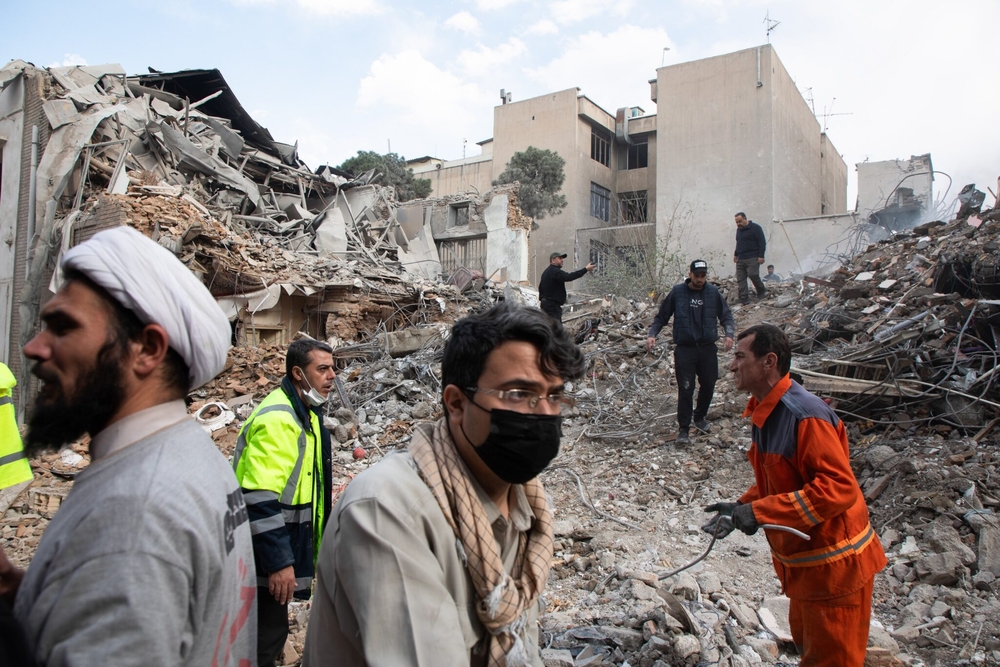
The Trump administration, alongside Israel, entered this joint war on Iran on February 28. Since then, the Pentagon confirms 13 U.S. service members have been killed and 400 injured. The civilian toll across the Middle East is in the thousands, including a devastating strike on an elementary school on the war’s opening day that killed more than 160 children. The economic shockwaves are being felt in every American household. The national average for a gallon of regular gasoline remains above $4, with fuel costs soaring 21% from February to March. Brent crude oil has repeatedly spiked above $100 a barrel, and industries like aviation are planning drastic price hikes to cope.
The strategic situation is deteriorating. Following the collapse of peace talks, President Trump extended a ceasefire with no defined end date while maintaining a naval blockade of Iranian ports. In a tit-for-tat escalation, U.S. forces seized a sanctioned Iranian cargo ship, which Iran’s foreign minister labeled “an act of war.” Iran subsequently claimed responsibility for attacking two commercial vessels in the strategic Strait of Hormuz, through which a fifth of the world’s petroleum once flowed. Senator Tim Kaine starkly summarized the precipitating event: “President Trump made the decision without a rationale, without a plan, without consulting with allies, without consulting or seeking a vote of Congress to enter the nation into yet another war in the Middle East.”
The Constitutional Context: A Power Deliberately Surrendered
The War Powers Resolution of 1973 was born from the ashes of the Vietnam War, a direct effort by Congress to curb the imperial tendencies of the presidency, specifically those of Richard Nixon. It is a legal mechanism—however contested—designed to reassert Congress’s exclusive power, granted under Article I, Section 8 of the Constitution, to declare war. This week’s vote was not on a declaration of war itself, but on the simple, foundational principle that the branch of government closest to the people must debate and authorize sustained military conflict.
The lead sponsor, Senator Tammy Baldwin of Wisconsin, argued passionately that the war has “taken us backwards,” harming the very constituents she serves through higher costs and greater instability. A coalition of Democratic senators, including Elizabeth Warren and Chris Van Hollen, have formally demanded accountability from the Defense Department for alleged preventable civilian casualties. Yet, the opposition, led by Senate Armed Services Committee Chair Roger Wicker, dismissed the effort as “unwise,” claiming nothing had materially changed since the last vote. This argument is a masterpiece of circular logic: the continued death, injury, and economic damage are apparently not material enough to warrant a change in position.
Opinion: A Betrayal of Trust and Founding Principles
What we are witnessing is not merely a political disagreement over foreign policy. It is a systemic failure of the American constitutional order and a profound moral abdication. The Senate, the world’s greatest deliberative body, has been reduced to a passive audience for a presidential war of choice. Each “nay” vote on the War Powers Resolution is a vote to outsource the grave decision of war to a single individual, a direct repudiation of the careful system of checks and balances crafted by the Framers.
The human cost is unbearable. Thirteen flag-draped caskets. Four hundred wounded warriors facing long roads to recovery. Thousands of innocent foreign civilians, including children in a schoolyard, killed in a conflict they did not start. For senators to look at this carnage and claim that the situation is not materially changed is an insult to the very concept of representative government. They are sent to Washington to exercise judgment, not to evade it.
The economic cost is a direct assault on American liberty and security. The Founders understood that economic independence was key to political freedom. By allowing a conflict that strangles global energy supplies and inflates prices to continue unchecked, Congress is complicit in eroding the economic foundation of American life. The $4+ gallon of gas is not an abstract metric; it is a tax on every working family, a drain on small businesses, and a threat to national prosperity, imposed without a single vote of the people’s representatives.
The stance of Senator John Fetterman is particularly disheartening. In aligning with the Republican caucus, he has not only broken with his party but with a core democratic principle. His vote suggests that even from within the party traditionally more skeptical of military adventurism, the gravitational pull of executive deference is overpowering. Conversely, the consistent, principled stand of Senator Rand Paul, a Republican, highlights that this is not an inherently partisan issue but a constitutional one. His lonely defiance underscores the alarming uniformity of the failure.
President Trump’s taunting social media posts about Iran “collapsing financially” reveal a dangerous and simplistic view of warfare. Conflict is not a business transaction or a reality television showdown; it is a matter of life and death, with generational consequences. To cheerlead for an adversary’s suffering while American troops are in harm’s way and global markets are in turmoil is beneath the dignity of the office and counterproductive to national security.
The Path Forward: Reclaiming the Power of the People
Democracy is not a spectator sport. The courage of senators like Baldwin, Kaine, Warren, and Paul must be amplified by the voice of the public. The pledge by Senate Democrats to continue forcing these votes is essential. They must not relent. Every failed vote is a recorded act of congressional surrender, a historical marker of accountability denied. These votes must be used to illuminate the choice before the nation: do we believe in a republic governed by laws and shared power, or an autocracy where war is an executive whim?
This moment demands a national awakening to first principles. The military heroes we send into battle deserve a policy forged by deliberation, not diktat. The American people, struggling with the economic fallout, deserve a government that weighs the costs of war with sober judgment. The Constitution, our nation’s bedrock, demands that Congress reassert its rightful place.
The blockade in the Senate must be broken. Public pressure must be brought to bear on every senator, regardless of party, to explain why they believe the President should hold a power the Constitution explicitly denies him. The memory of those 13 fallen troops, the futures of the 400 wounded, and the economic security of millions of Americans hang in the balance. History will judge this Congress not by its political victories, but by its fidelity to its most sacred duty: to decide, deliberately and democratically, whether and when America goes to war. Thus far, it is failing that test catastrophically.