
The Assault on Birthright Citizenship: A Constitutional Betrayal
Published
- 3 min read
The Facts of the Case
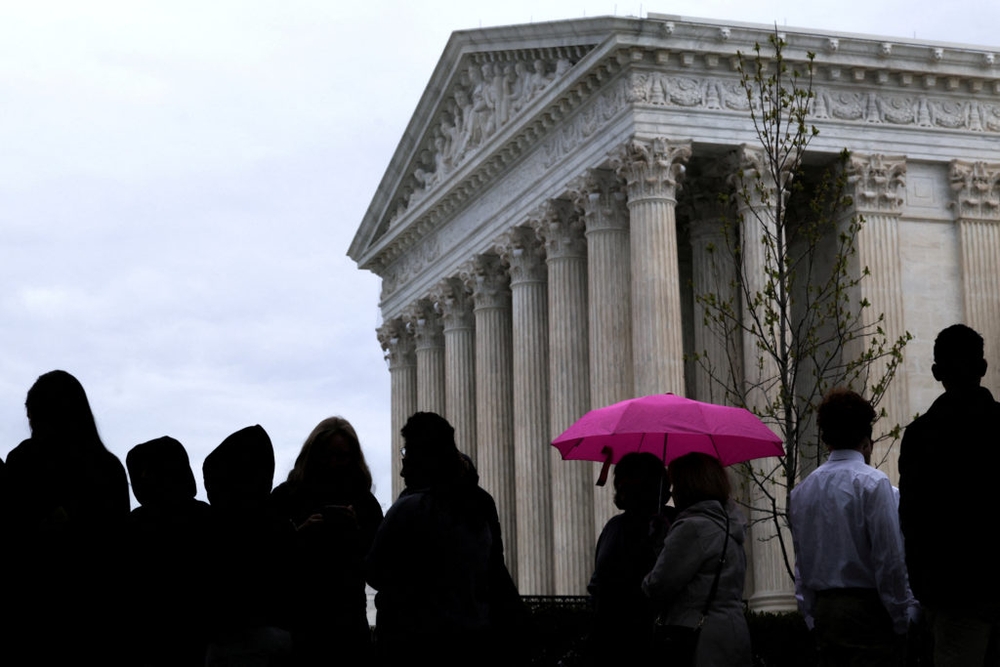
The Supreme Court of the United States is poised to hear arguments that could fundamentally alter the fabric of American citizenship. At the heart of this legal battle is an executive order signed by President Donald Trump on January 20, 2025, his first day back in office. The order, titled “Protecting the Meaning and Value of American Citizenship,” seeks to deny U.S. citizenship to children born in the United States to individuals who are in the country illegally or temporarily. This directive represents a radical departure from over a century of legal understanding and practice regarding the 14th Amendment of the U.S. Constitution.
The case originates from New Hampshire, where U.S. District Judge Joseph N. LaPlante ruled that the executive order “likely violates” both the Constitution and federal law. Every court that has considered this issue has reached the same conclusion, preventing the order from taking effect. The legal challenge is now before the highest court in the land, setting the stage for a monumental decision that could affect more than a quarter of a million babies born in the U.S. each year, according to research by the Migration Policy Institute and Pennsylvania State University’s Population Research Institute.
The Constitutional Foundation
The first sentence of the 14th Amendment, known as the Citizenship Clause, clearly states: “All persons born or naturalized in the United States, and subject to the jurisdiction thereof, are citizens of the United States and of the State wherein they reside.” For 156 years, this clause has been understood to grant citizenship to virtually everyone born on American soil, with narrow exceptions for children of foreign diplomats and invading armies. The current legal battle turns on the interpretation of the phrase “subject to the jurisdiction thereof,” which the Trump administration argues excludes individuals who are in the country illegally or temporarily.
Solicitor General D. John Sauer, representing the administration, has framed this case as an opportunity to correct “long-enduring misconceptions about the Constitution’s meaning.” In a controversial comparison, Sauer has likened the potential ruling to the seminal 1954 Brown v. Board of Education decision that outlawed school segregation and the 2008 Heller case that recognized an individual right to gun ownership. This comparison has drawn sharp criticism from legal scholars who see it as an attempt to legitimize what they view as an unconstitutional power grab.
The Human Impact
The article poignantly illustrates the human dimension of this legal battle through the story of an Argentine emigre who came to the U.S. in 2016 on a student visa and has since applied for a green card. She secured a U.S. passport for her son born in Florida last year, seeing it as “tangible evidence that he’s an American.” Her anonymity, insisted upon by her lawyers out of fear of retribution by the administration, speaks volumes about the climate of fear this policy has created among immigrant communities.
This mother’s experience highlights the emotional toll of living under the threat of having her child’s citizenship questioned. She described a moment of panic following a court ruling in June that initially left open the possibility that the restrictions could take effect in certain states. “I never thought that, you know, so close to the end of my pregnancy that I would have to be even thinking about … the executive order and how it would have impacted my baby,” she told the Associated Press. Her story represents the anxiety facing thousands of families across the nation.
A Broader Political Context
This executive order is not an isolated incident but part of a broader pattern of immigration restrictions implemented by the Trump administration. These include stepped-up deportations, drastic reductions in refugee admissions, suspension of asylum at the border, and stripping temporary legal protections from vulnerable populations. The birthright citizenship challenge represents the most fundamental assault yet on the rights of immigrant communities and their American-born children.
The case also tests the limits of executive power and the independence of the judiciary. Justice Sonia Sotomayor, joined by the court’s other liberal justices, previously called the administration’s defense of the order “an impossible task in light of the Constitution’s text, history, this Court’s precedents, federal law, and Executive Branch practice.” The court’s conservative majority, however, has previously allowed some anti-immigration efforts to continue even after lower courts had blocked them.
Opinion: The Constitutional Betrayal
The attempt to reinterpret the 14th Amendment through executive fiat represents one of the most dangerous assaults on American constitutional democracy in modern history. The Citizenship Clause was born from the aftermath of the Civil War, specifically designed to overturn the Dred Scott decision and ensure that African Americans born in the United States would be recognized as citizens. Its language was deliberately broad and inclusive, reflecting the nation’s commitment to moving beyond a history of exclusion and discrimination.
For the Trump administration to now claim that this clear constitutional text has been misunderstood for over a century is not just legally dubious—it is historically revisionist and morally bankrupt. The comparison to Brown v. Board of Education is particularly galling, as that decision expanded civil rights rather than restricting them. To equate the fight for racial equality with an effort to strip citizenship from newborns reveals a profound misunderstanding of both history and justice.
The Dangerous Precedent
If the Supreme Court were to uphold this executive order, it would establish a terrifying precedent: that fundamental rights guaranteed by the Constitution can be rewritten by presidential decree. This would effectively grant the executive branch the power to determine who is and isn’t American based on political considerations rather than constitutional principles. Such a ruling would undermine the very foundation of our legal system and open the door to further erosion of constitutional protections.
The administration’s argument that people here illegally or temporarily are not “subject to the jurisdiction” of the United States is both logically flawed and practically dangerous. Anyone physically present in the United States is subject to American laws and courts—this is precisely why undocumented immigrants can be detained, prosecuted, and deported. To claim they are not under U.S. jurisdiction for citizenship purposes while simultaneously subjecting them to American law enforcement represents a contradiction that cannot be reconciled with basic principles of legal consistency.
The Moral Dimension
Beyond the legal arguments lies a profound moral question: What kind of nation do we want to be? A country that revokes the citizenship of children based on their parents’ immigration status is a country that has abandoned its highest ideals. The child born to undocumented parents in an American hospital is as innocent and deserving of protection as any other child born on American soil. To punish children for circumstances beyond their control is antithetical to basic concepts of justice and human dignity.
The anonymous mother from Argentina expressed this sentiment perfectly when she said of the United States: “It gave me the most beautiful thing I have today, which is my family.” Her words remind us that at its best, America has always been about hope, opportunity, and the promise of a better future. The administration’s policy represents the opposite: fear, exclusion, and the closing of American doors to those who seek to contribute to our nation.
The Threat to Institutional Integrity
The fact that this case has reached the Supreme Court at all represents a failure of our political and legal institutions to check executive overreach. That lower courts uniformly rejected the administration’s arguments should have been the end of the matter. Instead, we face the alarming prospect that a politicized Supreme Court might validate what every other court has found unconstitutional.
This case tests not just the meaning of the 14th Amendment but the integrity of our judicial system itself. As Cecillia Wang, the ACLU legal director arguing against the administration, stated: “We have the president of the United States trying to radically reinterpret the definition of American citizenship.” When the highest elected official in the land seeks to undermine foundational constitutional principles, the damage to democratic norms can be catastrophic.
The Path Forward
Regardless of the Supreme Court’s decision, those committed to constitutional principles must continue to fight for an inclusive interpretation of American citizenship. The 14th Amendment’s guarantee was meant to be enduring and expansive, not subject to the political whims of any administration. We must reject the notion that some children are more deserving of citizenship than others based on their parents’ status.
This battle is about more than immigration policy—it is about the soul of our nation and our commitment to the constitutional framework that has sustained American democracy for centuries. The promise of equal protection under the law cannot be conditional or subject to political manipulation. Either the Constitution means what it says, or it becomes merely a suggestion that can be rewritten by whichever party holds power.
Conclusion: defending Our Constitutional Heritage
The fight over birthright citizenship is ultimately a test of whether America will remain true to its constitutional principles or succumb to the politics of division and exclusion. The 14th Amendment represents one of our nation’s greatest achievements—a definitive repudiation of the notion that some people born in America are less American than others. To undermine this principle now would be to betray the sacrifices of those who fought to enshrine it in our Constitution.
We must stand with the mothers like the one from Argentina who see America as a land of hope and opportunity. We must defend the constitutional rights of every child born on American soil. And we must reject any attempt to transform the presidency into an institution that can unilaterally redefine who counts as an American. The stakes could not be higher, for if we allow the foundation of birthright citizenship to crumble, no constitutional right will be safe from executive overreach.