
The Assault on Birthright Citizenship: A Constitutional Crisis at America's Doorstep
Published
- 3 min read
The Legal Battle Unfolding
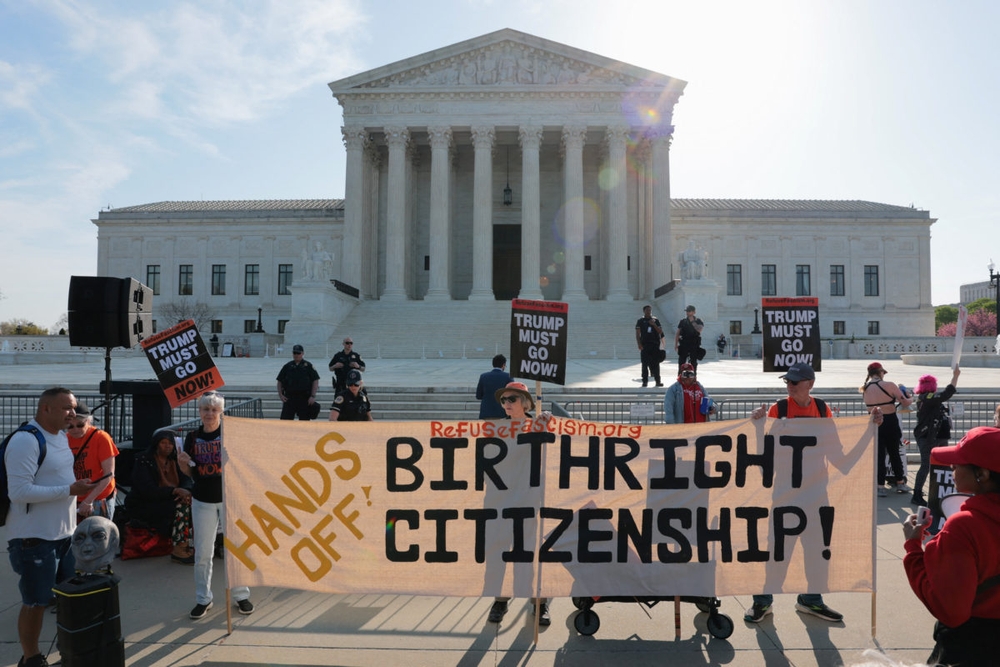
The Supreme Court of the United States stands at a historic crossroads as it hears arguments regarding one of the most consequential constitutional questions of our time: President Donald Trump’s executive order seeking to end birthright citizenship for children born to undocumented immigrants and temporary residents. This case represents not merely a policy dispute but a fundamental challenge to the very meaning of American citizenship and the constitutional protections that have defined our nation for generations.
President Trump’s presence at oral arguments marks an unprecedented moment—the first sitting president to attend Supreme Court proceedings—signaling the extraordinary political significance his administration places on overturning established constitutional interpretation. The executive order, signed on the first day of his second term, attempts to declare that children born to parents in the United States illegally or temporarily are not American citizens, directly contradicting the long-standing interpretation of the 14th Amendment’s Citizenship Clause.
The legal journey to this moment has seen multiple lower courts strike down the executive order as unconstitutional, invoking the Supreme Court’s own 1898 ruling in United States v. Wong Kim Ark, which firmly established that children born on American soil to foreign nationals are indeed citizens. These courts have consistently found that the president’s order violates both the Constitution and federal law, creating a judicial consensus that the administration now asks the Supreme Court to overturn.
Historical Context and Constitutional Foundation
The 14th Amendment, ratified in 1868, emerged from the ashes of the Civil War with the explicit purpose of ensuring that Black people, including former slaves, would forever be recognized as citizens of the United States. The language chosen by the framers was intentionally broad and inclusive: “All persons born or naturalized in the United States, and subject to the jurisdiction thereof, are citizens of the United States and of the State wherein they reside.” This wording reflected not only the immediate need to address the legacy of slavery but also to establish a enduring principle of inclusive citizenship.
For over 150 years, this constitutional provision has stood as a bedrock of American identity, ensuring that anyone born on American soil—regardless of their parents’ status—would share equally in the rights and responsibilities of citizenship. The Wong Kim Ark decision of 1898 reinforced this understanding, establishing that birthright citizenship applied even to children of immigrants who themselves could not become citizens due to racist exclusion laws targeting Chinese immigrants at the time.
The Trump administration’s legal argument, presented by Solicitor General D. John Sauer, contends that the common understanding of the 14th Amendment is mistaken. They claim that children of noncitizens are not “subject to the jurisdiction” of the United States and therefore should not automatically receive citizenship. This interpretation represents a radical departure from over a century of constitutional jurisprudence and would effectively rewrite the meaning of American belonging.
The Human Impact
Research from the Migration Policy Institute and Pennsylvania State University’s Population Research Institute indicates that more than 250,000 babies born in the United States each year would be affected by this executive order. Contrary to the administration’s rhetoric focusing primarily on undocumented immigration, the order’s reach extends far beyond—affecting children of students, green card applicants, and other temporary legal residents. These are infants who would suddenly find themselves stateless, without the protections or privileges of citizenship in the country of their birth.
Cecillia Wang, the American Civil Liberties Union legal director arguing against the administration, aptly characterized the stakes: “We have the president of the United States trying to radically reinterpret the definition of American citizenship.” Her words underscore the profound transformation that would occur should the Court endorse this executive overreach.
A Dangerous Precedent of Executive Power
This case represents another alarming test of this administration’s assertion of executive power that defies long-standing precedent. While the Supreme Court has largely ruled in President Trump’s favor on other matters, their previous rejection of his global tariffs imposed under emergency powers demonstrates that even this Court has limits to what executive authority it will endorse.
The president’s reaction to that February decision—publicly shaming justices who ruled against him and calling them “unpatriotic”—coupled with his recent preemptive broadside against the Court on Truth Social, reveals a disturbing pattern of attempting to intimidate the judicial branch. His statement that “Dumb Judges and Justices will not a great Country make!” represents not just criticism but an assault on the very independence of the judiciary that forms a cornerstone of our constitutional system.
The Constitutional Principle at Stake
At its core, this case is about whether the Executive Branch can unilaterally redefine constitutional provisions that have stood for generations. The 14th Amendment’s Citizenship Clause was designed specifically to prevent exactly this type of arbitrary exclusion from the American community. Its framers understood that citizenship must be protected from the changing political winds and the prejudices of any particular era.
The administration’s argument that the Amendment’s authors intended something different than what they actually wrote represents the most dangerous form of constitutional interpretation—one that seeks to replace clear textual meaning with speculative historical reconstruction that serves contemporary political objectives. If accepted, this approach would empower future presidents to redefine other constitutional provisions based on their own political preferences rather than the text itself.
The Threat to Institutional Integrity
President Trump’s decision to personally attend oral arguments represents an unprecedented political pressure on the judicial branch. While presidents certainly have the right to observe Court proceedings, the symbolic weight of his presence cannot be ignored—particularly given his history of publicly attacking judges who rule against him. This creates an environment where the independence of the judiciary appears under direct assault from the Executive Branch.
The Court’s credibility as an institution depends on its perceived independence from political pressure. When a president appears before the justices while simultaneously launching public attacks on their patriotism and intelligence, he undermines public confidence in the judiciary’s ability to render impartial judgments based on law rather than fear of political retaliation.
The Moral Dimension
Beyond the legal and constitutional questions lies a profound moral issue: What kind of nation do we aspire to be? The birthright citizenship guarantee represents America’s commitment to being a nation where opportunity is not determined by ancestry or the circumstances of one’s birth. It embodies the promise that anyone born on American soil starts life with equal claim to the American dream.
To revoke this promise would be to betray the very ideals that have made America a beacon of hope for generations of immigrants. It would create a permanent underclass of people born in this country but denied full participation in its civic life—a situation reminiscent of the discriminatory practices the 14th Amendment was explicitly designed to eliminate.
The administration’s focus on so-called “birth tourism” represents a distortion of the actual impact of this policy. While they emphasize extreme cases of wealthy foreigners allegedly abusing the system, the reality is that the vast majority of those affected would be children of long-term residents who have built lives and communities here. The policy uses rare exceptions to justify sweeping changes that would fundamentally alter America’s character.
Conclusion: defending Constitutional Democracy
As the Supreme Court deliberates this case, the justices confront not just a legal question but a defining moment for American constitutional democracy. Their decision will determine whether the Executive Branch can unilaterally redefine the meaning of citizenship, whether constitutional provisions can be reinterpreted to serve temporary political objectives, and whether the judiciary will remain independent in the face of unprecedented presidential pressure.
The principles at stake extend far beyond immigration policy. They touch upon the very nature of our constitutional system—the separation of powers, the independence of the judiciary, and the enduring meaning of constitutional guarantees that transcend political expediency. To allow this executive order to stand would be to endorse a vision of America that is narrower, less inclusive, and fundamentally at odds with both our constitutional text and our historical traditions.
The Court must recognize that the 14th Amendment’s guarantee of birthright citizenship represents one of the most profound commitments to equality ever enshrined in constitutional text. To undermine this guarantee would be to betray the amendment’s Reconstruction-era origins and the centuries of struggle to create a more perfect union. The justices have an obligation to protect the Constitution from executive overreach and preserve the promise of equal citizenship for all born on American soil, regardless of their parents’ status. The soul of American democracy depends on their courage to uphold this fundamental principle.