
The Assault on Birthright Citizenship: A Threat to America's Constitutional Soul
Published
- 3 min read
The Constitutional Challenge at Hand
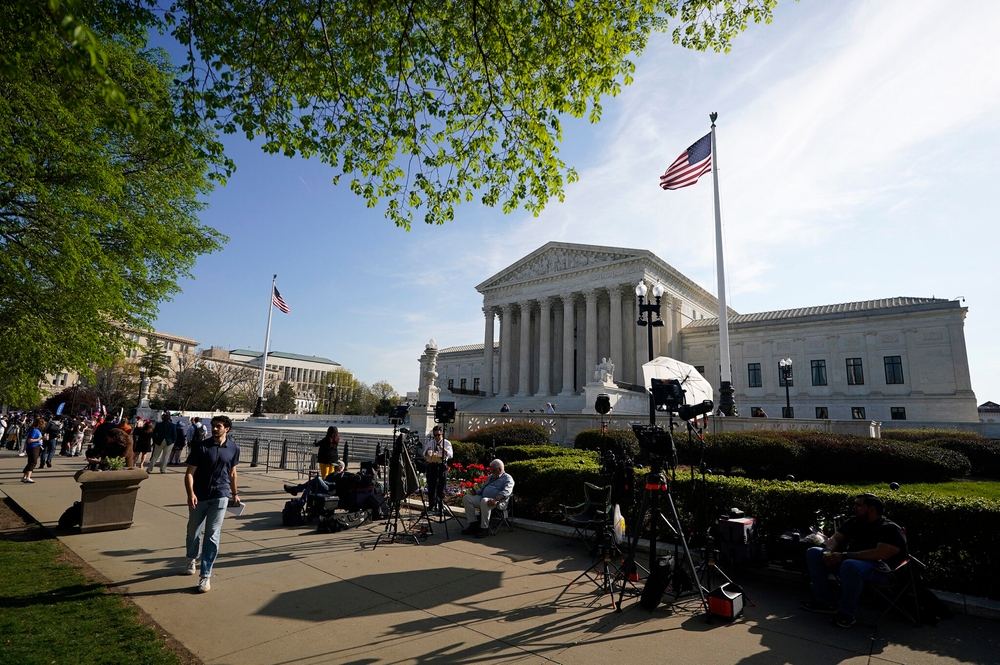
The United States Supreme Court finds itself at the epicenter of a profound constitutional crisis as it considers the legality of President Donald Trump’s executive order seeking to end birthright citizenship. This order, signed on Trump’s first day back in office, represents the most direct assault on the 14th Amendment’s Citizenship Clause since its ratification in 1868. The clause clearly states: “All persons born or naturalized in the United States, and subject to the jurisdiction thereof, are citizens of the United States and of the State wherein they reside.”
During oral arguments last week, Justice Sonia Sotomayor emerged as a powerful voice of skepticism, questioning Solicitor General D. John Sauer about the potentially expansive implications of the administration’s legal theory. Her probing questions revealed the dangerous precedent this case could establish—opening the door not just to prospective denial of citizenship, but potentially to the revocation of existing citizenships. The Trump administration contends that children born to parents in the country illegally or temporarily are not subject to the country’s jurisdiction, a position that most historians and legal scholars vehemently reject as contrary to both the text and historical understanding of the 14th Amendment.
Historical Context and Precedent
The current case, Trump v. Barbara, forces the Court to confront its own historical legacy, including the 1898 landmark decision United States v. Wong Kim Ark. In that case, the Court affirmed that virtually all children born in the United States were guaranteed citizenship, establishing birthright citizenship as a foundational principle of American law. Norman Wong, grandson of Wong Kim Ark, recently emphasized outside the Supreme Court that “birthright citizenship is not just a legal principle—it’s a statement about who we are as a nation.”
Tragically, the Court must also reckon with its darker precedents, particularly the 1923 decision in U.S. v. Thind, where the justices ruled that Bhagat Singh Thind, a Sikh man from India, wasn’t eligible for citizenship. This decision led to the federal government revoking the citizenship of dozens of South Asian Americans—a historical warning of what can happen when citizenship becomes contingent on arbitrary criteria rather than constitutional principles.
The Political and Ideological Divide
The birthright citizenship debate exposes a fundamental ideological schism in American politics. President Trump and some Republican allies, including Senator Eric Schmitt and Representative Chip Roy, have embraced a vision of America as a nation bound by cultural heritage rather than shared principles. Their brief to the Supreme Court argues that “The Citizenship Clause applies only to those who have been allowed to adopt our country as their permanent and lawful home”—a formulation that would fundamentally alter the relationship between individuals and the constitutional state.
This perspective stands in stark contrast to the vision articulated by civil rights advocates like Cecillia Wang, national legal director of the ACLU, who argued before the Court that the 14th Amendment has provided a “fixed, bright-line rule” on citizenship that has been essential to the nation’s growth and prosperity. The Fred T. Korematsu Center for Law and Equality, along with more than 70 other nonprofit groups, warned in their brief that upholding the order would invite efforts to revoke the citizenship of countless Americans, potentially rendering them stateless.
The Constitutional Principles at Stake
What makes this case so profoundly disturbing is that it represents nothing less than an attempt to rewrite the social contract that has defined American citizenship for over 150 years. The 14th Amendment was born from the ashes of the Civil War and the bitter experience of slavery—it was designed to create an inclusive, unambiguous standard for citizenship that could not be manipulated by political majorities or executive fiat.
The administration’s legal theory rests on a tortured reading of “subject to the jurisdiction thereof” that contradicts both the historical record and settled constitutional understanding. The framers of the 14th Amendment explicitly rejected language that would have excluded children of immigrants from citizenship protection. They understood that America’s strength would come from its ability to assimilate newcomers and offer them full membership in the political community.
The Dangerous Precedent Being Established
Justice Sotomayor’s exchange with Solicitor General Sauer revealed the terrifying logical endpoint of the administration’s position. If birthright citizenship can be eliminated prospectively based on the parents’ immigration status, what prevents a future administration from applying this logic retroactively? The Thind case demonstrates that citizenship revocation is not merely theoretical—it has happened before in our history, with devastating consequences for vulnerable communities.
The creation of a stateless underclass within our borders would represent a moral and constitutional catastrophe. These individuals would exist in a legal limbo—unable to access basic rights, benefits, or protections, yet physically present within our society. This would undermine social cohesion, create permanent second-class status, and betray the very ideals of equal protection under law.
The Broader Implications for American Democracy
Beyond the immediate legal questions, this case raises profound concerns about the stability of constitutional governance. Executive orders that seek to overturn settled constitutional interpretations represent a dangerous expansion of presidential power at the expense of both congressional authority and judicial independence. If presidents can simply declare longstanding constitutional provisions null through executive action, the entire system of checks and balances collapses.
Furthermore, the rhetoric surrounding this debate—the suggestion that America should be defined by cultural heritage rather than shared values—threatens to unravel the pluralistic vision that has made this nation unique. The beauty of the American experiment has always been its capacity to welcome diverse peoples into a common civic identity based on commitment to constitutional principles rather than ethnic or religious homogeneity.
The Path Forward: Reaffirming Constitutional Values
As the Supreme Court deliberates this case, the justices must recognize that they are deciding not just a legal technicality, but the very character of American citizenship. To uphold the executive order would be to repudiate the Reconstruction Amendments’ central purpose: to create a more perfect union based on equal citizenship for all.
The Court should follow the wisdom of its precedents, particularly Wong Kim Ark, which correctly interpreted the 14th Amendment as establishing a clear, objective standard for citizenship. This standard has served America well for over a century, allowing us to absorb waves of immigrants while maintaining a stable constitutional order.
Ultimately, this case is about whether America will remain true to its highest ideals or succumb to the politics of exclusion and fear. The promise of birthright citizenship—that anyone born on American soil can claim full membership in the political community—represents one of our nation’s most noble contributions to human freedom. To abandon that promise would be to betray not only our Constitution, but our very identity as a nation of immigrants and a beacon of hope for the world.
We must stand firm in defense of the 14th Amendment’s guarantee and reject any attempt to create a hereditary aristocracy of citizenship based on parents’ immigration status. The constitutional soul of America depends on it.