
The Assault on Federal Reserve Independence: A Dangerous Precedent for American Democracy
Published
- 3 min read
The Facts: A Constitutional Crisis Unfolding
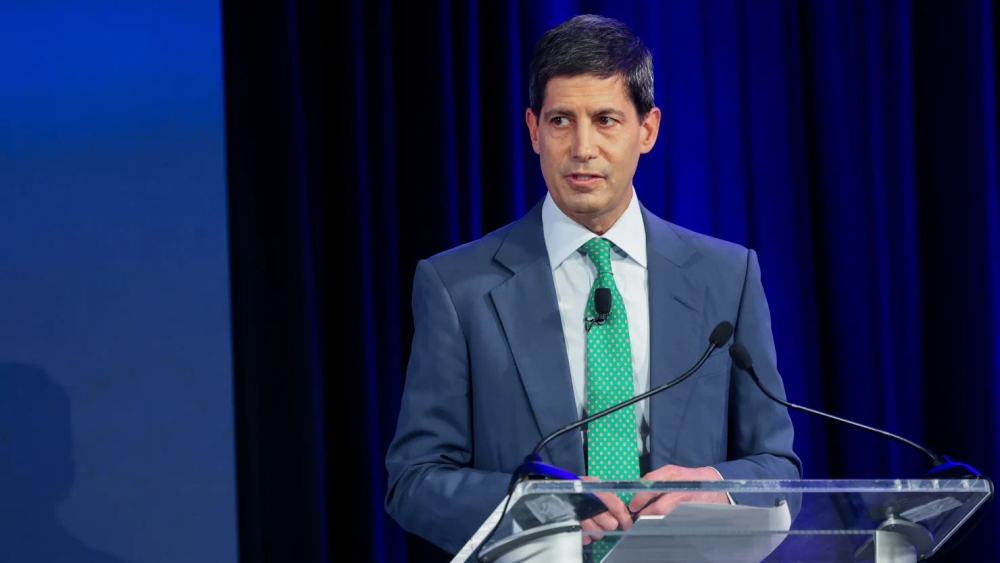
The Senate Banking Committee has scheduled a nomination hearing for Kevin Warsh to become the next chair of the Federal Reserve, proceeding despite an ongoing criminal investigation into current chair Jerome Powell. This investigation, initiated by the Trump administration, alleges that Powell lied to Congress about expensive renovations to the Fed’s offices—a claim that a federal judge has already questioned due to lack of evidence. Judge James Boasberg of the U.S. District Court for the District of Columbia recently declined the government’s motion to reconsider his decision to quash subpoenas into the Fed, stating that “the Government’s fundamental problem is that it has presented no evidence whatsoever of fraud.”
Meanwhile, Senator Thom Tillis (R-N.C.) has declared he will not vote to confirm Warsh until this probe is resolved, creating a significant obstacle for the administration’s confirmation efforts. President Trump, however, continues to push for Warsh’s confirmation while simultaneously expressing support for the investigation against Powell—a clear conflict that threatens the institutional integrity of America’s central banking system.
The Context: Why Federal Reserve Independence Matters
The Federal Reserve was established to operate independently from political pressure for a crucial reason: monetary policy decisions must be based on economic fundamentals rather than political considerations. Congress explicitly tasked the Fed with setting interest rates independent of political influence because history has shown that central banks with operational independence are far more effective at controlling inflation and maintaining economic stability.
This independence becomes particularly critical during times of economic uncertainty, such as the current period marked by rising energy costs due to international conflicts. The Fed’s ability to make tough decisions about interest rates without fearing political retaliation is essential for maintaining price stability and public confidence in our financial system.
The Dangerous Politicization of Monetary Policy
What we are witnessing represents nothing less than a systematic assault on one of America’s most important economic institutions. The simultaneous pursuit of a questionable criminal investigation against the sitting Fed chair while pushing for a replacement nominee who might be more amenable to presidential demands creates a chilling effect that undermines the very foundation of central bank independence.
President Trump’s repeated demands for lower interest rates—and his apparent willingness to weaponize the justice system to achieve this goal—should alarm every American who values economic stability and institutional integrity. The fact that Jerome Powell has denounced the probe as “a pretext to pressure him into lowering interest rates” reveals the troubling political motivations behind this investigation.
This situation becomes even more concerning when considering the recent changes at the Department of Justice, where Trump fired Attorney General Pam Bondi and appointed Todd Blanche—formerly one of Trump’s defense attorneys—as acting attorney general. These personnel changes could potentially affect the trajectory of the Powell investigation, further blurring the lines between law enforcement and political objectives.
The Principle of Institutional Integrity
Senator Thom Tillis deserves recognition for taking a principled stand against this confirmation until the investigation is resolved. His insistence on maintaining the Fed’s independence demonstrates a commitment to institutional integrity that transcends partisan politics. Similarly, Senator Elizabeth Warren’s concerns about Warsh potentially serving as a “rubber stamp for President Trump’s Wall Street First Agenda” highlight the legitimate worries about maintaining the Fed’s non-partisan character.
The Federal Reserve must remain free from political manipulation to effectively serve its dual mandate of maximum employment and price stability. When political considerations influence monetary policy decisions, the results are typically disastrous—hyperinflation, economic instability, and loss of international confidence in the U.S. dollar as the world’s reserve currency.
The Broader Implications for American Democracy
This assault on Federal Reserve independence represents a broader pattern of undermining democratic institutions that should concern every American. The attempted politicization of the Fed follows similar attacks on the judiciary, intelligence agencies, and law enforcement—all designed to concentrate power in the executive branch at the expense of institutional checks and balances.
The founding fathers established a system of separated powers precisely to prevent this kind of consolidation of authority. Independent institutions like the Federal Reserve serve as vital bulwarks against authoritarian tendencies, ensuring that no single branch of government can dominate economic or political life.
The Path Forward: Preserving Institutional Independence
Americans across the political spectrum must recognize the danger of allowing political pressure to influence monetary policy. The Federal Reserve’s independence is not a partisan issue—it is a fundamental requirement for economic stability and democratic governance. We must support leaders like Senator Tillis who put institutional integrity above short-term political considerations.
The Senate Banking Committee should postpone the Warsh nomination hearing until the investigation into Jerome Powell is conclusively resolved. Additionally, Congress should consider strengthening protections for Federal Reserve independence to prevent future administrations from attempting similar political interventions.
Conclusion: Defending Democracy’s Foundations
The current situation represents a critical test for American democracy. Will we allow political pressure to undermine one of our most important economic institutions, or will we defend the principle of central bank independence that has served our nation so well for over a century?
The answer to this question will determine not just the future of monetary policy, but the health of our democratic system itself. We must stand firm against this dangerous precedent and reaffirm our commitment to institutions free from political manipulation. The economic stability of our nation and the integrity of our democracy depend on it.