
The Assault on Truth and Public Health: Josh Hawley's Misleading Crusade Against Missouri's Title X Network
Published
- 3 min read
The Facts: A Lifeline Under Fire
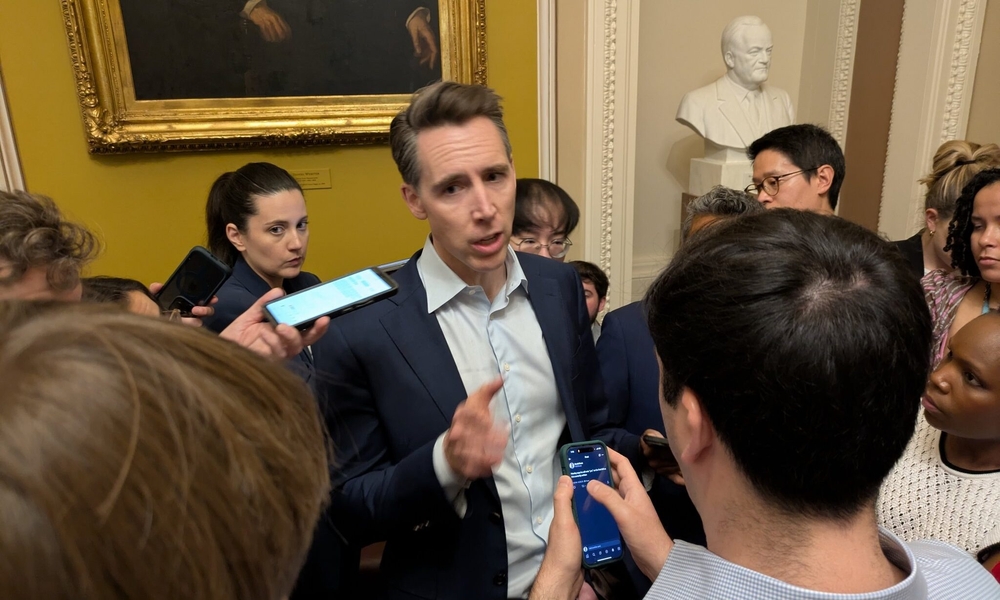
At a congressional hearing on the Department of Health and Human Services budget, U.S. Senator Josh Hawley (R-MO) launched a direct assault on a cornerstone of Missouri’s public health infrastructure. He demanded that Health Secretary Robert F. Kennedy Jr. cease providing federal Title X funding to the Beacon Reproductive Health Network, the only Title X grantee program in the state. Hawley erroneously labeled the nonprofit an “abortion provider” and questioned why federal tax dollars should support such an entity. This accusation is the latest in a series of political threats against an organization that has administered the Title X program in Missouri for nearly 45 years.
The Beacon Reproductive Health Network, formerly the Missouri Family Health Council, is not an abortion provider. This is a critical, legal fact. Federal law explicitly prohibits the use of Title X funds for abortions. The network received $8 million in federal funding to distribute across 65 Missouri health centers, including city and county health departments, community action agencies, federally-qualified health centers, and hospital-based clinics. These funds provide essential health care services such as contraception, testing and treatment for sexually transmitted infections, and cancer screenings related to reproductive health. In 2024 alone, these clinics served 35,000 patients, with 81% being female, 73% under the age of 34, and almost 50% uninsured.
Michelle Trupiano, the executive director of Beacon, responded forcefully to Hawley’s allegations, calling them “inaccurate and misleading.” She emphasized that the senator’s comments demonstrate he is “out of touch” and “determined to decimate the network and reproductive health care for Missourians.” Trupiano clarified that while federal rules require Title X providers to offer “all options counseling” to pregnant patients, including discussing pregnancy termination, Beacon does not help set up abortion appointments or provide transportation to abortion clinics.
The Context: A Precarious Political Landscape
This incident did not occur in a vacuum. It is part of a broader, ongoing campaign to undermine reproductive healthcare access under the guise of political ideology. Earlier in 2025, the Trump administration froze approximately $27.5 million in Title X funding to several states, including millions earmarked for Missouri distributed by Beacon, citing compliance concerns around diversity, equity, and inclusion initiatives. That funding was restored in July, but the threat remains palpable.
Furthermore, Hawley expanded his accusations beyond abortion, claiming Beacon provides “gender-affirming care including to young people”—a practice currently banned in Missouri. Health Secretary Kennedy, despite agreeing with Hawley’s arguments, stated the litigation risk of freezing the funds was too high, as the funding is in the final year of a five-year grant cycle. Hawley then pivoted, asking Kennedy about writing new regulations to prevent tax dollars from going to any group that makes abortion referrals, to which Kennedy said he was “happy to work… on ideas.” Hawley’s closing remark laid bare his priority: “I’d rather take the risk in litigation than subject children in my states to transgender care funded by federal taxpayer dollars.”
The stakes could not be higher. Trupiano stated plainly that without Title X funding, clinics across Missouri would close, placing a “huge amount of strain on the public health safety network.” She noted the conversation made it clear that “the future of care is precarious.” In many rural areas, the Title X clinic is the only place people can access reproductive and sexual healthcare.
Opinion: A Dangerous Erosion of Institutional Integrity and Human Dignity
The confrontation between Senator Hawley and the Beacon Reproductive Health Network is not merely a policy dispute; it is a stark case study in the deliberate erosion of truth, the weaponization of federal power against vital institutions, and a chilling disregard for the health and autonomy of American citizens. This episode forces us to confront several disturbing principles at play in our current political climate.
First, it represents a flagrant attack on factual integrity and the rule of law. Senator Hawley stood in the halls of Congress and made a specific, provably false claim: that Beacon is an “abortion provider” receiving federal funds for that purpose. The law is clear. The network’s mandate is clear. Michelle Trupiano’s rebuttal was clear. Yet, the senator persisted with a narrative designed not to inform but to inflame. This is not a simple mistake; it is a calculated strategy. When elected officials feel empowered to publicly distort the core function of a 45-year-old institution without consequence, they undermine public trust in all institutions. They replace governance with propaganda, and debate with demagoguery. A healthy democracy cannot function when its leaders casually divorce their statements from reality, especially on matters of life-and-death importance like healthcare access.
Second, this is an assault on the very purpose of public health infrastructure. The Title X program was created over half a century ago as a bipartisan commitment to ensuring that all people, regardless of income, have access to basic family planning and preventive health services. It is a testament to a societal compact that values health, privacy, and personal responsibility. Hawley’s campaign to defund Beacon is not an attempt to reform or improve this system; it is an attempt to destroy it. His willingness to see clinics close—clinics that provide cancer screenings and STI treatment—over ideological grievances about unrelated services reveals a profound nihilism. He is prioritizing a political victory over the tangible wellbeing of 35,000 Missourians, many of whom have nowhere else to turn. This is the antithesis of public service. It is an abandonment of the duty to protect one’s constituents.
Third, Hawley’s conflation of issues is a transparently cynical tactic. By bundling false claims about abortion provision with allegations about gender-affirming care for minors (which is illegal in Missouri), he seeks to create a monster in the public imagination. This “groomer”-style rhetoric is designed to provoke fear and outrage, bypassing rational discussion about the actual, lifesaving work Beacon does. It is a move straight from the authoritarian playbook: identify a vulnerable population, vilify the institutions that serve them, and justify draconian measures in the name of protecting “the children.” His statement to Secretary Kennedy—“I’d rather take the risk in litigation than subject children… to transgender care”—is particularly revealing. It admits that his action may be legally tenuous, but he deems the cultural fight more important than the law or the healthcare of thousands. This prioritization of ideology over law and order is a direct threat to constitutional governance.
Finally, this episode highlights the precariousness of freedom in the face of relentless institutional sabotage. The Beacon network has survived previous funding attacks, but as Trupiano said, the future is precarious. Each assault weakens its capacity, sows uncertainty among providers and patients, and consumes resources that should be spent on care. This death-by-a-thousand-cuts strategy against disfavored institutions is a powerful tool for those who wish to reshape society not through democratic consensus, but through administrative strangulation. It bypasses the legislative process and uses the power of the purse and the platform to enforce a narrow ideology.
As a firm supporter of democracy, liberty, and the U.S. Constitution, I find this spectacle deeply alarming. The Bill of Rights implies a right to privacy and bodily autonomy that programs like Title X uphold. The deliberate misrepresentation of facts by a sitting senator to justify stripping healthcare from the vulnerable is an affront to the principles of honest governance. It treats citizens, particularly low-income women and rural communities, as pawns in a political game rather than as rights-bearing individuals.
We must call this what it is: an act of political violence against a public health institution. The casualties will not be on a debate stage; they will be in Missouri communities where clinics close, cancer goes undetected, and unplanned pregnancies increase. Defending Beacon Reproductive Health Network is about more than family planning; it is about defending truth from lies, institutions from sabotage, and the fundamental American promise that our government exists to promote the general welfare, not to sacrifice it on the altar of divisive politics. The fight for the soul of our democracy is being waged in these hearings, and we must stand with the facts, with the patients, and with the institutions that keep them healthy and free.