
The Battle for NJ-11: A Local Election with Global Stakes and a Test of American Conscience
Published
- 3 min read
The Facts: A Vacant Seat and a High-Stakes Contest
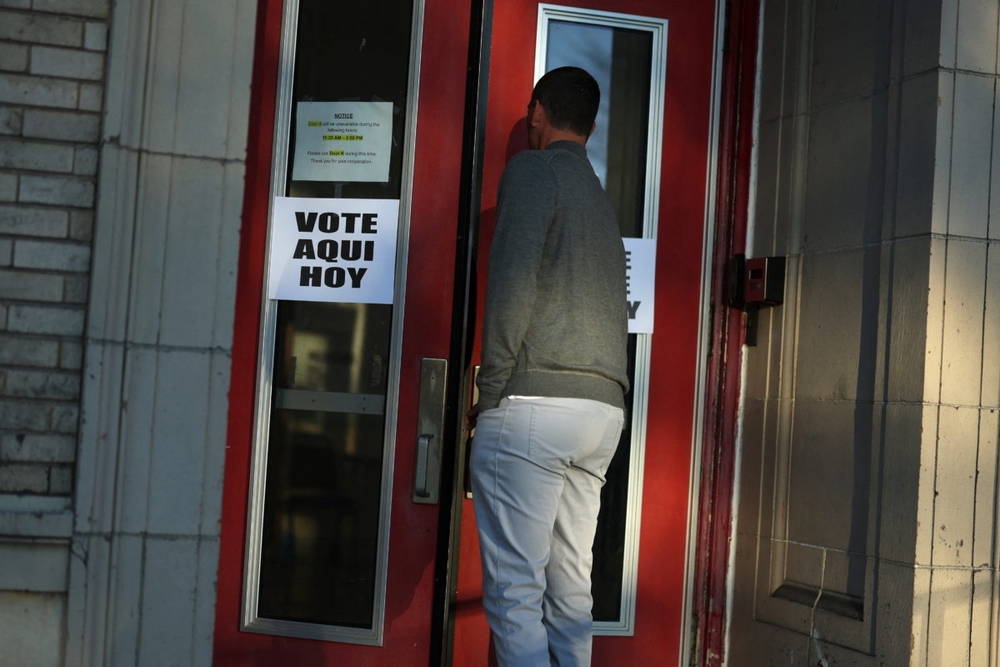
On Thursday, November 7th, 2024, residents of New Jersey’s 11th Congressional District participated in a special election to fill the U.S. House seat vacated by Democrat Mikie Sherrill, who successfully ran for Governor. This election, occurring just 201 days before the seat is up again in the 2026 midterms, carries immediate and significant weight for the national political landscape. A Democratic victory in this Democratic-leaning district—where Sherrill won re-election in 2024 with about 57% of the vote and where Vice President Kamala Harris carried the district—would further narrow the already razor-thin majority Republicans hold in the House of Representatives. The electoral mechanics are straightforward: polls closed at 8 p.m. ET, with over 603,000 registered voters eligible, split among approximately 230,000 Democrats, 165,000 Republicans, and 204,000 unaffiliated voters. As of Tuesday, about 58,000 early votes had already been cast, signaling robust engagement.
The Contenders: Ideological Fault Lines Exposed
The race featured two major party nominees representing the deepening ideological chasm in American politics. The Democratic nominee, Analilia Mejia, is a longtime progressive organizer and former Labor Department official. She secured her nomination in a narrow February 5th special primary victory against a crowded field, earning early endorsements from progressive stalwarts Senators Bernie Sanders and Elizabeth Warren and Representative Alexandria Ocasio-Cortez. Her primary opponents included former Representative Tom Malinowski, who was attempting a political comeback after losing a neighboring seat in 2022. The Republican nominee, Joe Hathaway, a member of the Randolph Township Council, ran unopposed for his party’s nomination. The financial disclosures reveal Mejia had raised about $1.1 million and had $374,000 on hand as of late March, while Hathaway had raised about $525,000 with $109,000 in the bank.
The Central Issue: Gaza and the American Foreign Policy Debate
Transcending typical local concerns, the war in Gaza emerged as the defining issue of this congressional campaign. This foreign policy debate was not abstract; it had concrete, expensive, and politically violent domestic repercussions. A super PAC affiliated with the American Israel Public Affairs Committee (AIPAC) spent a staggering more than $2.3 million to defeat Tom Malinowski in the Democratic primary, specifically targeting him for having “questioned providing unconditional aid to the Israeli government.” This represents a profound intervention by a foreign policy-focused interest group into a district-level Democratic primary, aiming to purge dissent.
The candidates’ positions crystallized the national divide. During a primary forum, Analilia Mejia was the only candidate to indicate she believes Israel has committed genocide in Gaza, and she has called Israeli Prime Minister Benjamin Netanyahu a war criminal. In stark contrast, Republican Joe Hathaway has stated the U.S. should stand “in lockstep” with Israel and opposes putting any conditions on aid to the ally. Thus, the choice for voters became a direct referendum on these diametrically opposed views regarding accountability, human rights, and the nature of the U.S.-Israel relationship.
The District’s Political Anatomy
Geographically, the 11th District is primarily composed of Morris County (more than half of its precincts), with portions in Essex and Passaic Counties. This geography creates its own political microclimate. The Essex County portion is heavily Democratic, with Harris winning 64% there in 2024. Conversely, former President Donald Trump narrowly won the district’s share of Morris County by about one percentage point and carried its small Passaic County portion with about 57%. This makes the district a true battleground mosaic, where suburban shifts and national political winds are felt acutely.
A Crisis of Conscience and the Erosion of Democratic Discourse
The NJ-11 special election is not a mundane political event. It is a distressing symptom of a deeper malady within American democracy and its foreign policy ethos. The fact that a local congressional race has been hijacked by a debate over allegations of genocide and war crimes is a tragedy of immense proportions. It signals how international human rights catastrophes have become polarized, weaponized cudgels in our domestic politics, often at the expense of nuanced understanding and principled stances.
The multi-million-dollar intervention by the AIPAC-affiliated Super PAC to defeat Tom Malinowski is an assault on the democratic process. It represents the raw power of special interest money to punish elected officials for exercising independent judgment and asking critical questions about the use of American taxpayer funds and military support. The foundational principle of congressional oversight—a core tenet of our constitutional system of checks and balances—is undermined when a member fears a well-funded backlash for merely questioning “unconditional” aid. This is not about being pro- or anti-Israel; this is about whether Congress can fulfill its solemn duty to conduct robust oversight of foreign assistance without being politically annihilated by shadowy, well-funded external groups. It chills dissent and enforces a dangerous orthodoxy.
Analilia Mejia’s stance, while galvanizing for her progressive base, raises serious questions about the language of international law and its application in domestic political campaigns. Accusations of genocide and labeling a foreign leader a war criminal are among the most serious charges imaginable under international law. Using them as campaign rhetoric, outside of formal judicial or investigative findings, risks cheapening these grave legal concepts and inflaming an already toxic discourse. However, her position also reflects a growing, passionate demand within a segment of the electorate for the United States to leverage its influence to demand accountability and an end to civilian suffering, a humanitarian impulse that should resonate with any conscience.
Joe Hathaway’s “lockstep” posture, while projecting steadfast alliance, represents the opposite peril: the abdication of independent moral and strategic judgment. Unconditional support for any nation, irrespective of its government’s actions, is not a policy; it is subservience. It negates America’s role as a leader that champions universal human rights and the laws of war. The U.S.-Israel relationship is strong enough to withstand honest criticism and conditional aid designed to uphold shared democratic values. To suggest otherwise is to infantilize the alliance and betray our own principles.
The Larger Threat: Local Elections as Proxy Wars
This election exemplifies a disturbing trend: local congressional districts becoming proxy battlefields for global conflicts and ideological wars. Voters in Morris, Essex, and Passaic Counties are being asked not just to choose a representative for local infrastructure and economic concerns, but to render a verdict on a complex foreign conflict thousands of miles away. This distorts the representative function and often drowns out pressing domestic issues that directly impact constituents’ lives.
Furthermore, the impending result’s impact on the House majority cannot be ignored. Our legislative process is already paralyzed by extremism and hyper-partisanship. Further narrowing the majority margin may increase democratic accountability by making every vote count, but it also risks deepening the gridlock and empowering the most intransigent factions within the narrow majority. The health of our republic depends on a functioning legislature, and elections like this one hold the keys to that functionality.
Conclusion: A Vote for What America Stands For
The New Jersey 11th Congressional District special election is a poignant moment of choice. It is a choice between blind allegiance and critical solidarity, between enforced orthodoxy and the right to dissent, between viewing international affairs through a purely partisan lens and upholding consistent human rights principles. The massive Super PAC spending to shape the outcome is a warning siren about the corrosive influence of money on our foreign policy.
As a nation founded on liberty and justice, we must demand representatives who embody the courage to ask hard questions, the wisdom to seek nuanced solutions, and the moral compass to apply our values consistently. Whether one agrees with Analilia Mejia’s specific terminology or Joe Hathaway’s unwavering stance, the essential lesson from NJ-11 is that American democracy is engaged in a struggle for its soul. It is a struggle between a foreign policy driven by accountability and human dignity and one driven by tribal loyalty and financial pressure. The voters’ decision, therefore, reverberates far beyond the district’s borders; it is a statement on what America chooses to stand for in a world watching our every move. The integrity of our institutions, the independence of our representatives, and the very conscience of our nation are on the ballot.