
The Bench and the Balance: A Nevada Judicial Race Tests the Scales of Justice
Published
- 3 min read
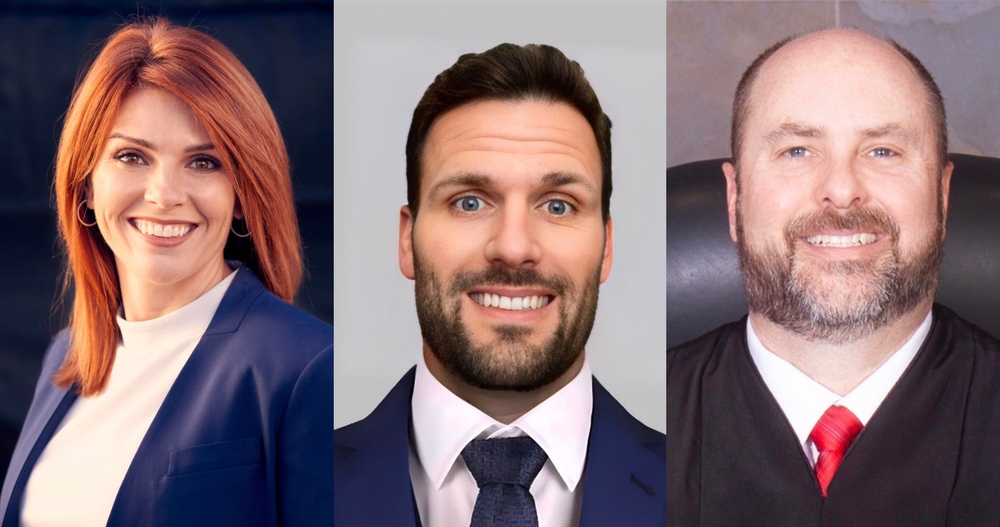
In the heart of Clark County, Nevada, a seemingly routine election to fill a vacant district judgeship has unfolded into a compelling microcosm of the enduring tensions within the American judicial system. The race for Department 26, left open by the retirement of Judge Gloria Sturman, features three distinct legal professionals: Justice of the Peace Jessica Goodey, State Bar of Nevada General Counsel Daniel Hooge, and newly appointed incumbent Judge Pete Thunell. This contest is more than a political horserace; it is a referendum on judicial philosophy, professional experience, and the very character of justice itself. For citizens who cherish the rule of law, the integrity of our institutions, and the promise of equal justice under law, understanding the stakes of this election is not just an academic exercise—it is a civic imperative.
The Contenders and Their Credentials
Jessica Goodey, a Justice of the Peace elected in 2022, presents herself as the civil law expert in a field dominated by former prosecutors. A graduate of the Boyd School of Law, she explicitly entered the race because she believed the department, known for its vigorous civil docket under Judge Sturman, required a judge with substantive civil experience. Her platform is built on judicial efficiency, transparency, and a forward-thinking approach to justice that emphasizes addressing root causes. She is a vocal proponent of diversion programs, like the Eviction Diversion Program, arguing they stabilize communities and transform lives. Notably, she testified neutrally on Governor Lombardo’s crime bill, raising a pointed concern about a provision requiring judges to report data to the Legislature instead of the Supreme Court, warning of a potential violation of the separation of powers—a principled stand on institutional integrity.
Daniel Hooge, the General Counsel for the State Bar of Nevada, offers a profile shaped by prosecutorial work in Lincoln County and his current role policing attorney misconduct. His application for the bench reveals a profound, personal lesson in judicial temperament: the haunting case of Jerry Hudson, a perpetrator he initially doubted due to a victim’s unconventional reaction, who later paroled and committed murder. Hooge’s writing conveys a transformative sense of guilt and a commitment to “follow the evidence, no matter how odd it is.” In his current role, he deals extensively with administrative law and civil procedure, and he highlights the emerging challenge of AI-generated legal complaints flooding the courts. His perspective is that of an insider who has seen the system’s failures and its mechanisms for attorney accountability.
Pete Thunell, appointed to the seat by Governor Joe Lombardo in March, is the de facto incumbent. With 18 years as a prosecutor in the Clark County District Attorney’s office, his experience is overwhelmingly in criminal law, though he currently handles a mixed docket. He emphasizes his “dozens and dozens of jury trials” as the critical experience for making weighty judicial decisions and presiding competently. He stresses his commitment to a nonpartisan judiciary, explicitly stating he avoids political discussions, and is a proponent of open courts, supporting remote access and ensuring pro se litigants feel on equal footing. His appointment connection—the governor’s daughter was on his prosecutorial team—is noted, though he asserts the selection was made “completely on merits.”
The Core Tensions: Experience, Philosophy, and the Role of the Judge
This race surfaces fundamental questions that extend far beyond Nevada’s borders. The first is the question of relevant experience. Is a civil-heavy docket best served by a judge with a civil practice background, as Goodey argues? Or is the sheer volume of courtroom command, particularly in jury trials, the paramount qualification, as Thunell contends? Hooge introduces a third vector: the experience of oversight, ethics enforcement, and a painfully acquired humility in assessing evidence. There is no easy answer, but the debate forces voters to consider what kind of expertise matters most for a fair and functional court.
The second, and more profound, tension revolves around judicial philosophy. Goodey’s advocacy for diversion programs represents a rehabilitative and preventative vision of justice. She speaks of “addressing the root causes” and “transform[ing] lives by focusing on recovery and productivity.” This is a humanistic approach that views the law as a tool for societal healing, not merely punishment. In contrast, Thunell’s long prosecutorial career inherently aligns him with the state’s punitive apparatus, though he insists his goal is ensuring “the right thing happens,” not just winning. Hooge’s philosophy appears forged in the fire of past error, emphasizing evidentiary rigor and a skepticism of preconceptions.
Crucially, all three candidates express support for transparent, accessible courts, particularly regarding remote hearing access—a legacy of the pandemic that has democratized viewing court proceedings. This consensus is a positive sign for civic engagement and government transparency.
A Principled Stance on Justice and Institutional Integrity
From a perspective deeply committed to democratic norms, the rule of law, and human dignity, this election presents both concerning pitfalls and promising possibilities.
The concerning elements are subtle but significant. The appearance of political connection in Thunell’s appointment, however merit-based he claims it to be, can erode public trust in an institution that must be beyond reproach. An independent judiciary is the bedrock of liberty; any whiff of patronage is a threat to that foundation. Furthermore, while prosecutorial experience is invaluable, an over-reliance on former prosecutors for judicial benches can risk institutionalizing a systemic bias toward the state, potentially unbalancing the scales of justice. The defendant, not just the people, deserves a fair hearing from a truly neutral arbiter.
This is where the candidacies of Goodey and Hooge offer compelling alternatives. Goodey’s focus on civil law and diversion programs is not “soft on crime”; it is smart on justice. A society that only punishes and never addresses the cycles of poverty, eviction, and desperation is a society building more prisons than futures. Her stance on the separation of powers in the crime bill testimony is exemplary—a judge must be a guardian of constitutional boundaries, not a clerk for the legislative branch.
Hooge’s painful introspection regarding the Jerry Hudson case is arguably the most powerful lesson any candidate brings. It epitomizes the humility and capacity for growth required of a judge. The law is not a perfect machine; it is administered by humans for humans. A judge who has confronted his own bias and carries the weight of a tragic mistake may possess a deeper empathy and a more rigorous commitment to due process than one who has never been tested in such a way. His wariness of the coming wave of AI-generated litigation is also prescient, highlighting the need for a judiciary prepared for new technological challenges to judicial economy and meritless filings.
The Verdict for Voters
Ultimately, the Department 26 race is a reminder that elections have consequences far downstream. The judge who wins will rule on matters of life, liberty, property, and community safety. They will interpret our laws and, in doing so, shape our lived experience of justice.
Voters must look beyond titles and years of service. They must seek the candidate whose philosophy aligns with a vision of justice that is both firm and fair, that respects the letter of the law while recognizing its impact on the human spirit. They must choose a guardian of the judiciary’s independence, someone who will resist any encroachment from other branches of government. They must select a person of profound integrity, who understands that the robe is not a mantle of power, but a symbol of solemn responsibility.
In a time when public faith in institutions is fragile, the selection of a judge is an act of profound civic trust. Nevada’s voters have the opportunity to affirm that trust by choosing a candidate who will not just occupy a bench, but will honor the promise etched above the doorway of the Supreme Court: “Equal Justice Under Law.” The integrity of our democracy depends on getting this right, one courtroom at a time.