
The Bible as a Political Prop: The Dangerous Fusion of Christian Nationalism and Partisan Power
Published
- 3 min read
The Facts: A Partisan Spectacle Dressed as Piety
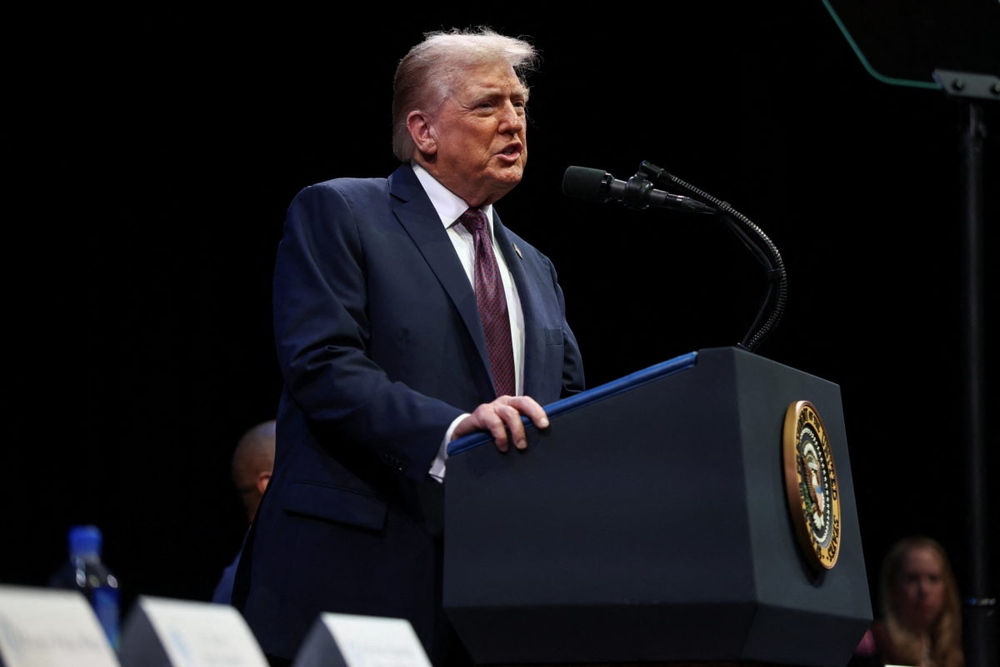
This week, a carefully curated event is unfolding under the banner of America’s upcoming 250th anniversary: a marathon public reading of the entire Bible. Organized by the group Christians Engaged and billed as a “return to the spiritual foundation that has shaped our country,” the event features a roster of participants that reads like a who’s who of the Trump-era Republican Party and its most prominent evangelical allies. President Donald Trump himself participated from his desk, reciting a passage from 2 Chronicles with an open Bible before him. High-ranking officials, including Defense Secretary Pete Hegseth, Secretary of State Marco Rubio, and House Speaker Mike Johnson, are participating, alongside Trump-aligned faith leaders like Franklin Graham, Jack Graham, and Paula White-Cain.
Organizer Bunni Pounds stated that Democratic members of Congress and progressive denominational leaders were invited but did not accept. Critics, including scholars like Brian Kaylor and Jemar Tisby, immediately labeled the event a “right-wing MAGA, Christian nationalist effort,” noting its stark lack of political or theological diversity. The event follows closely on the heels of other faith-related controversies for Trump, including the circulation of a social media meme depicting him in a messianic light and a clash with Pope Leo XIV. It also serves as a prelude to a larger “America Prays” event on the National Mall next month, announced by Trump last year.
The specific verse President Trump read—2 Chronicles 7:14, in which God promises to “heal their land” if His people humble themselves and turn from wicked ways—is a longtime favorite at conservative Christian political rallies. The organizers invited Trump to read this passage, and Pounds called his decision to do so a “powerful statement.” The underlying narrative pushed by participants is that America’s founding was essentially Christian, a claim many historians vigorously dispute, and that the nation’s identity is indelibly woven with the Bible.
The Context: A Long-Standing Project to Redefine America
This is not a spontaneous outpouring of faith. It is a calculated political and cultural maneuver, part of a decades-long project by a segment of the Christian right to fuse a specific, conservative Protestant identity with American civic identity. The term “Christian nationalism” is key here. It is the ideology that America is, and must remain, a Christian nation defined by a particular cultural and political framework, often one that aligns with conservative, white evangelical priorities. The America 250 anniversary presents a potent symbolic opportunity to cement this narrative in the public consciousness, to present a Christian nationalist vision not as a controversial opinion but as the undisputed historical truth.
The event’s timing and participant list reveal its core purpose. By overwhelmingly featuring sitting Republican officials and Trump loyalists, it sends an unambiguous message: this version of Christianity is aligned with one political party. It politicizes sacred scripture, turning the Bible into a campaign prop and a tool for voter mobilization. When faith becomes a litmus test for patriotism and a marker of partisan affiliation, it corrupts both religion and politics. It excludes the millions of American Jews, Muslims, Hindus, Buddhists, atheists, agnostics, and Christians of diverse traditions who do not subscribe to this narrow vision.
Furthermore, the event’s structure—a Protestant reading of the 66 books—inherently marginalizes other Christian traditions like Catholicism and Orthodoxy (which recognize additional books) and entirely sidelines Judaism, which reveres the Hebrew Bible but not the New Testament. The claim of a unifying “spiritual foundation” rings hollow when the event’s very design reinforces theological and political divisions.
Opinion: A Grave Threat to the American Experiment
As a firm supporter of the US Constitution, the Bill of Rights, and the secular republic they established, I view this event with profound alarm. This is not about encouraging personal faith or national reflection; it is an act of ideological colonization of America’s founding narrative. It is a direct assault on the First Amendment’s Establishment Clause, which exists precisely to prevent the government from endorsing or privileging one religion over others.
The participation of sitting cabinet officials and the Speaker of the House in their official capacities is particularly egregious. It blurs, beyond recognition, the vital line between church and state. When the Secretary of Defense and the Secretary of State participate in an event that promotes a Christian nationalist historical view, they are not acting as private citizens. They are wielding the immense prestige and power of their offices to lend state sanction to a particular religious-political ideology. This is an abuse of power and a betrayal of their oath to defend a Constitution that explicitly forbids a religious test for office.
The chosen verse, 2 Chronicles 7:14, is being weaponized. In this context, it is not a humble prayer for national repentance; it is a triumphalist claim that their people—defined by this political and religious movement—are the true heirs to God’s promise, and that national healing is contingent on the nation adopting their worldview. It is a theological justification for political dominance. This mirrors the criticism voiced by Pastor Doug Pagitt: “If you like reading the Bible, try living it.” The message of Jesus centered on love, mercy, and care for the marginalized, not on political conquest or the exclusion of those who believe differently.
Jemar Tisby’s critique cuts to the heart of the hypocrisy: “You cannot quote the Bible while justifying violence, war and exclusion.” Yet, we have seen this alignment repeatedly. The same movement that champions this public Bible reading often champions policies of exclusion, harshness toward immigrants and the poor, and a foreign policy devoid of mercy. The prayer by Pete Hegseth for violence “against those who deserve no mercy,” mentioned in a related report, exemplifies this terrifying contradiction. It reveals a faith stripped of its core ethical imperatives and twisted into a cudgel for the powerful.
The Path Forward: Reclaiming Our Secular, Pluralistic Heritage
The true “spiritual foundation” of America is not a specific denomination or holy book. It is the radical, revolutionary idea articulated in the Declaration of Independence and codified in the Constitution: that all are created equal and endowed with unalienable rights, and that government must remain neutral on questions of ultimate belief to protect the freedom of every conscience. Our founders, many of whom were Deists or privately religious men deeply skeptical of state religion, built a secular government. They did not found a Christian nation; they founded a nation where Christianity—and all faiths—could practice freely without coercion from the state.
To defend democracy, freedom, and liberty, we must vocally and unequivocally reject this Christian nationalist project. We must celebrate America’s real strength: its pluralism. Our national identity is not, and must never be, bound to a single religious text or tradition. It is bound to a set of civic principles—democracy, equality before the law, individual rights, and the peaceful transfer of power.
We must call out the participation of government officials in such explicitly partisan religious events as a breach of public trust. We must support journalism and scholarship that presents an accurate, complex history of America’s religious landscape. And we must engage our fellow citizens in a conversation about what truly unites us: not a common faith, but a common commitment to the republican principles of liberty and justice for all.
The marathon Bible reading is a symptom of a deeper sickness—a move toward illiberalism, where belonging is conditional on creed and party. To heal our land, we must not turn to a politicized verse from Chronicles, but to the living words of our Constitution. We must reaffirm the wall of separation, protect the rights of minorities, and remember that in a free society, the state has no business anointing official scriptures or sanctioning official theologies. Our nation’s soul depends on it.