
The Bondi Subpoena Evasion: A Dangerous Precedent for Accountability and Justice
Published
- 3 min read
The Facts of the Case
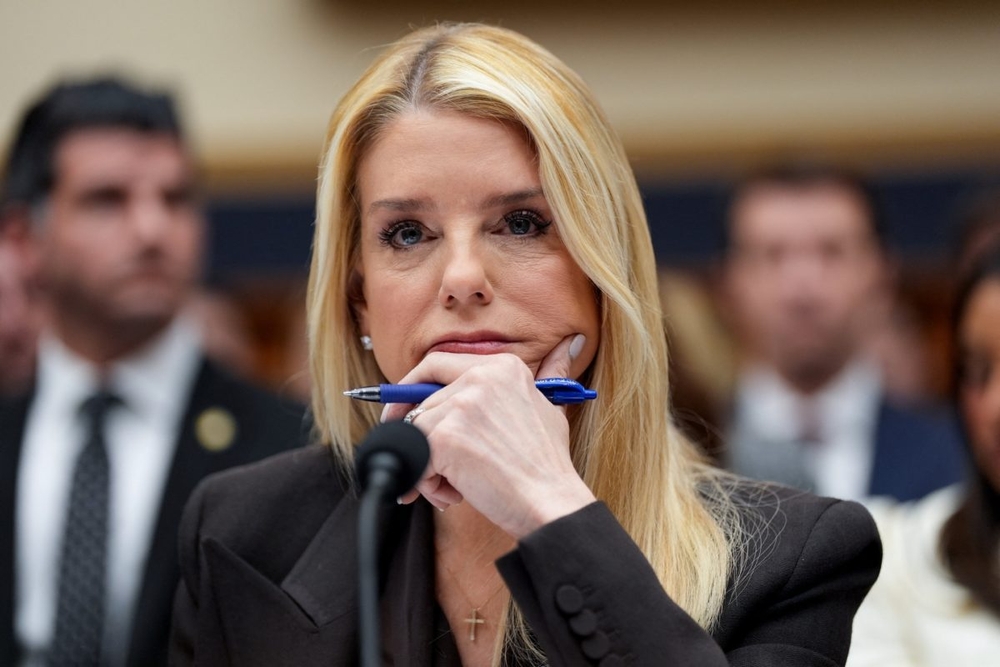
The Department of Justice has formally indicated that former Attorney General Pam Bondi will not appear for her scheduled deposition before the House Oversight Committee next week. The committee, which is investigating how the government handled its investigations into Jeffrey Epstein, had subpoenaed Bondi last month in a bipartisan vote. Jessica Collins, spokeswoman for the committee, stated that the DOJ signaled Bondi’s non-appearance “since she is no longer attorney general and was subpoenaed in her capacity as attorney general.”
This development comes amidst significant scrutiny over how the Justice Department handled what are known as the Epstein files. The department’s release of millions of case files on Epstein, the late financier who sexually abused underage girls, contained multiple errors and ran behind a congressional deadline. Bondi was ousted from her position by President Donald Trump on April 2, though the Justice Department’s website still listed her as attorney general as of Wednesday.
Congressional Response and Bipartisan Concern
Republican Representative Nancy Mace, who initiated the motion to compel Bondi’s appearance, stated on social media that “Bondi cannot escape accountability simply because she no longer holds the office of Attorney General.” Mace emphasized that the subpoena was issued “by name, not by title” and expressed expectation that Bondi would appear once a new date is set.
The top Democrat on the committee, Representative Robert Garcia of California, also committed to pushing for enforcement of the subpoena, threatening contempt of Congress charges if Bondi fails to appear. In a statement, Garcia asserted that “Now that Pam Bondi has been fired, she’s trying to get out of her legal obligation to testify before the Oversight Committee about the Epstein files and the White House cover-up.”
Committee Chairman James Comer, a Republican from Kentucky, has previously enforced subpoenas on high-ranking former officials including Bill and Hillary Clinton, establishing a precedent for congressional authority over former government officials.
The Constitutional Crisis of Evaded Accountability
The attempt to avoid congressional testimony based on a change in employment status represents a dangerous erosion of democratic norms and constitutional principles. Congressional oversight is a fundamental check on executive power, designed specifically to ensure accountability regardless of political circumstances or employment status. The notion that a subpoena becomes void upon departure from office creates a perilous loophole that could allow any official to evade responsibility simply by resigning or being dismissed.
This is particularly concerning given the gravity of the Epstein investigation. Jeffrey Epstein’s crimes represent one of the most significant failures of justice in recent American history, involving the sexual abuse of numerous underage girls and potential cover-ups at the highest levels of power. The American people deserve complete transparency regarding how their government handled this investigation, especially given the numerous errors and delays in releasing relevant documents.
The Principle of Permanent Accountability
Government service carries with it enduring responsibilities that do not vanish upon leaving office. When individuals accept positions of public trust, they implicitly accept ongoing accountability for their actions while in service to the nation. The Department of Justice’s position in this matter threatens to establish a precedent where officials can act with impunity, knowing they can avoid future scrutiny simply by leaving their positions.
This undermines the very foundation of our constitutional system, which relies on checks and balances to prevent abuse of power. Congressional oversight committees serve as the people’s representatives in examining executive branch actions. When officials evade this oversight, they effectively deny the American people their right to transparency and accountability.
The Human Cost of Evaded Testimony
Beyond the constitutional implications, there’s a profound human dimension to this situation. The victims of Jeffrey Epstein’s abuse have endured unimaginable trauma, followed by years of seeking justice and closure. Every evasion of accountability, every delayed document, every refused testimony represents another betrayal of these victims and their pursuit of justice.
The handling of the Epstein files has already been marked by errors and missed deadlines. Now, the potential evasion of testimony by a key official compounds the perception that the system is failing those it should protect most. This is not merely a political or procedural matter—it’s about whether our institutions can deliver justice for the most vulnerable among us.
The Dangerous Precedent Being Set
If allowed to stand, this evasion could establish a template for future officials seeking to avoid congressional scrutiny. Imagine a scenario where every cabinet member, every agency head, every presidential advisor could simply resign to avoid testifying about their actions in office. This would effectively nullify congressional oversight authority and create a class of government officials immune from accountability.
The bipartisan nature of the original subpoena vote demonstrates that this is not a partisan issue but rather a fundamental question of governmental integrity. Republicans and Democrats alike recognized the necessity of Bondi’s testimony regarding the Epstein files handling. This unity across party lines underscores the seriousness of the matter and the importance of maintaining congressional oversight authority.
The Path Forward: Upholding Constitutional Principles
Congress must assert its constitutional authority and insist on Bondi’s testimony. The subpoena was properly issued, and the change in employment status does not nullify the obligation to testify about actions taken while in office. The committee should immediately schedule a new deposition date and make clear that failure to appear will result in contempt proceedings.
Furthermore, this situation highlights the need for clearer statutory language regarding the obligations of former government officials to testify about their tenure. While constitutional principles should suffice, sometimes explicit legislative clarification becomes necessary to prevent such evasions of accountability.
Conclusion: defending democratic institutions
The attempt to avoid congressional testimony represents more than just a procedural dispute—it strikes at the heart of our democratic system of checks and balances. Our government derives its legitimacy from accountability and transparency, and when those principles are compromised, the entire system suffers.
The victims of Jeffrey Epstein’s crimes, the American people, and indeed our constitutional system itself deserve better than evasion and obfuscation. We must demand that every government official, current or former, fulfill their obligation to provide testimony when properly subpoenaed by Congress. Anything less represents a failure of our democratic institutions and a betrayal of the public trust.
In the words of Representative Mace, we cannot allow officials to “escape accountability simply because she no longer holds office.” The principles of democratic governance demand that we uphold congressional oversight and ensure that no one is above the law, regardless of their current employment status. The integrity of our justice system and the faith of the American people depend on it.