
The Brink of Abandonment: Trump's NATO Gambit and the Undermining of American Security
Published
- 3 min read
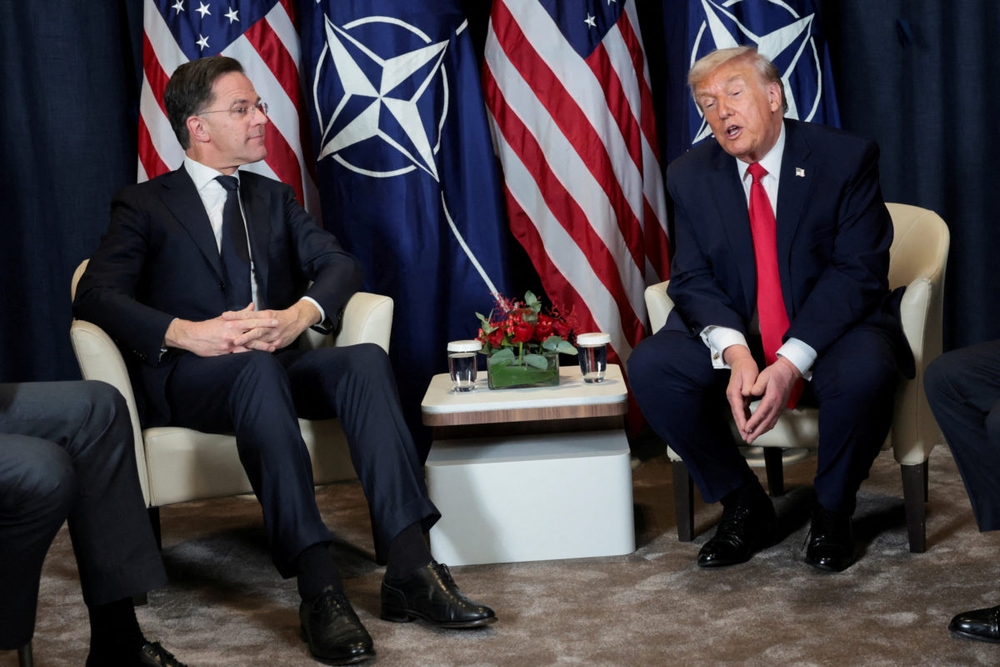
In the unstable aftermath of a narrowly averted escalation in the Iran conflict, a different but equally profound crisis simmers within the West. President Donald Trump, having secured a tentative two-week ceasefire that includes reopening the vital Strait of Hormuz, has turned his ire not just on adversaries, but on America’s oldest and most critical military alliance: the North Atlantic Treaty Organization (NATO). The core fact is stark: the President is again threatening U.S. withdrawal from NATO, prompting an emergency meeting with Secretary-General Mark Rutte to smooth over his anger. This is not routine diplomatic friction. It is a direct assault on the institutional bedrock of post-war Western security, driven by grievance and a transactional worldview that threatens to unravel seven decades of strategic stability.
The Immediate Crisis: Ceasefire and Confrontation
The article outlines a tense sequence of events. Following Iran’s effective shutdown of the Strait of Hormuz—a chokepoint for roughly one-fifth of the world’s oil—gas prices soared globally. President Trump, engaged in a “war of choice” with Iran, demanded NATO allies help reopen the strait, framing it as their responsibility, not America’s. When the alliance did not immediately comply, the President’s long-simmering hostility toward NATO boiled over, reviving threats of U.S. withdrawal. This confrontation unfolds even as a fragile ceasefire, brokered after Trump threatened to strike Iranian infrastructure with apocalyptic rhetoric, takes hold. The planned meeting with Secretary-General Rutte is thus a pressure cooker, aimed at addressing Trump’s frustrations over allied actions (or inactions) during the Iran war, including Spain and France restricting U.S. use of their airspace and facilities.
The Constitutional and Historical Context
To understand the gravity, one must recall what NATO represents. Founded in 1949 to counter Soviet expansion, its central tenet is Article 5: the mutual defense pledge that an attack on one member is an attack on all. This pledge was invoked for the first and only time in history following the September 11, 2001, terrorist attacks against the United States. NATO allies, as Senator Mitch McConnell rightly noted in his supportive statement, sent their sons and daughters to fight and die alongside Americans in Afghanistan. The alliance is not a mere club; it is a covenant. Recognizing the profound danger of a president unilaterally discarding this covenant, Congress in 2023 passed a law, championed by then-Senator and now Secretary of State Marco Rubio, explicitly preventing any U.S. president from withdrawing from NATO without congressional approval. President Trump’s meeting with Rutte tests the resolve of that law, as the article speculates whether his administration would challenge it if his frustrations are not alleviated.
A Pattern of Institutional Erosion
This is not an isolated incident but part of a deliberate pattern. The article reminds us that the alliance was “already rattled” by Trump’s previous actions: reducing U.S. military support for Ukraine against Russian aggression and the bizarre threat to seize Greenland from ally Denmark. Former NATO Secretary-General Jens Stoltenberg feared Trump might walk away in 2018. The President’s constant haranguing of allies over defense spending, while a legitimate concern, is wielded not as a tool for strengthening the alliance but as a justification for its potential abandonment. His statement, “Go to the strait and just take it,” encapsulates a simplistic, go-it-alone bravado that dismisses the complexities of international law, diplomacy, and collective action.
Opinion: A Betrayal of Principle and Pragmatism
The ongoing threat to leave NATO is more than a bad policy; it is an unforgivable betrayal of both American principles and pragmatic self-interest. From the standpoint of democratic commitment, it is an act of profound bad faith. The United States asked for and received the ultimate sacrifice from allies under Article 5. To now threaten to leave because allies did not follow a specific tactical demand in a different conflict is to treat sacred oaths as disposable. It signals to the world that America’s word is ephemeral, subject to the whims of a single leader. This erodes the very concept of an alliance, which is built on trust and predictability over decades, not transactional compliance over weeks.
From a strategic security perspective, it is catastrophic foolishness. NATO is the force multiplier that has allowed the United States to project stability and deter aggression in Europe and beyond at a fraction of the cost of acting alone. Dismantling it is a gift to every autocrat and adversary who dreams of a divided West. President Vladimir Putin of Russia has sought to break NATO for his entire tenure; Trump’s actions do Putin’s work for him. The President’s complaint that “NATO has shown it will not be there for the U.S.” during the Iran war ignores history and context. Alliances are frameworks for collective defense, not blank checks for supporting every unilateral military engagement. That allies like the United Kingdom, under Prime Minister Keir Starmer, are actively working on post-conflict security plans for the Strait of Hormuz demonstrates commitment, even amid disagreements over specific wartime operations.
The Human and Institutional Cost
The human cost of this brinksmanship is immense. It forces diplomats like Mark Rutte to engage in crisis management over the alliance’s very existence instead of focusing on tangible threats. It strains the morale of militaries across 32 nations who train and plan as a unit. Most damningly, it abandons the democratic ideals that bind the alliance. NATO is not merely a military pact; it is a community of democratic nations committed to the rule of law, individual liberty, and collective security. Threatening to blow it up because of a policy dispute over Iran is the antithesis of the steady, principled leadership those ideals require.
Senator McConnell’s plea for the President to be “clear and consistent” and to focus on deterring adversaries rather than “nursing grudges with allies” is a sober Republican voice cut from an older, more responsible cloth. It highlights that this is not a partisan issue but a national security imperative. The 2023 law blocking unilateral withdrawal is a testament to Congress’s recognition of this imperative. The question now is whether institutional guardrails, painstakingly built over generations, can withstand the relentless pressure of a president who views them as constraints to be broken.
Conclusion: Choosing Steadfastness Over Chaos
The meeting between Trump and Rutte is a microcosm of a fundamental choice. Will America reaffirm its role as the anchor of the free world, committed to its treaties and the allies who have shed blood alongside us? Or will it descend into a chaotic, transactional nationalism that leaves it isolated and weaker? The principles of democracy, freedom, and liberty are not defended by going it alone. They are defended by standing together with those who share them. To undermine NATO is to undermine the architecture of that collective defense. It is to prioritize personal pique over patriotic duty, and momentary leverage over lasting security. The United States must not step back from the brink of abandoning NATO; it must step back from the brink altogether, recommit to the alliance, and recognize that in a dangerous world, our strength has always been, and must always remain, in our unity with free nations.