
The Brink of Barbarism: Trump's Threat to Iranian Civilian Infrastructure and the Abdication of American Principles
Published
- 3 min read
The Facts: An Ultimatum for Destruction
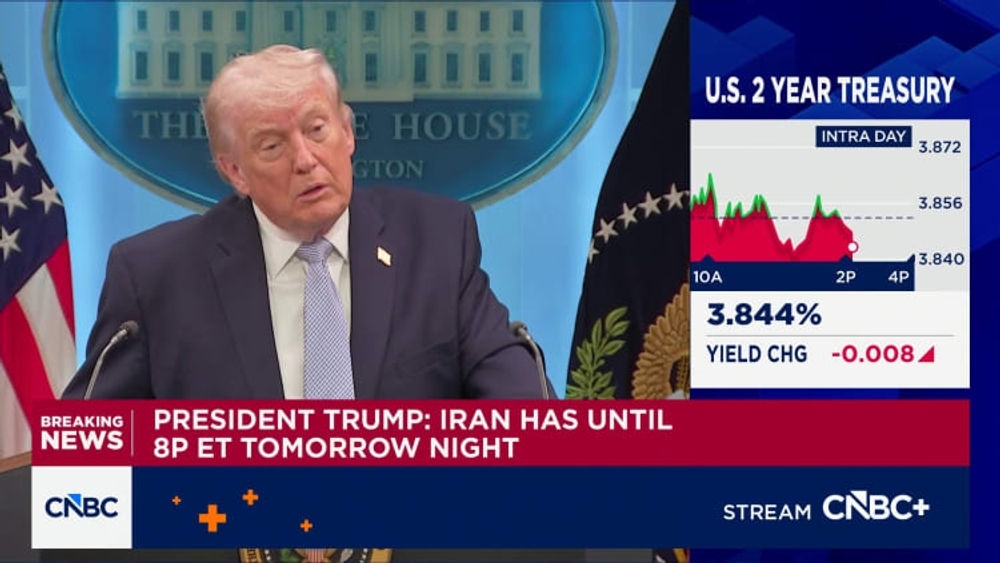
The geopolitical standoff between the United States and Iran entered a chilling new phase this week. According to reports, President Donald Trump has issued a dire ultimatum: Iran must reopen the strategically vital Strait of Hormuz by Tuesday night or face devastating American military strikes targeting its civilian infrastructure. The specificity of the threat is what makes it so grotesque. President Trump, speaking from the White House South Lawn during the Easter egg roll and later in a press conference, explicitly stated that if no deal is reached, “every bridge in Iran will be decimated” and “every power plant in Iran will be out of business, burning, exploding, and never to be used again.” This threat was preceded by a profanity-laced social media post demanding Iran “Open the Fuckin’ Strait.”
The context is a five-week-old conflict, stemming from Iran’s effective closure of the Strait of Hormuz—a critical global oil shipping corridor—in late February. Iran’s parliament has moved to formalize toll collection on the waterway. In response, a proposal for a 45-day ceasefire has been floated, reportedly involving regional mediators like Pakistan. Iran submitted a 10-point response to the U.S. via Pakistan, calling for a protocol for safe passage, reconstruction, and sanctions relief. However, President Trump dismissed the Iranian proposal as “not good enough,” though he called it a “significant step.” A White House official emphasized that the President had not signed off on any specific ceasefire plan and that “Operation Epic Fury continues.” Trump’s rhetoric frames the negotiation as a transactional power struggle, asking, “What about us charging tolls?” and declaring, “We’re the winner. We won.”
The Context: A Pattern of Escalatory Rhetoric
This incident is not an isolated outburst but fits a persistent pattern of bellicose rhetoric that substitutes volatile threats for disciplined statecraft. The setting of a public holiday event for discussing the mass destruction of another nation’s civilian essentials creates a jarring disconnect. The threat extends a previously imposed 10-day pause on attacks, showing a tactic of public deadlines and escalatory pressure. This approach fundamentally misunderstands the nature of deterrence and diplomacy, treating international conflict like a reality television negotiation where the loudest threat wins. It bypasses traditional channels of statecraft and deliberately injects uncertainty and fear into an already tense situation.
The Strait of Hormuz is undeniably a vital economic artery. Its closure disrupts global energy markets and represents a aggressive act by Iran. The United States has a legitimate interest in ensuring freedom of navigation. However, the response must be measured, strategic, and rooted in both international law and American values. The leap from addressing a blockade to threatening the total destruction of a nation’s civilian power grid and transportation network is not a proportional escalation; it is a leap into the abyss of what constitutes acceptable conduct in warfare.
Opinion: A Moral and Strategic Catastrophe
This threat represents nothing less than the moral bankruptcy of a certain approach to American power. To deliberately target civilian infrastructure is not just strategically dubious; it is a potential war crime. The principles of distinction and proportionality, cornerstones of the Law of Armed Conflict (LOAC), exist precisely to prevent this kind of barbarism. Power plants are not military objectives; they provide electricity for hospitals, water treatment facilities, homes, and schools. Bridges are conduits for civilians, ambulances, and commerce. Threatening their wholesale destruction is a threat to impose collective punishment on the Iranian people—men, women, and children who have no say in their government’s decisions.
As a staunch supporter of democracy, freedom, and liberty, I must state unequivocally: these values cannot be defended by abandoning them. The greatness of America has historically been measured not by the cruelty it could inflict but by the restraint it exercised, even in victory. We condemned Saddam Hussein for poisoning environments and targeting civilian infrastructure. We cite the Geneva Conventions when criticizing adversaries. What, then, becomes of our standing and our soul when our President publicly contemplates such actions? We become the antithesis of what we claim to champion.
This is not strength; it is weakness disguised as machismo. True strength lies in the resilient pursuit of diplomatic outcomes, in building coalitions, in leveraging economic and political tools, and in maintaining a military ready to defend against actual aggression while adhering to the rules that separate civilization from chaos. Threatening to plunge 80 million people into a pre-industrial darkness is the tactic of a tyrant, not the leader of the free world. It erodes our moral authority, alienates allies who share our concerns about Iran but not our methods, and provides superb propaganda to every adversary who claims America is a lawless imperial power.
Furthermore, this strategy is self-evidently counterproductive. Such an attack would not compel Iranian surrender; it would forge an unbreakable, generational hatred among the Iranian populace, unifying them against the United States in a wave of national trauma. It would likely trigger retaliatory actions across the region, endangering U.S. personnel and allies. It would destabilize global markets far more than the strait’s closure. It abandons any pretense of seeking a sustainable political solution, instead opting for a punitive spasm of violence that solves nothing and creates endless new problems.
The spectacle of this threat being delivered amidst the festivities of the Easter Egg Roll is a metaphor for the profound degradation of our diplomatic discourse. Foreign policy and threats of mass suffering are not backdrop for holiday photo-ops. This casualness about war and human cost is perhaps the most disturbing element. It suggests a failure to comprehend the gravity of the words being spoken, the lives they represent, and the precedent they set for a world already sliding away from rules-based order.
Conclusion: A Call for Principle and Restraint
We stand at a precipice. The conflict with Iran is complex and fraught, but the path forward must be illuminated by the lights of our founding principles, not the fires of burning power plants. Congress, the media, and the American public must voice immediate and forceful opposition to this dangerous rhetoric. We must demand a return to serious, quiet diplomacy conducted through proper channels. We must insist that any use of force, if absolutely necessary as a last resort, be strictly limited to legitimate military targets and conducted in accordance with the laws we helped write.
The defense of democracy and liberty is a sacred trust. It requires not just the power to destroy, but the wisdom to build, the courage to negotiate, and the moral clarity to know that some lines must never be crossed. Threatening the civilian infrastructure of a nation is one of those lines. To cross it would be to lose far more than a tactical advantage in the Strait of Hormuz; it would be to sacrifice the very soul of America’s promise on the altar of reckless bluster. We must be better than this. Our security, our values, and our legacy demand it.