
The Brink of Civilization: How Presidential Recklessness Threatens Constitutional Order and Global Stability
Published
- 3 min read
The Facts of the Crisis
This week, the United States stood at the precipice of one of the most constitutionally and morally alarming moments in its history. President Donald Trump announced a two-week ceasefire with Iran, temporarily delaying his explicit threat to destroy what he called Iran’s “whole civilization” through targeted attacks on civilian infrastructure including bridges, power plants, and other vital civilian structures. The ceasefire came after intense diplomatic intervention from Pakistani leadership, with Prime Minister Shehbaz Sharif and Field Marshal Asim Munir serving as intermediaries between the White House and Tehran.
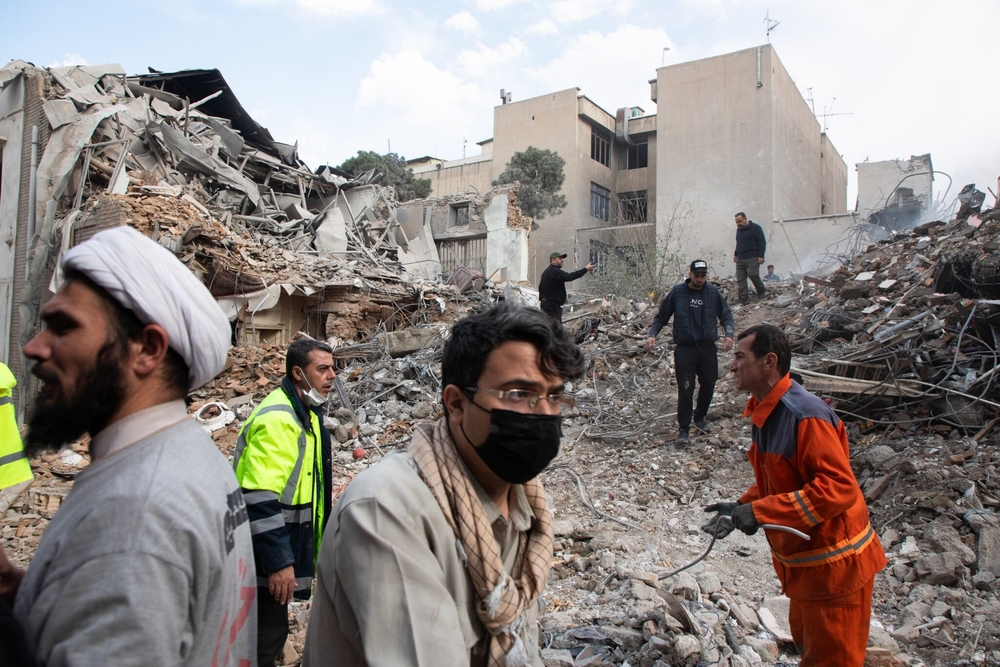
The immediate context involves escalating tensions following Iran’s downing of two U.S. military aircraft and subsequent successful rescue operations of American personnel. In response, the U.S. and Israel had already initiated joint military operations targeting Iranian infrastructure, including strikes on Kharg Island (Iran’s main oil export terminal) and various transportation networks. Iran retaliated by effectively closing the Strait of Hormuz, a critical maritime passage responsible for transporting one-fifth of the world’s petroleum and liquid natural gas.
President Trump’s Sunday threat gave Iran until Tuesday evening to reopen the strait or face devastating consequences. His social media post explicitly threatened that “a whole civilization will die tonight, never to be brought back again” - language that directly contradicts international humanitarian law, including the Geneva Conventions that prohibit targeting civilian infrastructure. The Cybersecurity and Infrastructure Security Agency subsequently issued alerts warning critical infrastructure operators to review protocols amid concerns about Iranian cyber retaliation.
Constitutional and Congressional Response
The presidential threats triggered immediate constitutional concerns across the political spectrum. Senate Minority Leader Chuck Schumer denounced Trump as “an extremely sick person,” while numerous Democrats raised the possibility of invoking the 25th Amendment to remove the president from office. Representative Marjorie Taylor Greene, typically a Trump loyalist, broke ranks to declare “25TH AMENDMENT!!! We cannot kill an entire civilization. This is evil and madness.”
Three Republican senators - Ron Johnson of Wisconsin, John Curtis of Utah, and Nathaniel Moore of Texas - expressed objections to the president’s approach. Senator Johnson expressed hope that the threats were “just bluster,” while Senator Curtis declared opposition to funding military operations without a formal congressional declaration of war. Representative Moore stated that destruction of a “whole civilization” is “not who we are” as a nation.
Senator Elissa Slotkin, a former CIA analyst, reminded military personnel that they are not obligated to follow illegal orders that violate the Law of Armed Conflict. This warning came alongside similar statements from Representative Jason Crow, who emphasized service members’ “solemn duty to follow the law” when confronted with unlawful commands.
The Dangerous Erosion of Constitutional Norms
What we witnessed this week represents more than just another foreign policy crisis—it demonstrates the systematic erosion of the constitutional order that has safeguarded American democracy for centuries. The framers of our Constitution deliberately placed war powers in the hands of Congress, not the executive, precisely to prevent exactly this type of reckless unilateral action that threatens global stability and undermines our moral standing.
The president’s explicit threat to target civilian infrastructure violates not only international law but the very principles that distinguish democratic nations from authoritarian regimes. When a sitting American president openly contemplates the destruction of an entire civilization, we have crossed a threshold that previous generations worked tirelessly to prevent through the establishment of international humanitarian law and the Geneva Conventions.
This crisis reveals several disturbing trends that should alarm every American who values constitutional governance. First, the normalization of extralegal threats against civilian populations sets a dangerous precedent that undermines America’s moral authority and commitment to human rights. Second, the circumvention of congressional war powers represents a direct assault on the separation of powers that is fundamental to our constitutional system. Third, the willingness to use civilian suffering as bargaining leverage in diplomatic negotiations abandons the ethical foundations that have guided American foreign policy at its best moments.
The Moral Imperative of Constitutional Constraints
The framers understood that executive power requires constraints precisely because human nature tends toward ambition and overreach. James Madison famously warned in Federalist 51 that “ambition must be made to counteract ambition” through the careful separation of powers. This week’s events demonstrate the enduring wisdom of this design—and the catastrophic consequences when those constraints fail.
Targeting civilian infrastructure is not merely illegal under international law; it represents a fundamental betrayal of the values that America has championed for decades. The Geneva Conventions emerged from the ashes of World War II precisely to prevent the mass destruction of civilian populations and infrastructure. When an American president threatens to violate these hard-won protections, he undermines the very system of international law that America helped create and that has provided stability for generations.
Furthermore, the president’s approach dangerously conflates military objectives with civilian suffering. International humanitarian law clearly establishes that attacks must be directed only against military objectives, and that indiscriminate attacks affecting civilian populations are prohibited. The president’s threats against bridges, power plants, and what he termed “whole civilization” demonstrate either a profound misunderstanding of these principles or a deliberate disregard for them.
The Path Forward: Restoring Constitutional Balance
This crisis demands a recommitment to constitutional principles and the rule of law. Congress must reassert its constitutional authority over war powers by clearly defining the limits of executive action and holding the administration accountable for violations. The War Powers Resolution of 1973 provides mechanisms for congressional oversight that have been neglected for too long.
Military leadership has an equal responsibility to uphold the law of armed conflict and to refuse unlawful orders. The statements from Senator Slotkin and Representative Crow reminding service members of their duty to reject illegal commands are not merely political commentary—they are essential reaffirmations of the military’s professional ethics and legal obligations.
Finally, the American public must recognize that constitutional governance requires vigilance. The separation of powers exists not as abstract theory but as practical protection against the concentration of power that can lead to catastrophic decisions. When any president—regardless of party—threatens to bypass constitutional constraints and international law, citizens must demand accountability through every available democratic mechanism.
Conclusion: Preserving Democracy in Perilous Times
This week’s near-catastrophe serves as a stark reminder that democratic institutions require constant defense. The constitutional framework that has guided America for centuries is not self-executing—it depends on the courage of elected officials to uphold their oaths, the integrity of military leaders to follow lawful orders, and the engagement of citizens to hold power accountable.
The threat to destroy “whole civilization” represents more than just reckless rhetoric; it symbolizes the danger that emerges when constitutional constraints weaken and executive power expands beyond its proper boundaries. As Americans committed to democratic values, we must reaffirm our commitment to the rule of law, the separation of powers, and the ethical principles that distinguish free nations from authoritarian regimes.
The temporary ceasefire provides an opportunity to step back from the brink, but the underlying constitutional crisis remains unresolved. Only through renewed commitment to our founding principles—and courageous defense of the institutions that protect them—can we ensure that such brinkmanship does not become the new normal in American foreign policy. The survival of constitutional democracy depends on it.