
The Bureaucratic Betrayal: How California's Broken System Starves Its Students' Futures
Published
- 3 min read
The Stark Reality of Student Food Insecurity
A poignant narrative from a UC Santa Cruz student lays bare a crisis that is both deeply personal and systematically pervasive. The story is not one of academic struggle, but of a daily battle for basic sustenance. The student meticulously planned their college career, engaging in internships, fostering faculty relationships, and advocating for marginalized communities. By all outward appearances, they were a model of determination and success. Yet, beneath this facade of thriving lay a constant, grinding anxiety about food. This experience is not an outlier; it is a symptom of a systemic failure within California’s support infrastructure for its most vulnerable learners.
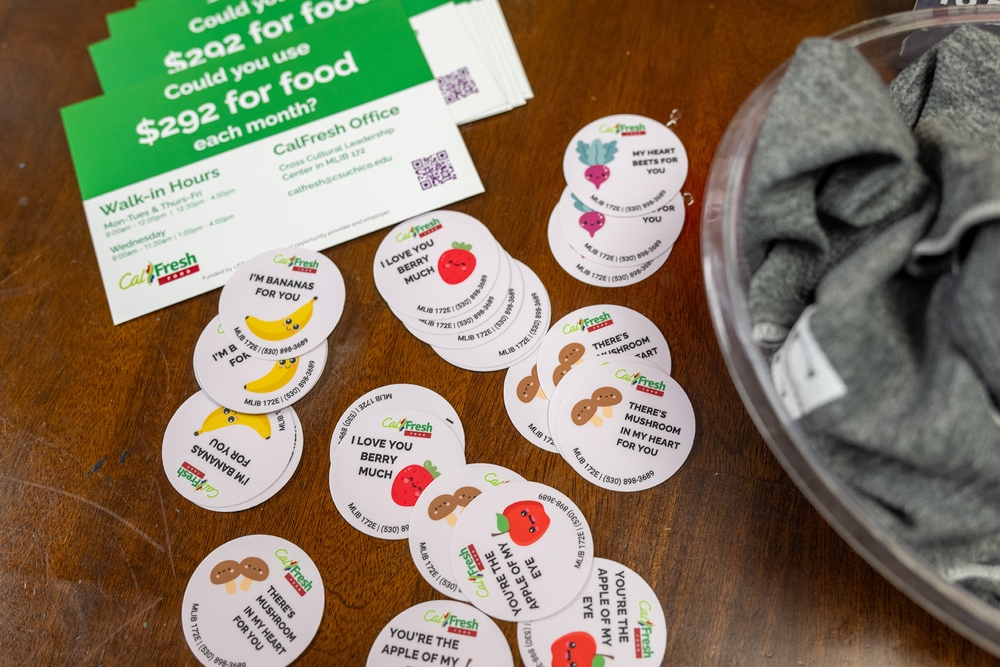
The core mechanism intended to alleviate this crisis is CalFresh, California’s implementation of the federal Supplemental Nutrition Assistance Program (SNAP). Designed as a safety net for low-income individuals, it should, in theory, provide college students with the nutritional foundation necessary to focus on their studies. However, the reality is starkly different. The article reveals a shocking statistic: while thousands of California college students qualify for CalFresh, a mere 25% of those eligible actually receive benefits. This gap is not due to a lack of need, but to a labyrinthine application process that actively prevents access.
A System Designed to Exclude
The student’s firsthand account details the precise mechanisms of this bureaucratic failure. Qualification was not the issue; navigation was. The application itself was dense and impenetrable. Verification requirements, such as reporting past income from a job two hours away, were rendered nearly impossible when paystubs existed only as inaccessible physical copies. Communication with county offices was characterized by excessive wait times and procedural absurdities, like missed phone calls for appointments that were never formally scheduled. The consequence of this administrative quagmire was tangible and severe: financial aid money earmarked for rent was diverted to groceries long before any assistance arrived. This forced the student into the exact kind of financial precarity the program is meant to prevent, leading to the agonizing, and fundamentally incorrect, question: “Is the problem me, or the system?”
The article broadens this individual plight into a statewide calculus of survival. Students across California face a convergent storm of rising rents consuming financial aid refunds, skyrocketing transportation and textbook costs, and the ever-present threat of a single unexpected expense—a car repair, a medical bill—that can completely destabilize their academic trajectory. These are not one-time emergencies but chronic conditions that force relentless trade-offs: work shifts versus study time, meals versus textbooks, survival versus academic success. California has made nominal strides in creating “basic needs” support on campuses, but as the article notes, access remains brutally inconsistent, dependent on a student’s personal reserves of time, pre-existing knowledge, and sheer persistence. For a student balancing school, work, and family, applying for public benefits becomes an unpaid, second job.
The Principles at Stake: Freedom, Liberty, and Human Dignity
This is where the analysis must move from documenting facts to defending foundational principles. A commitment to democracy, freedom, and liberty is meaningless if it does not include the freedom from hunger and the liberty to pursue an education without sacrificing one’s health. The United States was founded on the ideal of opportunity, a promise that hard work and talent can lead to a better life. The current CalFresh system for students represents a grotesque subversion of that promise. It tells ambitious, capable young people, “You have done everything we asked. You are working hard. And yet, we will place an arbitrary, bureaucratic wall between you and the food you need to continue.”
This is not merely inefficient policy; it is an anti-human action. It treats students as case files rather than citizens, imposing demands that assume “unlimited time, a stable income, or easy access to documentation”—conditions that are the precise antithesis of the student experience it claims to serve. Forcing a young person to choose between a meal and a textbook is a direct attack on their human dignity and a sabotage of their potential. A society that allows its future leaders, engineers, teachers, and artists to be undermined by hunger is a society failing in its most basic covenant.
SB 961: A Legislative Lifeline and a Test of Commitment
The article correctly identifies a concrete solution: Senate Bill 961, the CalFresh for Students Act, introduced by State Senator Angelique Ashby. This legislation is not a radical overhaul but a rational, necessary correction. It calls for streamlined outreach, expanded on-campus enrollment assistance, stronger coordination between colleges and counties, clearer eligibility guidance, and sustained funding for campus basic needs centers. These are pragmatic measures designed to dismantle the bureaucratic barriers that have been erected.
The question posed by the student author is the critical one: “Whether California legislators will meet us or continue to expect students to carry the burden alone.” Funding and passing SB 961 is now a direct test of the state’s values. It is an investment in human capital and a reinforcement of the rule of law—not the law of bureaucratic procedure, but the fundamental law of a society that protects its vulnerable and nurtures its aspiring. Fully funding this bill means investing in staffing to provide real-time help, simplifying cruel verification processes, and fixing interagency communication so that a student’s education is not held hostage by paperwork delays.
Conclusion: Building a System That Works as Hard as Our Students Do
The student’s final statement is a powerful manifesto: “I don’t need to be rescued. I need a system that works as hard as I do.” This reframes the entire issue. It is not about charity or pity; it is about justice, efficiency, and respect. Students across California are already demonstrating extraordinary commitment, balancing immense pressures while showing up every day. They are upholding their end of the social contract.
The state must now uphold its own. Supporting SB 961 is the minimum viable action. A stronger, accessible CalFresh system is an essential pillar of a free and democratic society, ensuring that the pathway to opportunity is not blocked by artificial hunger. It acknowledges that true liberty requires a foundation of security. The futures these students are working toward—the innovations, the services, the leadership—are the very futures that will strengthen our democracy and economy. To starve that potential in the present through neglect and bureaucratic failure is not just a policy error; it is a profound betrayal of the American promise. California’s legislators have a duty to act, not out of political expediency, but out of a principled commitment to the liberty, dignity, and boundless potential of every student striving to build a better life and a better state.