
The Burning Bridge: Trump, Meloni, and the Fragility of Transactional Alliances
Published
- 3 min read
The Facts: A Transatlantic Rift in Full View
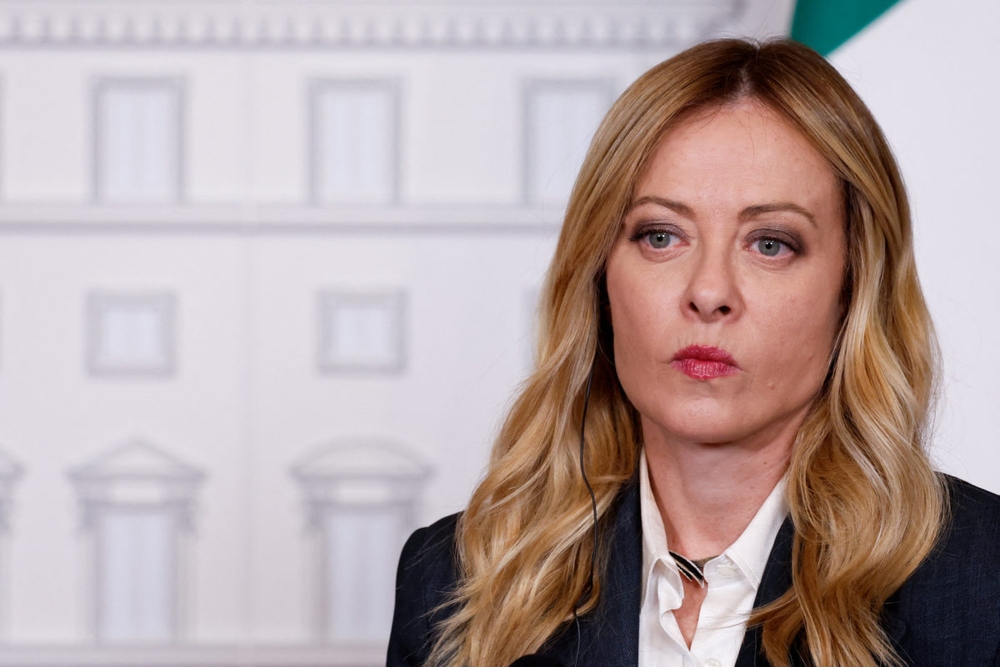
The once-warm political relationship between former U.S. President Donald Trump and Italian Prime Minister Giorgia Meloni has entered a period of profound and public strain. According to recent reports, Trump has openly expressed disappointment and ire towards Meloni, whom he once considered a courageous ally. The rupture stems from two primary points of contention: Italy’s refusal to participate in or support the ongoing U.S.-Israel war against Iran, and Meloni’s direct criticism of Trump for his “unacceptable” verbal broadside against Pope Francis.
Meloni, the leader of the Brothers of Italy party and the only European Union head of government invited to Trump’s second inauguration, was historically positioned as a natural bridge between Trump’s “America First” agenda and European nationalist-conservative movements. Their alliance was built on perceived ideological symmetry, particularly regarding hard-line immigration policies. However, the practical fruits of this relationship for Italy have been questionable, with the country not spared from Trump’s aggressive tariff policies.
The divergence became starkly operational over the Iran conflict. Italy has not only declined to join the war effort but also refused authorization for U.S. bombers to land at a key air base in Sicily—a significant logistical snub. Meloni’s subsequent statement condemning Trump’s attack on the Pontiff marked her most direct criticism of the former president to date. Trump has retaliated in media interviews, stating their bond has “frayed” and that “anybody that turned us down to helping with this Iran situation, we do not have the same relationship.”
The Context: Domestic Pressures and a Shifting Landscape
This diplomatic spat unfolds against a fraught backdrop for both figures. Prime Minister Meloni is navigating a challenging domestic political environment. She is recovering from a decisive referendum defeat last month, which acted as a de facto confidence vote on her leadership. Furthermore, the economic repercussions of the Iran war, including spiking energy prices, are deeply unpopular in Italy. Analysts like Professor Nathalie Tocci suggest that distancing herself from Trump—who has become “completely toxic across Europe”—may be a “godsend” for Meloni, allowing her to demonstrate independence and shore up domestic support.
Meloni’s recent actions seem calibrated for this audience. A two-day solo tour of Gulf states aimed to secure energy supplies (though it yielded no formal deals), and a decision not to automatically renew a defense agreement with Israel appear driven more by domestic political calculus than a fundamental strategic realignment. As Professor Roberto D’Alimonte notes, the ultimate test for Meloni will be the monthly gas bills of Italian citizens, not geopolitical posturing.
On the other side, Trump’s frustration appears amplified by a broader European recalcitrance. He has not only failed to garner robust European support for the Iran war but also lost a staunch ally in Europe with the recent electoral defeat of Hungary’s Viktor Orbán. As former ambassador Mariangela Zappia observes, Trump is confronting a European Union that is proving difficult to sway or dismantle, with a mix of anti- and pro-Trump sentiments ultimately coalescing around the preservation of the European project.
Opinion: The Inevitable Crumble of Principle-Lite Partnerships
The spectacular fraying of the Trump-Meloni alliance is not a random diplomatic incident; it is the predictable and inevitable result of building international relationships on a foundation of transactional politics, perceived personal loyalty, and aligned resentment rather than on bedrock shared principles. This episode serves as a critical case study in the inherent instability of alliances untethered from a mutual, unwavering commitment to democratic norms, institutional respect, and sovereign integrity.
First, the rupture exposes the hollow core of the “populist international.” For years, commentators spoke of a unified wave of right-wing nationalism sweeping the transatlantic space. Meloni and Trump were its poster figures. Yet, when tested by the hard realities of war, economic crisis, and the moral weight of the Papacy, that unity has vaporized. Why? Because the alliance was never truly about a positive vision for the free world; it was often a coalition defined by what it opposed—immigration, globalism, elite institutions. Opposition is a weak glue. When national interests, as defined by the elected leader of a sovereign nation, diverge—as Italy’s energy security and public opinion inevitably did from U.S. war aims—the partnership crumbles. This is a stark lesson for all who believe political movements built primarily on grievance can sustain durable international frameworks.
Second, Trump’s reaction—personal, public, and petulant—is a textbook example of the personalization of statecraft that undermines stable international order. Reducing the complex, centuries-old U.S.-Italy alliance, rooted in NATO and shared democratic journeys, to a question of whether a single foreign leader is sufficiently supportive of his policies is dangerously myopic. It treats allies as vassals expected to deliver fealty. Cabinet minister Adolfo Urso correctly noted that alliances “consecrated” in treaties decades ago should not be cracked by personal outbursts. Yet, Trump’s rhetoric consistently attempts to do just that, valuing personal deference over institutional partnership. This approach breeds uncertainty, erodes trust, and forces democratic allies like Italy to make painful choices between placating a powerful partner and responding to the will of their own people. A healthy Atlantic Alliance cannot function on such a capricious basis.
Third, Meloni’s positioning, while clearly opportunistic, touches on a legitimate and crucial theme for European democracy: strategic autonomy. Her refusal to be dragged into a war that lacks broad domestic support and her efforts to secure energy alternatives are exercises of national sovereignty. From a pro-democracy perspective, this is preferable to blind obedience. The right of a democratically elected government to make decisions based on its national interest and public mandate is sacrosanct. Whether one agrees with Meloni’s politics or not, her assertion of Italy’s independent foreign policy voice is a function of her democratic mandate. The concerning element is if this assertion is merely a short-term political stunt rather than a principled shift toward a more coherent, values-based Italian foreign policy.
Conclusion: A Lesson in Foundational Values
The “burning bridge” between Trump and Meloni is more than a tabloid-friendly feud. It is a profound lesson in the necessity of principle. For those of us deeply committed to democracy, freedom, and liberty, this episode reinforces that the only alliances worth having—and the only ones that endure—are those built on more than personal chemistry or parallel populist sentiments. They must be built on a shared, unshakeable commitment to constitutional order, the rule of law, human dignity, and the respect for the sovereign democratic choices of allied nations.
The Atlantic Alliance has weathered crises before because, at its core, it was understood to be about common defense of a way of life. When it devolves into a ledger of personal favors and verbal endorsements, it becomes fragile. Italy and the United States will remain allies because the institutions—NATO, shared cultural and economic ties—are larger than any two individuals. The hope emanating from this discord is that it may push European leaders, across the spectrum, to articulate a forward-looking vision for transatlantic relations based on positive democratic values and mutual strategic interests, rather than on navigating the volatile persona of any single American leader.
The path forward requires statesmanship that elevates institutions over individuals, principled consistency over transactional convenience, and the long-term health of the democratic world over the fleeting triumphs of domestic political theater. The bridge that is burning was always a precarious one; let its light illuminate the need to build a sturdier, principle-based path ahead.